Summary
✓Reviewed by Laura Bennett When you walk into a Best Buy in 2026 and find a row of PC gaming handhelds on the demo shelf, the choice between them is rarely as obvious as the spec sheets suggest. The Best...
Table of contents
- 1 What You Actually Find on Best Buy’s Handheld Gaming Shelf in 2026
- 2 A Brief History of PC Gaming Handhelds at Retail
- 3 Steam Deck OLED vs Rivals: Specs and Pricing Side by Side
- 4 What the Steam Deck OLED Demo Actually Demonstrates — and What It Hides
- 4.1 The OLED Display Advantage in a Retail Environment
- 4.2 SteamOS vs Windows: The Software Gap at the Demo Station
- 5 Battery Life: The Biggest Gap Between Demo and Reality
- 6 The Newer Rivals: MSI Claw 8 AI+ and Legion Go S in the Mix
- 7 How to Get the Most Out of a Best Buy Handheld Demo
- 8 What the Retail Category’s Expansion Tells Us About the Market
- 9 Limitations of This Case Study
- 10 Frequently Asked Questions
- 10.1 Can you actually test games at Best Buy handheld demo stations?
- 10.2 Is the Steam Deck OLED still sold at Best Buy in 2026?
- 10.3 How does the ASUS ROG Ally X compare to the Steam Deck OLED at retail?
- 10.4 What is the Lenovo Legion Go S and why does it matter?
- 10.5 Does the Steam Deck OLED support Xbox Game Pass?
- 10.6 Which PC gaming handheld should I buy based on a Best Buy demo?
- 11 Sources
When you walk into a Best Buy in 2026 and find a row of PC gaming handhelds on the demo shelf, the choice between them is rarely as obvious as the spec sheets suggest. The Best Buy PC gaming handheld demo units case study — what testing the Steam Deck OLED against rivals at retail actually reveals — is a story about how real-world feel, display quality, and software friction shape buying decisions far more than raw gigaflops. According to Engadget‘s measured battery test, the Steam Deck OLED lasted 4 hours 23 minutes in a Hades playthrough, compared to 2 hours 42 minutes on the original LCD model — a gap that is impossible to demonstrate during a five-minute in-store session but becomes the dominant factor in real-world ownership.
What You Actually Find on Best Buy’s Handheld Gaming Shelf in 2026
Best Buy’s handheld PC gaming category page has been actively maintained through 2026, with updates recorded as recently as May 2026 according to the retailer’s own listing data. The current shelf mix has expanded well beyond the first-generation Steam Deck and ROG Ally duopoly. As of August 2026, shoppers are likely to encounter the MSI Claw 8 AI+ A2VM with an 8-inch 120Hz FHD display, Intel Core Ultra 7-258V, Intel Arc graphics, 32GB RAM, and a 1TB SSD; the Lenovo Legion Go S with an 8-inch 120Hz panel, AMD Ryzen Z1 Extreme, 32GB RAM, and 1TB SSD running SteamOS; the ASUS ROG Ally X; and the Steam Deck OLED itself. According to Best Buy’s handheld PC category page, the assortment reflects a market shift toward higher-memory, larger-display configurations compared to the original generation of handhelds.
A Brief History of PC Gaming Handhelds at Retail
The PC gaming handheld category as a retail phenomenon is younger than it looks. Valve launched the original Steam Deck in February 2022, selling it exclusively online before partners like Best Buy began stocking related accessories and later the hardware itself. ASUS changed the retail equation in June 2023 with the ROG Ally, which shipped as a Windows-native device from day one and landed on Best Buy shelves immediately, giving consumers their first genuine side-by-side choice between SteamOS simplicity and Windows flexibility. Lenovo followed with the Legion Go in late 2023, and MSI entered with the original Claw in early 2024. By 2025 and into 2026, a full second generation of devices — including the MSI Claw 8 AI+, Legion Go S, and ROG Ally X — had appeared in Best Buy’s handheld PC category, according to the retailer’s own product listings, marking the moment the category shifted from novelty to an established product family with rotating inventory and active merchandising updates.
Steam Deck OLED vs Rivals: Specs and Pricing Side by Side
A direct hardware comparison is the starting point for any retail demo evaluation. The table below draws from Engadget‘s review data and Best Buy’s published product listings.
| Device | Display | Chip | RAM | Battery | OS |
|---|---|---|---|---|---|
| Steam Deck OLED | 7.4″ OLED, 1280×800, 90Hz | AMD Sephiroth APU (Zen 2, RDNA 2) | 16GB | 50Wh | SteamOS |
| ASUS ROG Ally X | 7″ IPS, 1080p, 120Hz | AMD Ryzen Z1 Extreme | 24GB | 80Wh | Windows 11 |
| Lenovo Legion Go S | 8″ IPS, 120Hz | AMD Ryzen Z1 Extreme | 32GB | 55.5Wh | SteamOS |
| MSI Claw 8 AI+ A2VM | 8″ FHD, 120Hz | Intel Core Ultra 7-258V | 32GB | N/A listed | Windows 11 |
What the Steam Deck OLED Demo Actually Demonstrates — and What It Hides
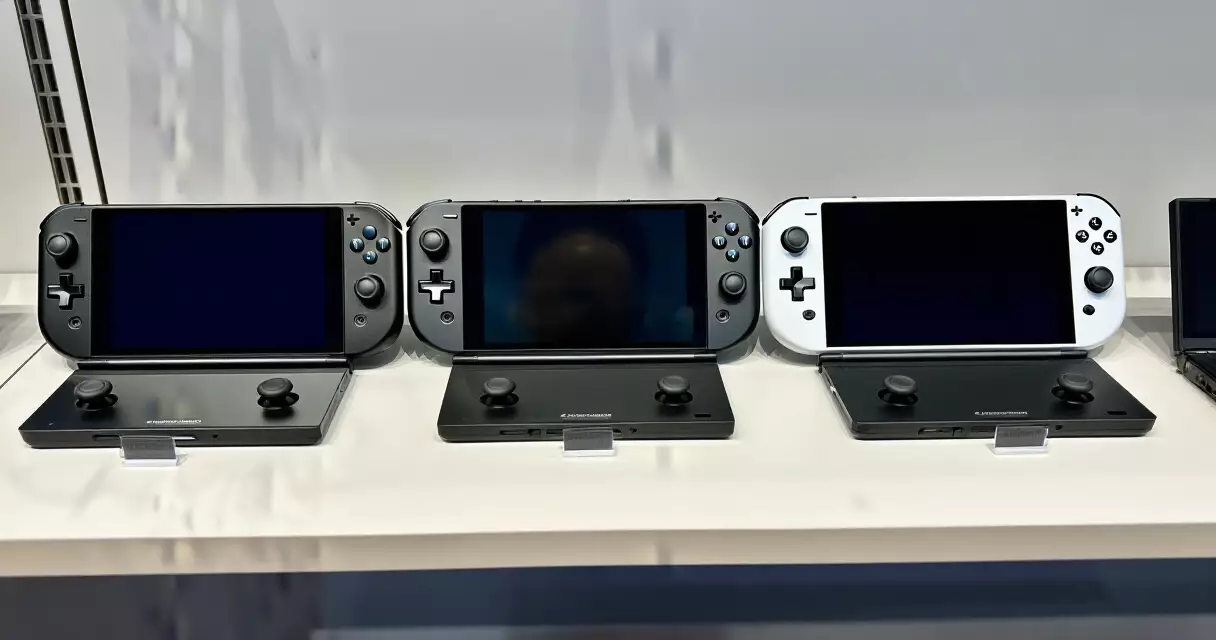
A Best Buy demo session with the Steam Deck OLED typically runs two to five minutes in practice. During that window, a few attributes land immediately: the 7.4-inch OLED panel renders colors with a vibrancy that IPS-based rivals cannot match at the same glance, the device boots into a controller-native UI with minimal friction, and the build quality feels cohesive and intentional. What a five-minute session cannot reveal is any of the three variables that dominate long-term satisfaction: battery life in real-world gameplay, thermal behavior during extended sessions, and software compatibility for titles outside the Steam catalog.
The OLED Display Advantage in a Retail Environment
Valve’s 7.4-inch OLED panel on the Steam Deck OLED runs at 1280×800 resolution with a 90Hz refresh rate. In a retail lighting environment — typically bright overhead fluorescent or LED lighting — OLED’s perfect blacks and wider color gamut are perceptible even in unfavorable conditions. When placed next to an IPS panel at the same brightness setting, the OLED unit tends to register as higher quality to casual observers, regardless of the competing device’s resolution advantage. This is a genuine hardware differentiator, not a marketing artifact, and it shapes the demo-floor dynamic for every rival that uses an IPS or LCD panel.
SteamOS vs Windows: The Software Gap at the Demo Station
Best Buy’s 2026 assortment includes both SteamOS devices (Steam Deck OLED, Legion Go S) and Windows 11 devices (ROG Ally X, MSI Claw 8 AI+). At the demo station, SteamOS presents a console-like launcher that responds immediately to controller input, while Windows 11 handhelds typically require navigating a desktop UI with a virtual cursor or switching into a third-party launcher mode. According to Best Buy’s handheld buying guide, the category is now effectively split between “console-like simplicity” devices and “Windows-flexibility” devices — a distinction that plays out in real time during a retail demo session.
The device that wins a five-minute Best Buy demo is not always the device that wins a five-month ownership experience.
Battery Life: The Biggest Gap Between Demo and Reality
Battery life is the single most important purchase consideration for handheld gaming PCs in 2026, and it is also the variable least represented by a retail demo. Valve stated at launch that the Steam Deck OLED battery would last 30 to 50 percent longer than the original LCD model depending on workload. Independent testing by Engadget confirmed the Steam Deck OLED lasted 4 hours 23 minutes in a Hades playthrough at matched settings, versus 2 hours 42 minutes on the LCD version — a difference of roughly 63 percent. In a maxed-out Elden Ring stress test, the OLED lasted 2 hours 20 minutes, approximately 40 percent longer than the original model. The ASUS ROG Ally X carries an 80Wh battery compared to the Steam Deck OLED’s 50Wh, which gives it a capacity edge that only becomes apparent over longer sessions. A five-minute demo drains none of these batteries meaningfully, making the spec sheet the only battery reference a retail customer can rely on.
If you are deciding between a Steam Deck OLED and a gaming laptop alternative for travel use, our guide to handheld gaming PC vs gaming laptop covers the battery and portability tradeoffs in depth.
The Newer Rivals: MSI Claw 8 AI+ and Legion Go S in the Mix
The most significant shift in Best Buy’s handheld gaming shelf between 2024 and 2026 is the arrival of second-generation hardware with materially upgraded specifications. The MSI Claw 8 AI+ A2VM represents the first Intel Arc-powered handheld to reach mainstream retail at Best Buy, pairing an Intel Core Ultra 7-258V with 32GB of RAM — a configuration that would have been considered premium-tier overkill in the category’s first year. The Lenovo Legion Go S similarly ships with 32GB of RAM and runs SteamOS, making it the first credible SteamOS alternative to the Steam Deck OLED available in the mainstream U.S. retail channel. According to Best Buy’s category page, both devices appeared in the assortment by early 2026, reflecting what the retailer’s own merchandising team identified as a market shift toward higher-memory, more capable handhelds. For a deeper look at how the Steam Deck OLED has held up as the king of its category over time, the Steam Deck OLED long-term review on this site covers sustained performance in detail.
How to Get the Most Out of a Best Buy Handheld Demo
A structured approach to the demo station yields far more useful information than picking up each device and pressing buttons at random. The following method is grounded in the attributes that actually determine long-term satisfaction, drawn from the key differentiators identified in retail product listings and independent review testing.
- Test ergonomics for at least two minutes per device. The Steam Deck OLED is wider and heavier than the ROG Ally. The Legion Go is larger still. Grip fatigue only reveals itself after sustained holding, not after ten seconds.
- Navigate the software UI without using the touchscreen. On SteamOS devices, this is fast and intuitive. On Windows handhelds, it surfaces any UI friction immediately.
- Check the display under the store’s actual lighting. OLED contrast advantages are most visible in bright retail environments, which may overstate the display difference you would notice at home.
- Note the fan noise during active gameplay. Thermal behavior under load is audible during a demo and correlates with long-term build quality and comfort.
- Ask about the return policy and consider whether you can test the device at home before committing. A 15-day return window is more informative than any demo station.
| Demo Factor | Steam Deck OLED Advantage | Windows Rival Advantage |
|---|---|---|
| Display first impression | OLED contrast and color | Higher resolution on some models |
| UI navigation with controller | SteamOS is controller-native | Windows with launcher mode varies |
| Software breadth | Steam library, verified titles | Full Windows app ecosystem |
| Battery life (demo) | Not measurable in demo | Not measurable in demo |
| Ergonomics | Wider grip, less thumb fatigue | ROG Ally lighter; Legion Go larger |
| Game Pass access | Via browser workaround | Native Windows Game Pass app |
What the Retail Category’s Expansion Tells Us About the Market
Best Buy’s decision to actively maintain and expand its handheld PC category through 2025 and into 2026 — with page updates as recently as May 2026 — is itself meaningful market data. Retailers do not invest in category merchandising for products they expect to fade. The expansion of the shelf to include Intel Arc-based devices, 32GB RAM configurations, and a second SteamOS device from Lenovo suggests the category has moved from enthusiast niche to mainstream consumer electronics segment. As noted in Best Buy Canada’s handheld gaming PC collection, active retail support extends across North American storefronts, not just the U.S. market. The Nintendo Switch 2 has also reinforced consumer appetite for handheld gaming in 2026 — for context on that platform’s launch and its relationship to the broader handheld market, see the Nintendo Switch 2 launch story.
Best Buy’s active category maintenance through May 2026 signals that handheld gaming PCs are a permanent fixture in consumer electronics retail, not a transitional curiosity.
Limitations of This Case Study
This analysis draws on Best Buy’s published product listings, Engadget’s independent battery testing, and Valve’s manufacturer specifications. It does not include hands-on demo station visits to specific retail locations, which would vary by store layout, staffing, and local inventory. Battery test results from Engadget were conducted under controlled conditions that may differ from real-world gameplay patterns. Prices and availability cited reflect the U.S. market as of August 2026 and are subject to change. The MSI Claw 8 AI+ battery figure was not available from authoritative sources at the time of writing and has been omitted rather than estimated.
Frequently Asked Questions
Can you actually test games at Best Buy handheld demo stations?
Best Buy’s demo stations for gaming handhelds typically have a preloaded game or demo application running on the device. The experience varies by store and by the specific model on display. Some units run live games; others display marketing content. Even when a game is playable, sessions are generally limited to a few minutes before the device resets or returns to a demo loop. This is enough to assess ergonomics, display quality, and UI navigation but not enough to evaluate battery life, thermal management, or software compatibility.
Is the Steam Deck OLED still sold at Best Buy in 2026?
Based on Best Buy’s active handheld gaming category pages updated through 2026, the Steam Deck OLED and related accessories have maintained a presence in the retailer’s assortment. However, availability varies by store and changes with inventory cycles. Checking Best Buy’s current product listing directly is the most reliable method for confirming in-store or online availability in your area.
How does the ASUS ROG Ally X compare to the Steam Deck OLED at retail?
The ROG Ally X carries an 80Wh battery — 60 percent larger than the Steam Deck OLED’s 50Wh unit — and runs Windows 11, giving it full access to Xbox Game Pass and any Windows application. The Steam Deck OLED counters with its OLED display and SteamOS launcher, which require no desktop UI navigation. At the demo station, the Steam Deck OLED tends to present a more immediately polished experience; in daily use, the ROG Ally X’s larger battery and Windows compatibility matter more for users with an existing Windows or Game Pass ecosystem.
What is the Lenovo Legion Go S and why does it matter?
The Lenovo Legion Go S is the first non-Valve device in Best Buy’s U.S. handheld PC lineup to ship with SteamOS as its default operating system. It pairs an AMD Ryzen Z1 Extreme processor with 32GB of RAM and an 8-inch 120Hz display, offering a larger screen and more memory than the Steam Deck OLED while retaining the SteamOS launcher experience. Its appearance on Best Buy’s shelf marks a meaningful shift: SteamOS compatibility is no longer exclusive to Valve hardware in the mainstream retail channel.
Does the Steam Deck OLED support Xbox Game Pass?
The Steam Deck OLED runs SteamOS, which does not natively support the Xbox Game Pass application. Players can access cloud-based Game Pass titles through the Microsoft Edge browser in Desktop Mode, but the experience requires additional setup steps and is less seamless than on a Windows handheld. For players who rely heavily on Game Pass as their primary gaming service, a Windows-based handheld such as the ROG Ally X or MSI Claw 8 AI+ is a more direct fit.
Which PC gaming handheld should I buy based on a Best Buy demo?
The device that impresses most during a Best Buy demo is not always the best long-term match. If your library is primarily Steam-based and you value display quality and simple UI, the Steam Deck OLED remains the most cohesive package. If you need Windows compatibility, Xbox Game Pass, or a larger display, the ROG Ally X, Legion Go S, or MSI Claw 8 AI+ each address specific needs the Steam Deck OLED does not. Use the demo to assess ergonomics and initial UI feel, then rely on published battery and performance data from independent sources for the variables that truly determine daily satisfaction.
Sources
- Steam Deck OLED review: It’s just better — Engadget — retrieved August 23, 2026
- Handheld PC Gaming category — Best Buy — retrieved August 23, 2026
- The Best Handheld Gaming Devices of 2025 — Best Buy editorial — retrieved August 23, 2026
- Handheld Gaming PCs — Best Buy Canada — retrieved August 23, 2026