Summary
✓Reviewed by Laura Bennett The Android gaming market has evolved into one of the most competitive entertainment platforms on the planet. According to Newzoo's 2026 Global Games Market Report, mobile gaming accounts for roughly 50% of total global game revenue,...
Table of contents
- 1 Why Android Dominates Entertainment Gaming in 2026
- 2 A Brief History of Android as a Gaming Platform
- 3 Top Android Games for Entertainment Focus Right Now
- 3.1 Action RPG and Open-World Titles
- 3.2 Battle Royale and Competitive Shooters
- 4 Cloud Gaming on Android: Xbox, GeForce NOW, and Beyond
- 5 Android vs. iOS for Entertainment Gaming: Key Differences
- 6 Best Controllers for Android Entertainment Gaming
- 7 Optimizing Your Android Device for Gaming Focus
- 8 Android Gaming and the Creator Economy
- 9 Free-to-Play vs. Premium Android Games: Which Should You Choose?
- 10 Frequently Asked Questions
- 10.1 What are the best Android games for long gaming sessions in 2026?
- 10.2 Does cloud gaming work well on Android phones?
- 10.3 Can I use a PlayStation or Xbox controller with my Android phone?
- 10.4 Is Google Play Pass worth paying for?
- 10.5 What Android phone is best for gaming in 2026?
- 10.6 Are there any major Android-exclusive games worth playing?
- 11 Key Takeaways
- 12 Sources
The Android gaming market has evolved into one of the most competitive entertainment platforms on the planet. According to Newzoo’s 2026 Global Games Market Report, mobile gaming accounts for roughly 50% of total global game revenue, with Android capturing the largest share of that pie due to the platform’s global reach and device diversity. Whether you’re hunting premium titles, free-to-play battle royales, or deep RPGs you can sink hours into, entertainment gaming focus Android has never offered more choice — or more noise to cut through.
Why Android Dominates Entertainment Gaming in 2026
Android’s position as the leading entertainment gaming platform is no accident. The OS runs on an estimated StatCounter-tracked 72% of global smartphones as of mid-2026, meaning developers who target Android reach more potential players than any other single platform. The Google Play Store hosts over 3 million apps, with games representing the single largest category by both download volume and revenue. This scale creates a self-reinforcing cycle: large audiences attract major studios, which produce higher-quality titles, which draw in more players.
The hardware story has also shifted dramatically. Flagship Android phones in 2026, such as the Samsung Galaxy S26 Ultra and the Sony Xperia 1 VII, ship with processors that rival last-generation console silicon. The Snapdragon 8 Elite 2 and Dimensity 9400 chipsets powering the best Android devices deliver sustained performance capable of running graphically intensive titles at high frame rates without the thermal throttling that plagued devices just a few years ago.
A Brief History of Android as a Gaming Platform
Android gaming began modestly in 2008 when the platform launched alongside the T-Mobile G1, offering basic titles like Snake and Tetris clones. The real inflection point came around 2012 when touchscreen hardware matured and titles like Temple Run and Clash of Clans demonstrated that mobile games could generate hundreds of millions of dollars. By 2016, games like Pokémon GO, which Reuters reported attracted over 500 million downloads in its first year, proved that Android-first entertainment gaming could achieve cultural impact matching AAA console releases. The decade since has seen a systematic narrowing of the quality gap between mobile and console, culminating in the near-console-quality experiences available on Android in 2026.
Top Android Games for Entertainment Focus Right Now
Not all Android games are created equal. The titles below represent the genuine best in class across multiple genres, based on player reviews, revenue performance tracked by Statista, and critical reception as of August 2026. Each one earns its place through consistent updates, fair monetisation relative to its category, and a core gameplay loop that holds up over dozens of hours.
Action RPG and Open-World Titles
Genshin Impact remains the benchmark for free-to-play action RPGs on Android. miHoYo’s title continues to receive major content updates in 2026, with Version 5.x content adding new regions and characters that rival the scope of many premium console releases. The game runs smoothly on mid-range Snapdragon 7s Gen 3 hardware and above, making it accessible to a wide slice of the Android market. Its gacha monetisation is polarising but the core game is entirely completable without spending.
Diablo Immortal, despite its complicated launch reception, has settled into a position as one of the deepest dungeon-crawlers on mobile. Blizzard’s 2026 content cadence has improved significantly, and the game’s crossplay with PC means Android players are never short of co-op partners.
Battle Royale and Competitive Shooters
PUBG Mobile and Call of Duty Mobile continue to dominate the competitive shooter space on Android. PUBG Mobile’s 2026 season introduced realistic wind physics and destructible cover, features previously associated only with PC versions. Call of Duty Mobile’s latest ranked season brought weapon balancing aligned with its console counterpart, making the experience feel more unified across platforms than ever before. For players who want a lighter-touch battle royale, Free Fire remains enormously popular in Southeast Asia and Latin America, a reach that Newzoo attributes to its low device requirements and aggressive regional event content.
Cloud Gaming on Android: Xbox, GeForce NOW, and Beyond
The single biggest change to entertainment gaming focus Android in 2025 and 2026 has been the maturation of cloud gaming. Xbox Game Pass Ultimate’s cloud streaming library now includes day-one releases on Android, meaning subscribers can play titles like Star Wars Zero Company on a mid-range phone without any local processing power beyond streaming capability. Microsoft’s xCloud infrastructure expanded to additional US regions in early 2026, reducing latency for players outside major metropolitan areas.
NVIDIA’s GeForce NOW takes a different approach: it streams your existing PC game library from GeForce RTX servers, so your Steam purchases become playable on Android at up to 4K/60fps with RTX 5080-class rendering. The Priority tier costs around $10 per month as of mid-2026, while the Ultimate tier, which offers 4K streaming and priority queue access, sits at approximately $20 per month according to NVIDIA’s pricing pages. If you play a lot of games across platforms, GeForce NOW can be a more cost-effective route than buying separate mobile ports. For context on how Android’s handheld cloud experience compares to dedicated hardware, the Steam Deck OLED long-term review outlines what dedicated gaming hardware still does better than any phone-and-cloud combo.
Cloud gaming has not replaced native Android titles — it has expanded the Android gaming ecosystem into territory that would have been unimaginable five years ago.
Android vs. iOS for Entertainment Gaming: Key Differences
The perennial platform debate has shifted in Android’s favor for several specific use cases. The following comparison draws on publicly available platform specifications, developer documentation, and aggregated user data from Statista and Newzoo.
| Factor | Android (2026) | iOS (2026) |
|---|---|---|
| Sideloading / APK installs | Supported natively | Limited (EU only via DMA) |
| Controller support breadth | Near-universal (USB-C, Bluetooth) | MFi certified controllers recommended |
| Cloud gaming app access | Full xCloud, GeForce NOW, Amazon Luna apps | Browser-only for xCloud; GeForce NOW app available |
| Emulator availability | RetroArch, Lemuroid, and others on Play Store | Delta available; ecosystem more restricted |
| Game streaming from PC | Steam Link, Moonlight, Parsec — full-featured | Steam Link available; Moonlight/Parsec functional |
| Global market share | ~72% of smartphones (StatCounter) | ~27% of smartphones (StatCounter) |
iOS retains advantages in per-device revenue (iOS users spend more on average according to Newzoo) and often receives major game launches simultaneously or slightly ahead of Android. But for sheer flexibility, especially around cloud gaming apps, controller compatibility, and emulation, Android holds a clear edge in 2026.
Best Controllers for Android Entertainment Gaming
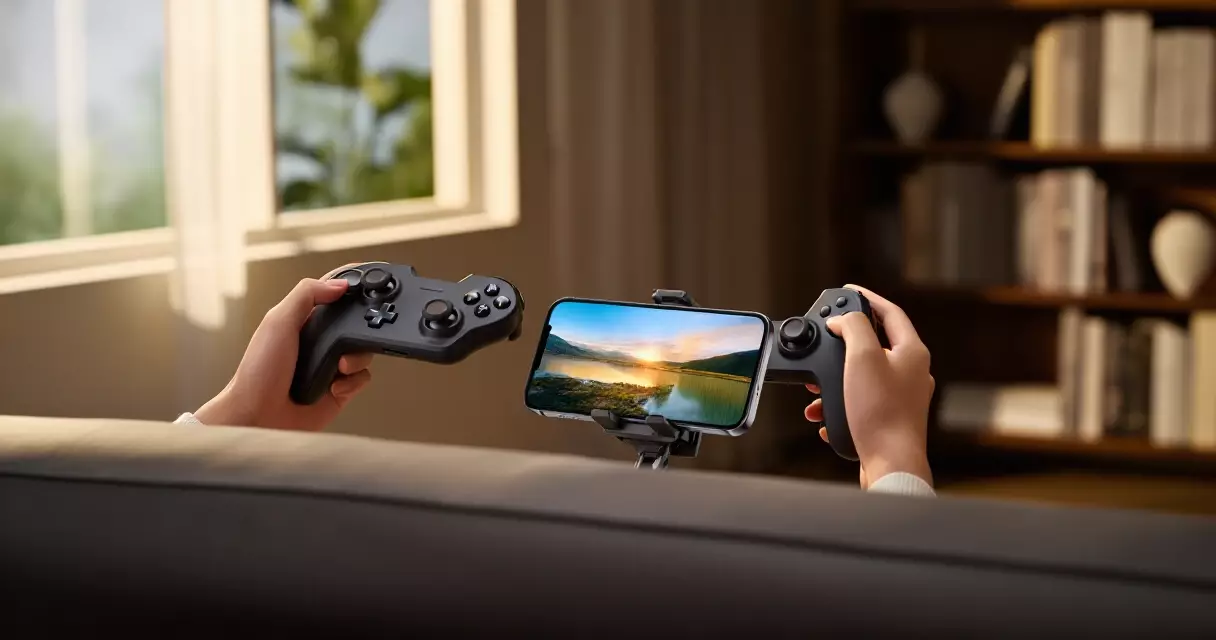
Touchscreen controls remain a compromise for most action genres. A dedicated controller transforms the Android gaming experience. The Razer Kishi V2 Pro is the most popular clip-on controller for Android in 2026, connecting via USB-C and offering near-zero latency with a layout identical to an Xbox gamepad. The GameSir G8 Galileo is a strong alternative that adds hall-effect joysticks (eliminating stick drift) at a lower price point. For those who prefer a standalone controller with Bluetooth, the Xbox Controller in Carbon Black is natively recognised by most Android games and pairs in seconds via Bluetooth 5.2.
| Controller | Connection | Key Feature | Best For |
|---|---|---|---|
| Razer Kishi V2 Pro | USB-C | Zero-latency wired connection, haptics | Cloud gaming, action games |
| GameSir G8 Galileo | USB-C | Hall-effect sticks, no drift | Budget-conscious buyers |
| Xbox Controller (Carbon Black) | Bluetooth 5.2 | Universal compatibility, premium build | Multi-device households |
| Sony DualSense Edge | Bluetooth 5.1 | Adaptive triggers work in select Android titles | PlayStation-ecosystem players |
| Backbone One (USB-C) | USB-C | Compact form, wide app support | Everyday carry gaming |
Optimizing Your Android Device for Gaming Focus
Getting the most out of entertainment gaming focus Android goes beyond picking the right titles. Device-level optimisation can meaningfully improve frame rates and reduce thermal throttling during long sessions. On Samsung Galaxy devices, Game Booster (accessible through the Game Launcher app) lets you set per-game CPU and GPU priority, disable background notifications during play, and monitor temperature in real time. On Pixel phones, Android’s built-in Developer Options include a GPU rendering profiler and strict-mode toggle that advanced users can use to identify bottleneck apps running in the background.
Storage type also matters more than most players realise. UFS 4.0 internal storage, found in flagship 2025 and 2026 Android devices, loads large game assets significantly faster than UFS 3.1 found in budget devices. For titles like Genshin Impact, which regularly push 20GB+ of assets, the difference in level-load times between a UFS 4.0 flagship and a budget device can exceed several seconds per load. Keeping internal storage at least 20% free also prevents Android’s garbage collection from running mid-game, which can cause stutter spikes. For perspective on how serious hardware choices shape the gaming experience, the analysis of gaming PC buying mistakes covers many of the same principles that apply to selecting a high-performance Android device.
Device optimisation is not optional for serious Android gaming — a flagship phone running bloated background processes will underperform a well-tuned mid-range device.
Android Gaming and the Creator Economy
Android gaming does not exist in isolation from the wider entertainment ecosystem. The platform is increasingly central to the creator economy: streamers and content creators produce Android gaming content for YouTube and Twitch, mobile esports events are broadcast globally, and games like Mobile Legends: Bang Bang run professional leagues with prize pools tracked by Esports Earnings in the hundreds of thousands of dollars. If you are interested in how the creator side of gaming is evolving, the site’s coverage of creator economy trends in 2026 examines how crowdfunded and platform-native content is reshaping who makes money from games and how.
Free-to-Play vs. Premium Android Games: Which Should You Choose?
The monetisation model of an Android game shapes the experience as much as the genre does. Free-to-play titles like Genshin Impact, PUBG Mobile, and Clash Royale rely on cosmetic or progression-based microtransactions. Premium titles, such as the Android ports of Stardew Valley, Dead Cells, and GRID Autosport, charge an upfront price with no ongoing monetisation. According to Statista, the vast majority of mobile game revenue comes from free-to-play titles, yet premium games consistently top user satisfaction ratings on the Play Store. The right choice depends on your play style: if you play in short sessions and value social features, free-to-play often works well; if you want a contained, content-complete experience without FOMO mechanics, premium delivers better value per hour.
Subscription services add a third lane. Google Play Pass, priced at around $5 per month as of 2026, offers a curated catalogue of premium games without ads or in-app purchases. Its library includes Alto’s Odyssey, Terraria, Monument Valley 1 and 2, and dozens of other titles that individually would cost more than the monthly fee. For players who want to explore the breadth of Android’s premium catalogue without committing to individual purchases, Play Pass is among the best-value propositions in entertainment gaming. The question of where gaming is heading across platforms, including mobile, is something the ongoing GTA 6 release coverage touches on as Rockstar eyes a mobile strategy alongside its console launch.
Frequently Asked Questions
What are the best Android games for long gaming sessions in 2026?
For sustained entertainment gaming focus Android sessions, Genshin Impact, Diablo Immortal, and PUBG Mobile offer the deepest content loops. Stardew Valley and Dead Cells are excellent premium alternatives that reward patient play. Each of these titles has been consistently updated through 2025 and 2026 and shows no signs of content slowdown.
Does cloud gaming work well on Android phones?
Cloud gaming on Android has improved dramatically. Services like Xbox Game Pass xCloud and GeForce NOW deliver playable experiences on a stable 20 Mbps connection or better. 5G connections in urban areas provide low enough latency for most game genres, though competitive shooters at the highest skill levels may still feel slightly behind a native experience. Wi-Fi 6 at home is the optimal setup for cloud gaming on Android.
Can I use a PlayStation or Xbox controller with my Android phone?
Yes. Both the DualSense (PS5 controller) and Xbox Series controller pair with Android via Bluetooth. Most Android games recognise standard HID controller input natively. The Xbox controller is slightly better supported across the widest range of Android games due to Microsoft’s developer relationships. The DualSense’s adaptive trigger features work in a small but growing number of Android titles.
Is Google Play Pass worth paying for?
For players who regularly buy premium Android games, Google Play Pass at around $5 per month almost certainly pays for itself within a month or two. Its catalogue includes titles like Terraria, Monument Valley 2, and Stardew Valley, which alone would cost more than a month’s subscription. If you primarily play free-to-play games, the value proposition is weaker.
What Android phone is best for gaming in 2026?
Flagship Android gaming in 2026 is best served by devices running the Snapdragon 8 Elite 2 or Dimensity 9400, such as the Samsung Galaxy S26 Ultra, ASUS ROG Phone 9, or OnePlus 13 Pro. The ASUS ROG Phone 9 specifically targets gamers with enhanced cooling, a high-refresh AMOLED display, and dedicated gaming triggers. For mid-range players, the Pixel 9a and Samsung Galaxy A56 provide strong sustained performance at roughly half the flagship price.
Are there any major Android-exclusive games worth playing?
While true Android exclusives are rare, several major titles launched on Android before or without an iOS counterpart. Some regional releases, particularly from Asian developers, arrive on Android globally before expanding. Additionally, Android’s open ecosystem means emulators like RetroArch and Lemuroid give the platform access to a back catalogue of retro titles that iOS restricts. Games built specifically for Android’s flexible aspect ratios and input methods, such as many titles in the strategy and card game genres, also tend to feel more at home on Android than on iOS.
Key Takeaways
Entertainment gaming focus Android in 2026 is defined by three forces: the quality of native titles has caught up to handheld console standards in many genres; cloud gaming services have extended the platform’s reach into AAA PC and console libraries; and Android’s open ecosystem continues to offer flexibility that no other mobile platform matches. Whether you are a casual player looking for a polished free-to-play experience or an enthusiast wanting console-quality gaming in your pocket, Android’s ecosystem in 2026 has a credible answer. The hardware has arrived. The software has followed. The only remaining question is which games deserve your time.
Sources
- Newzoo Global Games Market Report 2026 — retrieved August 4, 2026
- StatCounter Global Stats — Mobile OS Market Share — retrieved August 4, 2026
- Statista — Mobile Gaming Revenue and App Store Data — retrieved August 4, 2026
- Reuters — Pokémon GO Download Milestones Coverage — retrieved August 4, 2026
- Esports Earnings — Mobile Esports Prize Pool Tracker — retrieved August 4, 2026