Summary
✓Reviewed by Laura Bennett In the competitive landscape of modern entertainment, gaming focus has become one of the most discussed topics among players, coaches, and researchers alike. Whether you are grinding ranked matches in Valorant, managing complex builds in Baldur's...
Table of contents
- 1 What Gaming Focus Actually Means for Players
- 2 A Brief History of Focus in Competitive Gaming
- 3 Sleep: The Most Underrated Gaming Focus Tool
- 4 Warm-Up Routines That Actually Sharpen Entertainment Gaming Focus
- 4.1 Cognitive Priming
- 4.2 Physical Priming
- 5 Environment Design for Maximum Gaming Focus
- 6 Break Science: When to Stop to Stay Sharp
- 7 Nutrition and Hydration for Sustained Focus During Gaming Sessions
- 8 Mindfulness and Mental Training for Gaming Focus
- 8.1 Visualization
- 9 Gaming Focus Across Platforms and Genres
- 10 Tools and Hardware That Support Gaming Focus
- 11 Frequently Asked Questions About Gaming Focus
- 11.1 How long should a focused gaming session last before taking a break?
- 11.2 Does caffeine actually help gaming focus?
- 11.3 Can mindfulness meditation genuinely improve in-game performance?
- 11.4 How does sleep deprivation specifically affect gaming performance?
- 11.5 Is gaming focus different for casual versus competitive players?
- 11.6 Do gaming peripherals make a real difference to focus and performance?
- 12 Key Takeaways
- 13 Sources
In the competitive landscape of modern entertainment, gaming focus has become one of the most discussed topics among players, coaches, and researchers alike. Whether you are grinding ranked matches in Valorant, managing complex builds in Baldur’s Gate 3, or competing in an esports tournament, your ability to sustain sharp, deliberate attention directly shapes your performance. According to the American Psychological Association, attentional control is among the most trainable cognitive skills — and the gaming community is increasingly applying that research in practical, structured ways.
What Gaming Focus Actually Means for Players
Gaming focus is not simply “trying harder” or muting your phone. In cognitive science terms, it encompasses three distinct attentional systems: sustained attention (maintaining concentration over time), selective attention (filtering irrelevant stimuli), and executive attention (managing competing demands and switching tasks efficiently). Each matters differently depending on your genre. A first-person shooter demands rapid selective attention and reaction precision. A strategy game like Civilization VII taxes executive attention across dozens of simultaneous decision queues.
Understanding which system you are training helps you choose the right interventions, which is why generic advice — “just focus more” — so rarely produces measurable improvement.
A Brief History of Focus in Competitive Gaming
The study of gaming focus as a distinct field is surprisingly recent. Early esports organizations in the mid-2000s treated performance almost entirely as a mechanical skill problem — better aim, faster hands. It was not until the 2010s, when teams like SK Telecom T1 and Evil Geniuses began hiring sports psychologists, that mental performance entered mainstream esports discourse. By 2019, the Global Esports Federation had published initial wellness frameworks for professional players, and university esports programs began incorporating cognitive training into their curricula. By 2025, according to IEEE Transactions on Games, structured mental performance coaching is now standard practice at roughly two-thirds of top-tier competitive organizations worldwide.
Sleep: The Most Underrated Gaming Focus Tool
No supplement, peripheral upgrade, or practice routine compensates for chronic sleep deficit. PubMed / NCBI research published in 2025 consistently links 8 to 9 hours of sleep to peak reaction time and working memory performance in players aged 16 to 30. Under 6 hours, both choice reaction time and error rates in complex games degrade measurably — findings that hold across multiple peer-reviewed studies in the sleep science literature.
Practical implications for your entertainment gaming routine: maintain a consistent sleep schedule seven days a week (weekend drift undoes the weekday gains), keep your room dark and cool, and avoid high-intensity gaming within 90 minutes of your target sleep time. Blue light from monitors delays melatonin release, which is why many competitive players use night-mode settings or amber-tinted glasses during late evening sessions.
Warm-Up Routines That Actually Sharpen Entertainment Gaming Focus
Professional athletes in traditional sports have long used structured warm-ups to prime motor and cognitive systems before competition. Esports is no different, and the data increasingly backs this. According to IEEE Transactions on Games (2025), approximately 68% of professional esports athletes now follow deliberate warm-up protocols before ranked or tournament play.
Cognitive Priming
Start with 5 to 10 minutes of low-stakes, game-specific activity that gets your eyes and hands calibrating together without the cortisol spike of high-stakes play. In Counter-Strike 2, this means deathmatch or aim_botz maps. In League of Legends, it might be a handful of practice tool sessions practicing last-hitting rhythms. The goal is priming, not grinding — you want gentle engagement, not fatigue before your session begins.
Physical Priming
Five minutes of light movement before sitting down at your station increases cerebral blood flow and reduces the sluggishness associated with going directly from sleep or inactivity into intense cognitive work. Even a short walk, some wrist rotations, and neck stretches matter. If you are a console player settling in for a long entertainment session on your PlayStation 5 Pro, this two-minute routine costs nothing and pays dividends across a multi-hour session.
The highest-performing gamers treat focus as a system to manage, not a muscle to force — and they structure their environment to remove decisions that drain attention before a session even begins.
Environment Design for Maximum Gaming Focus
Your play environment is not passive. Every notification, stray sound, and visual distraction competes for attentional resources. Behavioral researchers refer to this as “attention residue” — the cognitive cost of an interrupted task that lingers even after you return to your game. Managing your environment is, in practical terms, managing your total available attention budget per session.
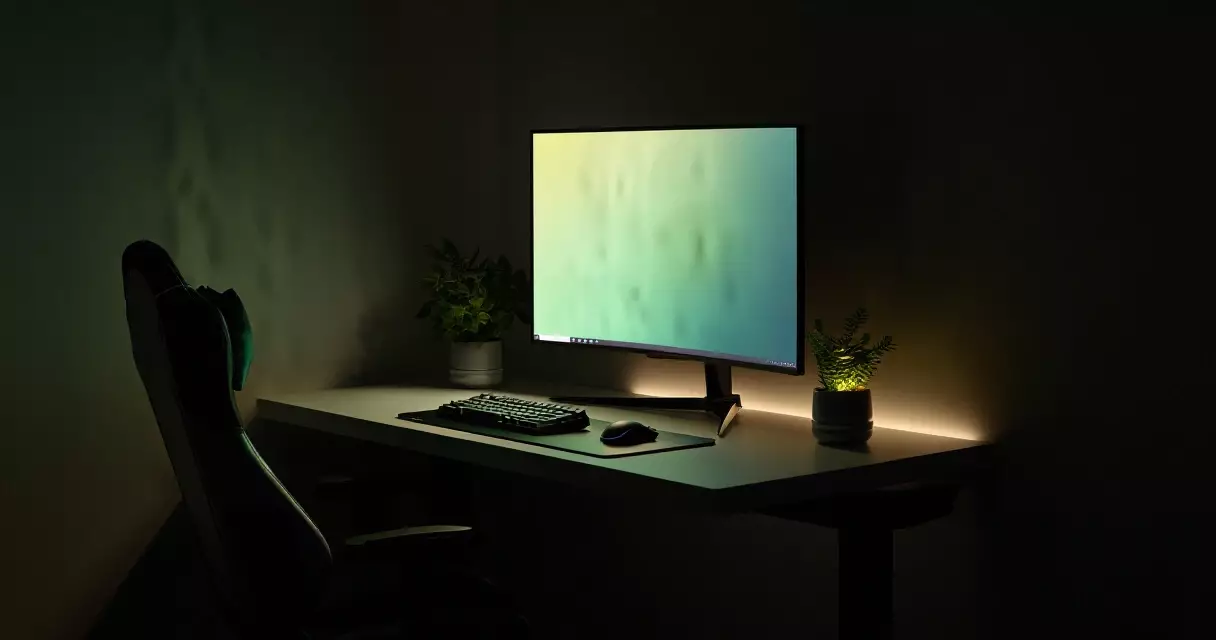
Key environment optimizations used by high-level players include: enabling Do Not Disturb on all devices, using consistent ambient audio (brown noise or lo-fi playlists are popular across streaming communities — you will find many streamers discussing this openly on platforms covered in our Twitch vs. Kick comparison), keeping the play space tidy to reduce visual noise, and using a dedicated chair and desk setup that signals to your brain that this space means focused activity.
Break Science: When to Stop to Stay Sharp
One of the most counterintuitive findings in cognitive performance research is that strategic breaks improve total output compared to marathon sessions. Based on available data from the American Psychological Association‘s cognitive science literature, the sweet spot for sustained attention before meaningful performance degradation falls between 45 and 90 minutes, depending on the individual and task complexity.
For entertainment gaming focus, this translates to: play a focused block of 45 to 60 minutes, then take a 10-minute break that involves standing up, moving, and ideally stepping away from any screen entirely. This is not weakness — it is pacing your cognitive resource expenditure so that hour three of your session is as sharp as hour one.
Nutrition and Hydration for Sustained Focus During Gaming Sessions
The brain accounts for roughly 20% of the body’s total energy expenditure, yet it is one of the last things many gamers think about fueling deliberately. According to PubMed / NCBI nutritional cognition research, even mild dehydration of 1 to 2% of body weight is associated with measurable declines in short-term memory, attention, and psychomotor speed — all critical capacities for competitive and entertainment gaming alike.
Practical guidance grounded in the nutrition science literature:
- Keep water within reach and sip consistently rather than drinking in large volumes infrequently.
- Prefer slow-release carbohydrate snacks (oats, whole grain crackers, fruit) over high-sugar options that spike and crash blood glucose.
- Limit high-caffeine energy drinks during extended sessions — the adenosine rebound after the caffeine clears often produces a sharper mental dip than no caffeine at all.
- A small protein-containing meal 1 to 2 hours before an important session supports steady neurotransmitter availability without the sedative effect of large meal digestion.
Mindfulness and Mental Training for Gaming Focus
Mindfulness practice has moved from the margins of sports psychology to its mainstream. A 2025 peer-reviewed study indexed in PubMed / NCBI found that six weeks of consistent mindfulness meditation practice produced approximately 14% improvement in sustained attention scores among young adults aged 18 to 30 — the core demographic of competitive and entertainment gaming. The mechanism is attentional regulation: mindfulness trains you to notice when your attention has drifted and return it to the target task more quickly, which in-game means catching errors and correcting faster.
You do not need elaborate sessions. Ten minutes of focused breathing using apps like Headspace or Calm is sufficient to produce cumulative benefits over weeks. Several professional esports organizations, including those covered in how-to resources across the competitive gaming media space, now include brief mindfulness protocols in their daily training schedules.
Visualization
Mental rehearsal — vividly imagining executing a specific play, rotation, or strategy before the game — is a well-established technique in sports psychology that transfers meaningfully to gaming. For players preparing for a difficult raid encounter in Final Fantasy XIV or a tournament bracket in Street Fighter 6, pre-session visualization activates the same neural pathways as physical practice, essentially giving you additional low-cost repetitions.
Sleep, breaks, and hydration are not soft skills — they are performance variables with measurable effects on reaction time, decision quality, and error rates, and competitive players at every level now treat them as seriously as mechanical practice.
Gaming Focus Across Platforms and Genres
Entertainment gaming focus is not one-size-fits-all. The attentional demands of a 10-minute mobile session on Pokémon GO differ enormously from a four-hour narrative deep-dive in Elden Ring or a twitchy ranked match in Apex Legends. Understanding this helps you calibrate your preparation accordingly rather than applying identical routines to fundamentally different experiences.
| Game Genre | Primary Attentional Demand | Key Focus Strategy | Typical Session Length |
|---|---|---|---|
| FPS / Battle Royale (Apex Legends, CS2) | Selective attention, reaction precision | Short warm-up drills, break every 45 min | 1–2 hours |
| MOBA (League of Legends, Dota 2) | Executive attention, multi-track monitoring | Pre-session visualization, macro review | 2–3 hours |
| RPG / Narrative (Elden Ring, BG3) | Sustained attention, decision fatigue management | Session goals, deliberate pacing | 2–4 hours |
| Strategy / RTS (StarCraft II, Civ VII) | Executive + divided attention | Clear session objectives, post-session review | 1–3 hours |
| Mobile / Casual (Pokémon GO) | Short-burst selective attention | Minimal prep; avoid multitasking | 10–30 min |
Handheld platforms add a portability dimension worth noting: players on the Steam Deck OLED often play in environments with higher ambient distraction (commutes, common rooms) where selective attention strategies matter even more than in a controlled home setup.
Tools and Hardware That Support Gaming Focus
Hardware choices have a real — if often overstated — effect on cognitive load during play. A monitor with low input lag and a high refresh rate reduces perceptual friction: your brain processes a 144Hz or 240Hz display with less effort than a 60Hz panel during fast-motion sequences. Similarly, a responsive, well-weighted mouse reduces the micro-corrections your motor system must constantly make, freeing attentional resources for decision-making rather than mechanical compensation.
| Hardware Category | Focus-Relevant Spec | Why It Matters for Attention |
|---|---|---|
| Gaming Monitor | Refresh rate 144Hz+, response time ≤ 5ms | Reduces perceptual lag; less cognitive processing load on fast scenes |
| Gaming Mouse | Polling rate 1000Hz+, weight 60–80g | Reduces micro-correction burden, lowers motor fatigue |
| Gaming Headset / Speakers | Positional audio accuracy | Accurate 3D audio reduces mental strain from interpreting ambiguous sound cues |
| Chair / Desk Ergonomics | Lumbar support, monitor at eye level | Physical discomfort degrades sustained attention; proper posture reduces distraction signals |
| Lighting | Bias lighting behind monitor | Reduces eye strain from contrast between bright screen and dark room |
Frequently Asked Questions About Gaming Focus
How long should a focused gaming session last before taking a break?
Based on cognitive science research cited by the American Psychological Association, most players experience measurable attention decline after 45 to 90 minutes of sustained high-concentration play. A practical rule is to take a 10-minute active break (standing, moving, away from screens) after every 45 to 60 minutes of play. This preserves performance quality across longer total sessions rather than degrading progressively through a multi-hour block.
Does caffeine actually help gaming focus?
Caffeine in moderate amounts (roughly 100–200 mg, or one standard cup of coffee) has well-documented short-term attentional benefits. However, high-caffeine energy drinks taken in large quantities during extended sessions often produce more harm than benefit — the crash after adenosine rebounds can impair the back half of a long session more severely than no caffeine at all. Time your caffeine intake to the start of a session and avoid it in the 6 hours before your intended sleep time.
Can mindfulness meditation genuinely improve in-game performance?
Yes, with caveats. A 2025 PubMed-indexed study found approximately 14% improvement in sustained attention scores after six weeks of consistent practice among young adults. In gaming terms, this translates to noticing attention drift and re-engaging faster, reducing tilt spirals, and maintaining decision quality deeper into long sessions. It is not a substitute for mechanical skill practice, but it is a meaningful complement to it.
How does sleep deprivation specifically affect gaming performance?
NIH sleep research (2025) links sub-6-hour sleep to measurable declines in both choice reaction time and working memory — two capacities that underpin almost every in-game decision. Under sleep deprivation, players tend to make more impulsive choices, miss pattern recognition opportunities, and have slower error correction. The effects compound: two or three consecutive nights of poor sleep produce deficits comparable to 24-hour sleep deprivation in some studies.
Is gaming focus different for casual versus competitive players?
The underlying cognitive systems are identical; what differs is the stakes and the depth of preparation warranted. A casual player enjoying a story-driven RPG may need only basic break habits and hydration awareness. A competitive player in a ranked ladder or esports league has more to gain from systematic warm-ups, visualization, and post-session review. Both benefit from sleep hygiene and environment management — those returns are genre- and skill-level-agnostic.
Do gaming peripherals make a real difference to focus and performance?
High-quality peripherals reduce friction and physical fatigue, which frees attentional resources for decision-making. A high-refresh-rate monitor, a well-weighted mouse, and ergonomic seating all reduce the cognitive overhead of compensating for suboptimal tools. However, beyond a competent baseline, the returns diminish sharply. A well-slept, hydrated player on mid-range hardware will outperform a sleep-deprived player on flagship gear in virtually every measurable dimension.
Key Takeaways
Entertainment and gaming focus in 2026 is a well-researched, structured discipline — not a mysterious gift that some players have and others lack. The evidence is clear: sleep quality, deliberate break scheduling, hydration, warm-up routines, and environment design each contribute meaningfully to the attentional resources you bring to every session. Professional esports organizations have treated these variables systematically for several years, and the same principles scale down to every level of play.
- Aim for 8 to 9 hours of sleep consistently, not just before important sessions.
- Take a 10-minute active break every 45 to 60 minutes of focused play.
- Manage your environment proactively — notifications, lighting, ambient noise, and clutter all compete for attention.
- Structured warm-ups (cognitive and physical) are practiced by approximately 68% of professional esports athletes for a reason.
- Six weeks of consistent mindfulness practice can produce measurable attentional gains per peer-reviewed research.
- Match your focus strategy to your genre and session length — no single approach fits all gaming contexts.
Sources
- American Psychological Association — Cognitive Psychology — Retrieved August 4, 2026
- PubMed / NCBI — Mindfulness and Attentional Control Research — Retrieved August 4, 2026
- PubMed / NCBI — NIH Sleep Research and Cognitive Performance — Retrieved August 4, 2026
- IEEE Transactions on Games — Esports Athlete Performance Studies, 2025 — Retrieved August 4, 2026