Summary
✓Reviewed by Laura Bennett Singapore's gaming PC market is on a sharp upward trajectory. According to Deep Market Insights, the segment was valued at approximately USD 0.22 billion in 2024 and is projected to reach USD 0.58 billion by 2033,...
Table of contents
- 1 Why Singapore Is a Strong Market for Gaming PCs
- 2 A Brief History of PC Gaming in Singapore
- 3 Building vs Buying a Gaming PC in Singapore
- 3.1 DIY Builds at Sim Lim Square
- 3.2 Custom Prebuilt Systems
- 4 Gaming PC Singapore: GPU Pricing in September 2026
- 5 Recommended Gaming PC Builds for Singapore Budgets
- 6 Where to Buy a Gaming PC in Singapore
- 6.1 Physical Retail
- 6.2 Online and Custom Integrators
- 7 Key Components to Consider for a Gaming PC in Singapore
- 8 Gaming PC Singapore: Prebuilt System Comparison
- 9 Singapore-Specific Considerations for Gaming PC Buyers
- 10 Gaming PC vs Console vs Handheld in Singapore
- 11 Frequently Asked Questions
- 11.1 How much does a gaming PC cost in Singapore?
- 11.2 Is it cheaper to build or buy a gaming PC in Singapore?
- 11.3 Where is the best place to buy PC parts in Singapore?
- 11.4 Is the RTX 5070 worth buying in Singapore?
- 11.5 Do I need DDR5 for gaming in 2026?
- 11.6 Does Singapore’s climate affect gaming PC performance?
- 12 Key Takeaways for Gaming PC Buyers in Singapore
- 13 Sources
Singapore’s gaming PC market is on a sharp upward trajectory. According to Deep Market Insights, the segment was valued at approximately USD 0.22 billion in 2024 and is projected to reach USD 0.58 billion by 2033, growing at an estimated 11.64% CAGR. Whether you are building your first rig at Sim Lim Square or configuring a custom system through a local integrator, Singapore offers one of Southeast Asia’s most competitive landscapes for gaming PC buyers in September 2026.
Why Singapore Is a Strong Market for Gaming PCs
According to Newzoo’s Singapore market research, 65% of men and 47% of women in Singapore play games on PC, making desktop gaming a mainstream activity rather than a niche pursuit. The city-state’s compact geography, reliable broadband infrastructure, and high household income combine to create an environment where premium gaming hardware sells well. Singapore’s 9% GST applies to all local purchases, but the absence of additional import duties on consumer electronics keeps component pricing competitive with regional neighbours.
The IDC Quarterly Personal Computing Tracker reported that Singapore shipped approximately 216,000 traditional PC units in Q2 2024, though the overall market contracted 7.7% year-over-year at the time. Since then, new GPU launches and the DDR5 transition have renewed upgrade interest heading into late 2026.
A Brief History of PC Gaming in Singapore
Sim Lim Square, which opened in 1987 at 1 Rochor Canal Road, has served as Singapore’s de facto IT hardware hub for nearly four decades. Through the LAN-cafe era of the early 2000s, the rise of Steam, and the shift to high-refresh-rate competitive gaming, the mall’s upper floors have continuously housed independent component shops that define the local DIY-PC culture. Brands like Aftershock PC, founded in Singapore in 2012, and Dreamcore emerged specifically to serve a local audience that wanted custom-configured desktops with proper regional warranty support, filling a gap that international OEMs left open.
Building vs Buying a Gaming PC in Singapore
The first decision any Singapore gamer faces is whether to assemble a DIY build from individual components or order a prebuilt system from a local integrator. Both paths are well-supported locally, and the right choice depends on your priorities.
DIY Builds at Sim Lim Square
According to the Sim Lim Square official directory, the mall’s upper levels host dozens of component retailers including Fuwell, Bizgram, PC Themes, and Cycom on Level 2. Shops like Infinity Computer on Level 4 offer assembly services alongside parts sales. The advantage of Sim Lim is hands-on price comparison and the ability to negotiate, especially when buying multiple components from one shop. However, individual component warranties are handled per-manufacturer, which can be less convenient than a single-vendor warranty.
Custom Prebuilt Systems
Aftershock PC’s Hypergate M starts from S$1,190, while Dreamcore’s entry configurations begin around S$1,400, according to pricing compiled by Best10 Singapore’s 2026 builder comparison. Both offer three-year warranties and standard delivery. The trade-off is a modest premium over DIY component cost in exchange for stress-tested assembly, cable management, and a single point of contact for after-sales support.
For most Singapore buyers, the real question is not whether a gaming PC is worth it, but whether the convenience of a local integrator’s warranty justifies the premium over a Sim Lim Square DIY build.
Gaming PC Singapore: GPU Pricing in September 2026
The graphics card is the single most important component in any gaming PC, and Singapore’s GPU market in September 2026 is defined by the Nvidia RTX 50-series rollout alongside AMD’s Radeon RX 9000-series. Pricing has settled since the initial launch-window markups earlier in the year.
Based on Singapore retailer listings tracked by GPU Prix and HardwareZone Singapore, the following table reflects approximate current Singapore pricing as of September 2026.
| GPU | Approx. Price (SGD) | Target Resolution | VRAM |
|---|---|---|---|
| RTX 5050 | From S$475 | 1080p | 8 GB GDDR6 |
| RTX 5070 | From S$1,085 | 1440p | 12 GB GDDR7 |
| RTX 5070 Ti | From S$1,533 | 1440p / 4K | 16 GB GDDR7 |
| RTX 5080 | S$1,949 – S$2,699 | 4K | 16 GB GDDR7 |
| RTX 5090 | S$4,699 – S$5,999 | 4K Ultra | 32 GB GDDR7 |
Prices vary by board partner and edition. The ASUS TUF Gaming RTX 5090 was listed at S$4,600 on VIIPC Singapore, while the ASUS ROG Astral RTX 5090 reached S$5,699 according to HardwareZone Singapore’s launch pricing roundup. For most gamers targeting 1440p, the RTX 5070 at around S$1,085 to S$1,152 represents the sweet spot for price-to-performance in the current generation.
Recommended Gaming PC Builds for Singapore Budgets
The following build tiers reflect typical Singapore pricing in September 2026, based on local retailer listings and system integrator configurations. All prices include the prevailing 9% GST.
| Build Tier | Budget (SGD) | GPU | Target Use |
|---|---|---|---|
| Entry Gaming | S$1,200 – S$1,500 | RTX 5050 / RX 9060 | 1080p, 60–120 fps |
| Mid-Range | S$1,800 – S$2,200 | RTX 5070 | 1440p, 100+ fps |
| High-End | S$3,000 – S$4,000 | RTX 5080 | 4K, 60–120 fps |
| Enthusiast | S$5,000+ | RTX 5090 | 4K Ultra, content creation |
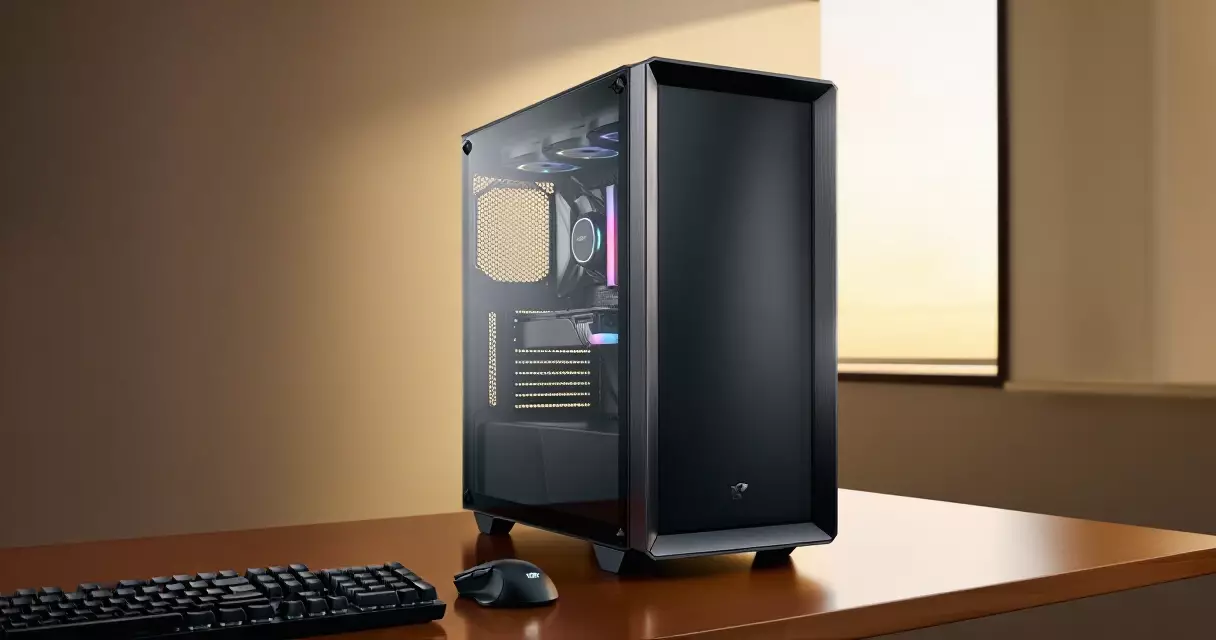
For a mid-range gaming PC in Singapore targeting smooth 1440p performance, expect to allocate roughly S$1,800 to S$2,200. That budget covers an RTX 5070, a current-generation AMD Ryzen 7 or Intel Core Ultra processor, 32 GB of DDR5 RAM, a 1 TB NVMe SSD, and a quality 650W to 750W power supply. If you want a pre-assembled system with similar specifications, Aftershock PC’s Zeal M Level 4X AMD configuration was available at S$1,729 during the CEE 2026 tech show at Suntec, according to HardwareZone Singapore.
Where to Buy a Gaming PC in Singapore
Singapore’s compact retail landscape means you are never far from a gaming PC retailer, whether you prefer to browse in person or order online.
Physical Retail
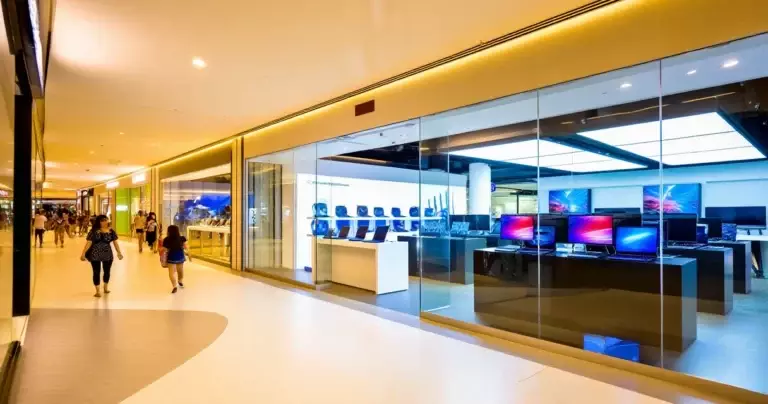
Sim Lim Square at 1 Rochor Canal Road remains the primary destination for DIY components. Level 2 houses most of the dedicated PC component shops. The MSI Concept Store within Sim Lim and the ASUS Store at Funan provide brand-specific showroom experiences with full product lines on display, as noted in a Singapore Malls retail guide. X-treme Solution at Sim Lim Square #02-21 is a specialist gaming peripherals retailer that has served competitive gamers for over a decade.
Online and Custom Integrators
Aftershock PC and Dreamcore both operate fully online configurators where you select each component and receive a turnkey system. Shopee and Lazada list components from both official brand stores and third-party sellers, though buyers should verify seller ratings and warranty terms carefully. For GPU-specific price tracking, GPU Prix provides Singapore-focused historical pricing that helps you time purchases intelligently.
Key Components to Consider for a Gaming PC in Singapore
Beyond the GPU, several component choices significantly affect the value and longevity of your gaming PC build in Singapore’s context.
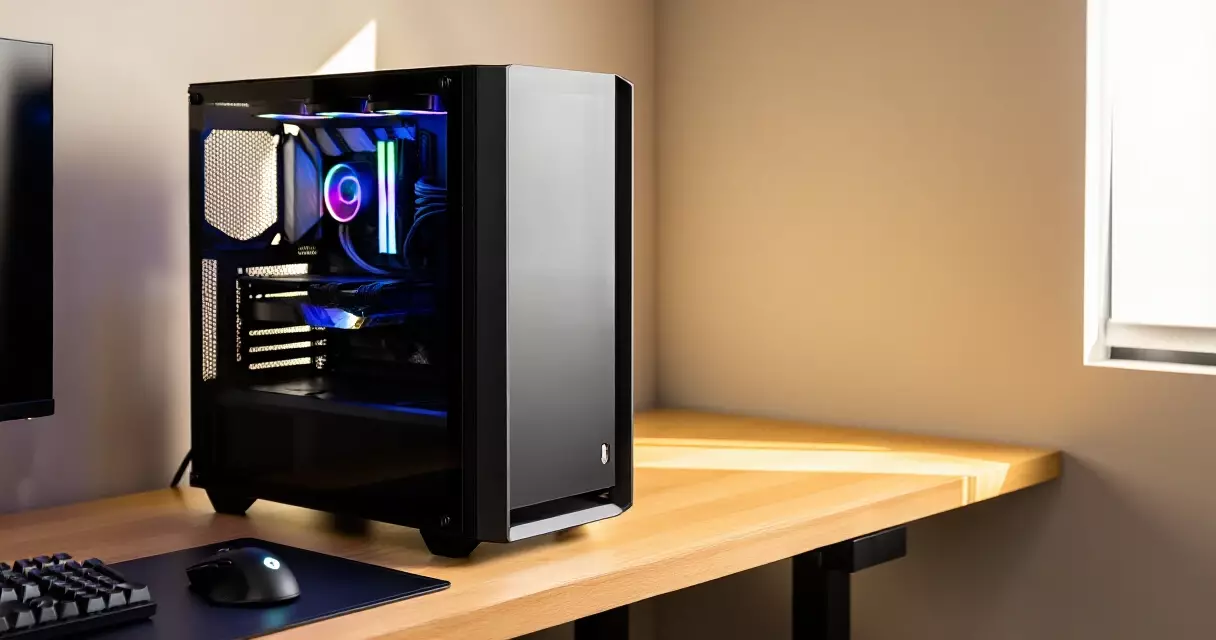
The current CPU landscape is split between AMD’s AM5 platform (Ryzen 9000 series) and Intel’s LGA 1851 platform (Core Ultra 200S series). Both support DDR5 memory exclusively, which means new builds in 2026 are DDR5-only. The AM5 socket offers a longer confirmed upgrade path, while Intel’s platform traditionally provides strong single-threaded performance for games. For most gaming-focused builds, a mid-range six-core or eight-core processor from either brand is sufficient, as modern games are overwhelmingly GPU-bound at higher resolutions. If you are trying to determine whether your setup is limited by the processor or the graphics card, understanding that distinction can help you allocate your budget more effectively.
Storage is straightforward: a 1 TB Gen4 NVMe SSD covers the operating system and a healthy game library, while a secondary 2 TB drive handles overflow. Gen5 NVMe drives exist but offer minimal real-world gaming benefit over Gen4 at current software optimisation levels. Power supply selection has become more important with the RTX 50-series: Nvidia recommends at least an 850W PSU for the RTX 5090, so factor in headroom if you plan to upgrade your GPU within the system’s lifespan.
Gaming PC Singapore: Prebuilt System Comparison
The following table compares the two most prominent Singapore-based custom PC builders, based on pricing and specifications available as of September 2026.
| Feature | Aftershock PC | Dreamcore |
|---|---|---|
| Starting Price | S$1,190 (Hypergate M) | Approximately S$1,400 |
| Warranty | 3 years | 3 years |
| Popular Mid-Range | Zeal M (from S$1,729 at CEE 2026) | Bucky (S$2,770 at CEE 2026) |
| High-End | Explorer Open Loop (S$5,195) | Custom configurations available |
| Delivery | Standard delivery included | Standard delivery included |
| Stress Testing | Included | Included |
Both builders regularly participate in Singapore tech shows like CEE at Suntec Convention Centre, where show-exclusive pricing can reduce costs by 5 to 15% on select configurations. If you are weighing whether to invest in a desktop or a handheld device, the Steam Deck OLED offers a compelling portable alternative, though it cannot match a desktop gaming PC’s raw performance at higher resolutions.
At S$1,729 for a stress-tested RTX 5070 system with a three-year warranty, Singapore’s local integrators have made the price gap between DIY and prebuilt smaller than it has ever been.
Singapore-Specific Considerations for Gaming PC Buyers
Several factors make buying a gaming PC in Singapore distinct from other markets.
The prevailing 9% GST is included in all locally listed retail prices. When importing parts from overseas retailers, purchases above S$400 are subject to GST at the point of import, which can narrow the price advantage of buying from international shops. Singapore does not impose additional tariffs on consumer electronics, so the GST is typically the only tax consideration.
Electricity costs matter for long gaming sessions. Singapore’s residential electricity tariff fluctuates quarterly; a high-end gaming PC drawing 500W under load will add noticeably to monthly utility bills compared to a console or laptop. Choosing efficient components, particularly a high-quality 80 Plus Gold or Platinum rated PSU, helps control ongoing costs.
Internet connectivity is a strength. Singapore’s fibre broadband infrastructure supports low-latency online gaming, and services like MyRepublic’s gaming-optimised plans cater specifically to competitive players. This makes a desktop gaming PC particularly well-suited to Singapore’s connected environment.
Gaming PC vs Console vs Handheld in Singapore
Singapore gamers have more platform choices than ever. A mid-range gaming PC at S$1,800 to S$2,200 costs significantly more upfront than a PlayStation 5 Pro or a Nintendo Switch 2, but it offers advantages in game pricing (Steam sales routinely undercut console digital storefronts), modding support, multi-monitor productivity, and the ability to upgrade individual components over time rather than replacing an entire system.
For gamers who split time between home and travel, handheld PCs like the Steam Deck OLED or ASUS ROG Ally run the same Steam library as a desktop. These devices excel for indie titles and older games but struggle with the latest AAA releases at high settings. A desktop gaming PC remains the best option for anyone who primarily games at home and values visual fidelity and high frame rates. Those interested in the broader console landscape can explore the confirmed Nintendo Switch 2 launch lineup for an alternative perspective.
Frequently Asked Questions
How much does a gaming PC cost in Singapore?
A basic gaming PC capable of 1080p gaming starts from around S$1,200 for a DIY build or S$1,190 from a local integrator like Aftershock PC. A strong 1440p system typically costs S$1,800 to S$2,200, while high-end 4K builds with an RTX 5080 or RTX 5090 range from S$3,000 to well over S$5,000.
Is it cheaper to build or buy a gaming PC in Singapore?
DIY builds from Sim Lim Square are usually 10 to 20% cheaper than equivalent prebuilt systems. However, local integrators include assembly, cable management, stress testing, and a unified three-year warranty. For first-time builders, the cost difference may be worth paying for peace of mind.
Where is the best place to buy PC parts in Singapore?
Sim Lim Square remains the primary physical destination, with shops like Fuwell, Bizgram, and PC Themes on Level 2 offering competitive pricing. Online, Shopee and Lazada list components from official brand stores, while Aftershock PC and Dreamcore provide fully configured systems through their own websites.
Is the RTX 5070 worth buying in Singapore?
At approximately S$1,085 to S$1,152 based on current Singapore retail tracking, the RTX 5070 offers strong 1440p performance with DLSS 4 support and 12 GB of GDDR7 memory. It represents the most popular price-to-performance choice for Singapore gamers who do not need 4K capability.
Do I need DDR5 for gaming in 2026?
Yes, for new builds. Both AMD’s AM5 and Intel’s LGA 1851 platforms require DDR5 exclusively. DDR4 is only relevant if you are upgrading an older system on a legacy platform. DDR5 prices have dropped substantially since its introduction, making 32 GB kits affordable for most gaming PC budgets.
Does Singapore’s climate affect gaming PC performance?
Singapore’s tropical heat and humidity can increase component temperatures. Gaming in an air-conditioned room is strongly recommended, and builds should prioritise cases with good airflow. High-quality thermal paste and at least a tower-style CPU cooler help mitigate the impact of higher ambient temperatures.
Key Takeaways for Gaming PC Buyers in Singapore
The gaming PC market in Singapore is well-served by both a mature DIY component ecosystem centred on Sim Lim Square and increasingly competitive local system integrators. With RTX 50-series GPUs now widely available and DDR5 as the new standard, September 2026 is a solid time to build or buy. Entry-level systems start from around S$1,190, mid-range 1440p builds sit comfortably at S$1,800 to S$2,200, and enthusiast-grade machines with the RTX 5090 push past S$5,000. Factor in Singapore’s 9% GST, plan for adequate cooling in the local climate, and consider whether the convenience of a prebuilt system’s warranty is worth the modest premium over a DIY approach. For gamers exploring related hardware decisions, the OLED monitor burn-in guide covers display considerations that pair naturally with a new desktop build.
Sources
- IDC: Singapore PC Market Q2 2024 Report — retrieved September 11, 2026
- Newzoo: Insights into the Singaporean Games Market — retrieved September 11, 2026
- IMDA: Annual Report and Singapore Digital Economy Report 2025 — retrieved September 11, 2026
- Deep Market Insights: Singapore Gaming PC Market 2025–2033 — retrieved September 11, 2026
- Sim Lim Square Official Directory — retrieved September 11, 2026
- HardwareZone Singapore: RTX 5090 and RTX 5080 Singapore Pricing — retrieved September 11, 2026
- GPU Prix: GeForce RTX 5070 Singapore Price Tracker — retrieved September 11, 2026
- Gigabyte Singapore: GeForce RTX 50 Series — retrieved September 11, 2026