
Summary
✓Reviewed by Laura Bennett The question of PC vs console gaming — which is better for you — has never had a more data-rich answer than it does in August 2026. According to Newzoo's PC & Console Gaming Report 2026,...
Table of contents
- 1 A Brief History: How PC and Console Gaming Evolved
- 2 PC vs Console Gaming: Upfront Cost and Long-Term Value
- 3 Performance and Graphics: Where PC vs Console Gaming Shows the Starkest Difference
- 4 Game Library: Exclusives, Backward Compatibility, and PC vs Console Gaming Breadth
- 5 Ease of Use and Setup: Where Consoles Still Win the PC vs Console Gaming Argument
- 6 Audience Data: Who Actually Chooses PC vs Console Gaming in the US
- 7 Multiplayer, Competitive Gaming, and Online Ecosystems
- 8 PC vs Console Gaming for Specific Player Types
- 8.1 Casual and Family Gamers
- 8.2 Dedicated and Enthusiast Gamers
- 8.3 Content Creators and Streamers
- 9 The Middle Ground: Handhelds and Hybrid Devices
- 10 Frequently Asked Questions About PC vs Console Gaming
- 10.1 Is PC gaming more expensive than console gaming in 2026?
- 10.2 Which platform has better graphics: PC or console?
- 10.3 Are console exclusives worth choosing a console over PC?
- 10.4 Is console gaming better for playing with friends?
- 10.5 Which is better for casual or infrequent gamers?
- 10.6 Will cloud gaming make the PC vs console debate irrelevant?
- 11 Sources
The question of PC vs console gaming — which is better for you — has never had a more data-rich answer than it does in August 2026. According to Newzoo’s PC & Console Gaming Report 2026, based on surveys of more than 73,000 players globally, the combined PC and console market reached $88.3 billion in 2025 — breaking out of a five-year stagnation. PC gaming is growing faster, but consoles still dominate on simplicity and upfront value. The right answer depends entirely on how you play, what you spend, and what you want from your gaming setup.
A Brief History: How PC and Console Gaming Evolved
The rivalry between PC and console gaming stretches back to the early 1980s, when home computers like the Commodore 64 competed directly with the Atari 2600 for living room attention. Through the 1990s and 2000s, consoles — led by Sony’s PlayStation and Nintendo’s various platforms — carved out a mass-market lead built on simplicity and exclusive game franchises, while PC gaming cultivated a dedicated audience drawn to customization, mods, and genres like real-time strategy and MMORPGs. By the 2010s, digital storefronts like Steam on PC and the PlayStation Store and Xbox Marketplace on console transformed how players bought and owned games, narrowing some of the ecosystem gap. Today, as reported by TechSpot’s analysis of the Newzoo 2026 data, PC gaming engagement is growing faster and spreading across more titles than at any prior point in the hobby’s history.
PC vs Console Gaming: Upfront Cost and Long-Term Value
Cost is usually the first factor players consider when weighing PC vs console gaming — and in 2026 the picture is more nuanced than it used to be. Consoles have always had a clear price-of-entry advantage, but hardware inflation has tightened the gap. According to price comparisons published by Shattered.io’s 2026 breakdown, a PS5 now retails at $599.99–$649.99, the Xbox Series X at $649.99–$799.99, and the Nintendo Switch 2 at $449.99–$499.99. A budget gaming PC capable of matching PS5 performance starts around $700–$800 — much closer to a modern console than it was five years ago.
The long-term math, however, tends to favor PC. Console online play requires a paid subscription: PlayStation Plus and Xbox Game Pass Ultimate each run $70–$80 per year, while PC multiplayer for most games is free. PC also offers greater access to deep game sales on platforms like Steam, where historic titles regularly drop to a few dollars. On the other hand, a high-end gaming PC — think an RTX 5080-powered rig — can cost $1,300 to $2,000 or more, an investment that makes sense only for players who want top-tier framerates and settings at 4K or above.
Performance and Graphics: Where PC vs Console Gaming Shows the Starkest Difference
Raw performance is where the PC vs console gaming debate most clearly favors the PC — with an important caveat: only if you spend enough to get there. A mid-to-high-end gaming PC equipped with an NVIDIA GeForce RTX 5070 or AMD Radeon RX 9070 XT can drive games at 1440p or 4K with frame rates well above 60 fps, including with ray tracing enabled. Consoles are designed around fixed hardware targets: the PS5 Pro and Xbox Series X in 2026 both deliver excellent 4K performance, but they cannot be upgraded when more demanding games arrive.
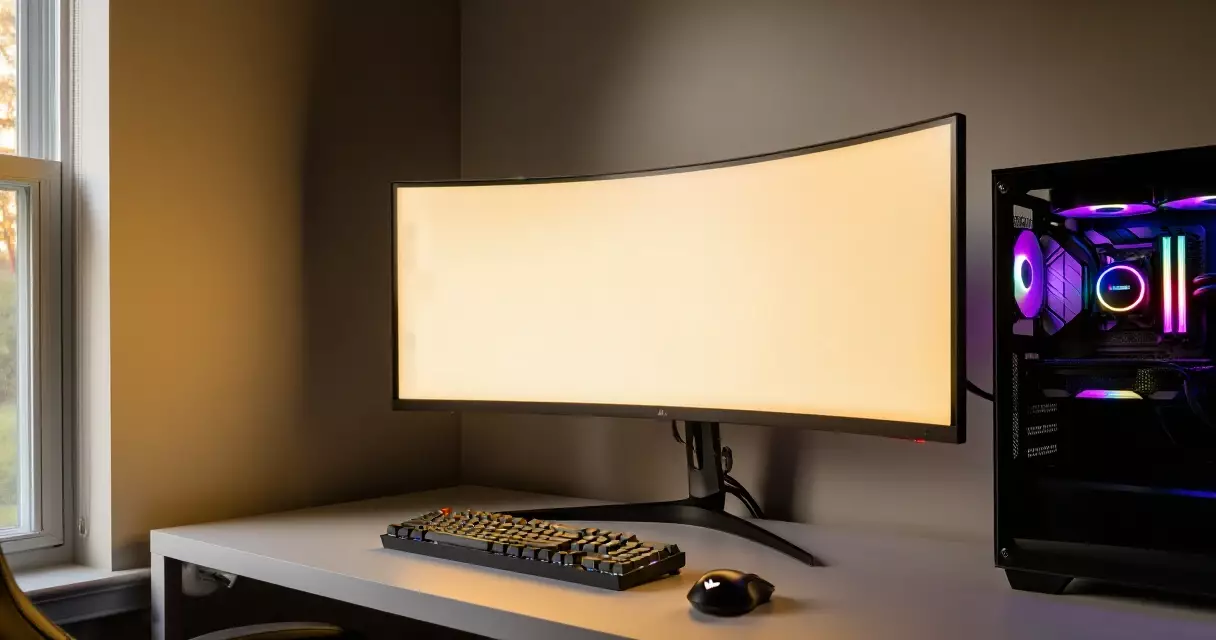
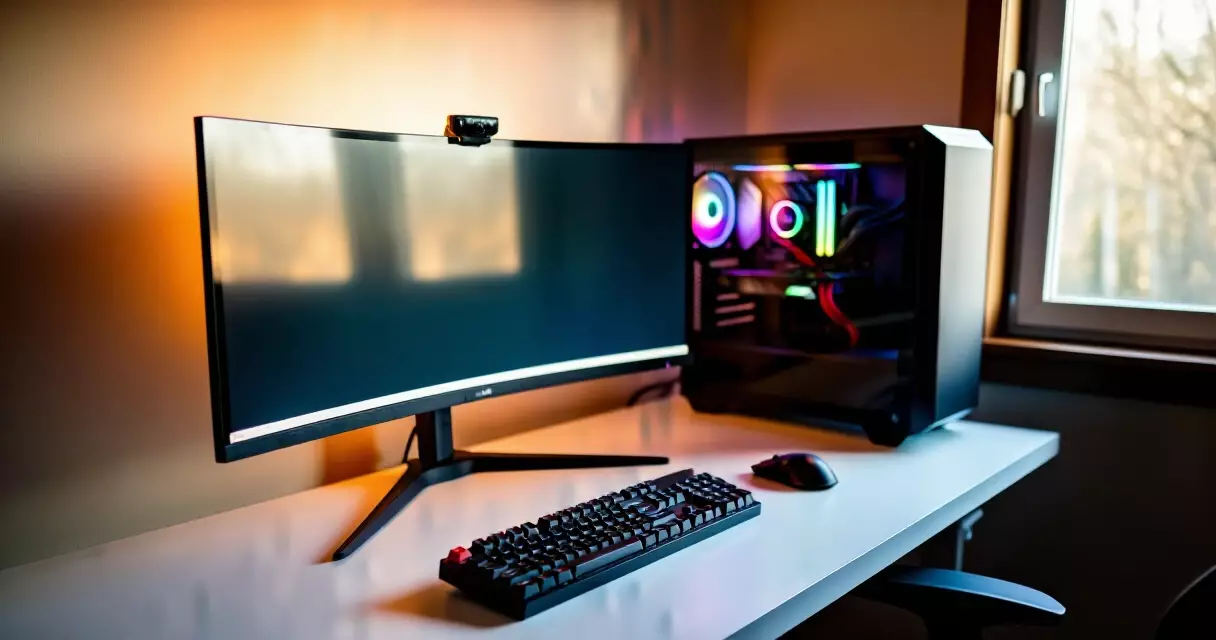
PC also supports a wider range of display technologies — from ultrawide monitors at 21:9 to high-refresh-rate competitive displays at 240 Hz or above. Consoles are optimized for standard 16:9 TVs and, increasingly, 120 Hz displays, but the full range of monitor options is a PC-exclusive advantage. For competitive gaming — titles like Counter-Strike 2, Valorant, or Apex Legends — the ability to push frame rates beyond 60 fps on a high-refresh display is widely considered essential, and that ceiling is much higher on PC.
For a deeper look at where the PS5 Pro lands in that spectrum, our full review breaks down how Sony’s mid-generation upgrade performs against the best PC builds at comparable price points.
Game Library: Exclusives, Backward Compatibility, and PC vs Console Gaming Breadth
Platform exclusives remain one of the most emotionally charged factors in the PC vs console gaming debate. Sony’s PlayStation lineup includes titles like God of War: Ragnarök, Spider-Man 2, and Astro Bot — games unavailable on PC or Xbox at launch. Nintendo’s ecosystem around the Switch 2 features Mario, Zelda, and Pokémon franchises that exist nowhere else. These exclusives are a genuine reason to own a console for players who want those specific experiences.
PC, however, has the broader overall library by a significant margin. Steam alone lists over 70,000 games as of 2026, covering genres that consoles rarely touch deeply: classic point-and-click adventures, deep simulation titles, grand strategy games like Crusader Kings III and Victoria 3, and a massive back catalog of older releases going back decades. PC is also the home of game mods: titles like The Elder Scrolls V: Skyrim, Fallout 4, and Minecraft have active modding communities that extend their lifespan indefinitely.
Backward compatibility is a nuanced area. Xbox Series X|S offers the most robust console backward compatibility, spanning four console generations. PlayStation 5 plays PS4 games reliably. PC, by contrast, can run software from any era — often with fan-made patches or tools like PCSX2 and RPCS3 for emulation — but this sometimes requires technical effort rather than just inserting a disc.
Ease of Use and Setup: Where Consoles Still Win the PC vs Console Gaming Argument
For many players, particularly those new to gaming or gaming with family, the ease-of-use advantage of consoles is decisive. Plug a PS5 or Xbox Series X into a TV, create an account, and you are playing a game within minutes. There are no driver updates, no compatibility checks, no configuration files to edit. Games are tested to run on defined hardware, so crashes and frame-rate issues are far less common than on a PC where thousands of hardware configurations must be accommodated.
PC gaming has improved enormously in accessibility since the early 2010s, with platforms like Steam and the Epic Games Store handling much of the complexity automatically. But driver issues, Windows update conflicts, and the occasional need to verify game files or adjust graphics settings remain part of the experience. Players who want to spend their time playing rather than troubleshooting will generally find consoles less frustrating — at least in the early stages of ownership.
Audience Data: Who Actually Chooses PC vs Console Gaming in the US
American gaming habits in 2026 show that neither platform has a commanding lead in household penetration. According to Plarium’s Newzoo-sourced statistics, 53% of U.S. households reported playing on PC in the past 12 months, compared to 36% for consoles. When looking at individual players aged 8 and older, 47% play on PC and 43% play on console — a much closer split. Generationally, Gen Alpha and Gen Z show the highest console usage at 58%, while PC usage among those groups is 54%.
Globally, the PC audience dwarfs the console audience: Newzoo estimates 936 million PC players in 2025 versus 645 million console players, with PC projected to reach approximately 1.02 billion by 2028. The size of that global PC audience reflects both the lower average cost of entry in emerging markets (where a mid-range laptop doubles as a gaming device) and the long-standing dominance of PC in genres like battle royale, MOBA, and MMORPGs.
| Factor | PC Gaming | Console Gaming |
|---|---|---|
| Entry price (2026) | $700–$800 (budget), $1,300–$2,000+ (high-end) | $449–$649 (Switch 2, PS5, Xbox Series X) |
| Online multiplayer cost | Free for most titles | $70–$80/year (PS Plus, Game Pass) |
| Global player base (2025) | 936 million | 645 million |
| Revenue growth (2025–2028) | 6.6% CAGR | 4.4% CAGR |
| US household penetration | 53% | 36% |
| Setup complexity | Moderate to high | Low |
| Game library size | 70,000+ titles (Steam) | Hundreds to low thousands per platform |
| Hardware upgradability | Yes | No |
Multiplayer, Competitive Gaming, and Online Ecosystems
For competitive and multiplayer gaming, the platform choice carries real consequences. PC gaming dominates esports: Counter-Strike 2, League of Legends, Dota 2, and Valorant — four of the most-watched esports titles in the world — are PC-exclusive or PC-primary. If following or competing in professional esports is part of your gaming identity, PC is essentially the required platform. For a full breakdown of how to watch those events, see our guide to the competitive gaming scene.
Console multiplayer has its own strengths. PlayStation Network and Xbox Live both offer robust online infrastructure with voice chat, party systems, and cross-play support for major titles. Xbox Game Pass Ultimate bundles online access with a rotating catalog of games, offering strong value for players who don’t want to buy individual titles. Cross-play has also reduced some of the platform divide: Fortnite, Call of Duty, and Rocket League all allow PC and console players to compete together, meaning the choice of platform no longer always dictates who you can play with.
For competitive gaming, the ability to push frame rates well beyond 60 fps on a high-refresh display is widely considered essential — and that ceiling is dramatically higher on PC than on any current console.
PC vs Console Gaming for Specific Player Types
Casual and Family Gamers
For households where gaming is a shared, occasional activity — weekend play sessions, family co-op, younger children — consoles offer a better experience. The Nintendo Switch 2 is particularly well-suited to this use case, with local co-op titles like Mario Kart World and family-friendly games that work well on a TV or in handheld mode. Setup is minimal, the controller experience is standardized, and age-rating controls are straightforward to manage.
Dedicated and Enthusiast Gamers
For players who game daily, care about frame rates, enjoy deep strategy or simulation genres, or want to participate in modding communities, PC delivers meaningfully more value over a multi-year period. The investment pays off especially for players who use their machine for other tasks — creative work, productivity, or content creation — since a capable gaming PC doubles as a workstation in ways a console cannot.
Content Creators and Streamers
For players who stream their gameplay or create video content, PC is the clear choice. Software like OBS Studio gives fine-grained control over stream settings, scene composition, and audio routing. Console streaming is possible through capture cards and dedicated apps, but the workflow is more complex and the output typically lower quality. Our guide to Twitch vs Kick creator splits discusses platform monetization — but the hardware equation almost always points to PC for serious streamers.
| Player Type | Recommended Platform | Key Reason |
|---|---|---|
| Casual / family | Console (Switch 2, PS5) | Simple setup, local co-op, family controls |
| Competitive / esports | PC | High frame rates, mouse precision, esports titles |
| RPG / strategy enthusiast | PC | Deep genre coverage, mods, keyboard-and-mouse control |
| Exclusive-focused gamer | Console (PS5 or Switch 2) | Sony / Nintendo franchises unavailable on PC |
| Content creator / streamer | PC | OBS, capture flexibility, dual-use hardware |
| Budget-conscious casual | Console | Lower entry price, no per-game configuration |
The Middle Ground: Handhelds and Hybrid Devices
The PC vs console gaming debate in 2026 is also complicated by a growing middle ground: handheld PCs and hybrid devices. The Steam Deck OLED from Valve occupies a unique position — it is technically a Linux PC running Steam, but it looks and functions like a console in handheld mode. For players who want portability alongside PC-level game access, it is worth considering seriously. Our Steam Deck OLED long-term review evaluates whether it genuinely bridges the divide.
Competitors from ASUS (the ROG Ally X) and Lenovo (the Legion Go S) have added further options in this space, running Windows and offering full access to the PC game library. None of these devices replaces a desktop PC for raw performance or a console for couch-gaming comfort, but they represent a genuine third path that didn’t meaningfully exist before 2023.
The PC vs console gaming debate in 2026 is no longer binary: handheld PCs like the Steam Deck OLED and ASUS ROG Ally X offer a credible third path that combines PC library access with console-style portability.
Frequently Asked Questions About PC vs Console Gaming
Is PC gaming more expensive than console gaming in 2026?
Upfront, yes — a capable mid-range gaming PC starts around $700–$800, matching or slightly exceeding the cost of a PS5 or Xbox Series X. High-end PCs cost $1,300–$2,000 or more. Over five years, however, the absence of mandatory online subscription fees and access to deeper game sales can make PC more cost-effective for frequent players. The long-term value depends heavily on how often you play and whether you pay for console online services.
Which platform has better graphics: PC or console?
A high-end gaming PC with a current-generation GPU like the RTX 5080 or RX 9070 XT will outperform any current console at equivalent settings. However, mid-range PCs in the $700–$900 range perform similarly to the PS5 Pro and Xbox Series X. Consoles are well-optimized for their fixed hardware, so the performance gap varies by game and settings. For the majority of players, both platforms deliver excellent visuals at 4K or 1440p.
Are console exclusives worth choosing a console over PC?
That depends entirely on which exclusives you want. Sony’s PlayStation exclusives — including the God of War series, Marvel’s Spider-Man 2, and Astro Bot — are compelling and not available on PC at launch. Nintendo’s first-party catalog on Switch 2 is similarly unique. If those specific games matter to you, console ownership is justified. Many former PlayStation exclusives do eventually come to PC, but often years after the initial release.
Is console gaming better for playing with friends?
Not necessarily. Cross-play has largely eroded the platform divide for major multiplayer titles — Fortnite, Call of Duty: Black Ops 7, and Rocket League all support cross-platform play between PC and console. The social infrastructure (party systems, voice chat) on PlayStation Network and Xbox Live is polished and easy to use. PC gaming, however, is the default choice for competitive esports titles, where the mouse-and-keyboard input method and high-refresh displays matter for performance.
Which is better for casual or infrequent gamers?
Console. Players who game a few hours per week benefit most from the plug-and-play simplicity of a PS5, Xbox Series X, or Switch 2. There is no hardware configuration, fewer software issues, and the controller experience is immediately accessible. A console will also hold its value as a device for streaming apps, Blu-ray playback, and family entertainment — making it a more versatile household purchase for light gamers.
Will cloud gaming make the PC vs console debate irrelevant?
Possibly in the long term, but not yet. Services like Xbox Cloud Gaming and NVIDIA GeForce NOW allow players to stream high-end games to lower-powered devices, including phones and budget PCs. However, input latency remains a limitation for competitive play, and rural or lower-bandwidth households in the US still face connectivity barriers. Cloud gaming is a supplement to hardware-based gaming in 2026, not a replacement — though the gap is narrowing with each generation of infrastructure investment.
Sources
- Newzoo: PC and Console Market in 2026 (Game Dev Reports) — retrieved August 8, 2026
- TechSpot: The 2026 PC and Console Gaming Report — retrieved August 8, 2026
- Game World Observer: In Two Years, PC Games Will Surpass Console Games in Revenue — retrieved August 8, 2026
- Plarium: PC Gaming vs. Console Gaming — 15 Key Statistics — retrieved August 8, 2026
- Shattered.io: PC Gaming vs Console Gaming 2026 — retrieved August 8, 2026