Summary
✓Reviewed by Laura Bennett What is the 20-20-20 rule for gaming? It is a simple habit endorsed by the American Optometric Association to reduce digital eye strain: every 20 minutes of screen time, look at something roughly 20 feet away...
Table of contents
- 1 What the 20-20-20 Rule Actually Means
- 2 Where the Rule Came From: A Brief History
- 3 Why Gaming Makes Eye Strain Worse Than Most Screen Use
- 4 What the Science Actually Says About the 20-20-20 Rule
- 5 How to Apply the 20-20-20 Rule During Real Gaming Sessions
- 5.1 Practical Techniques for Different Game Genres
- 5.2 Timers and Apps That Help
- 6 The 20-20-20 Rule as Part of a Broader Eye-Health Strategy
- 7 Common Mistakes When Following the 20-20-20 Rule
- 8 Frequently Asked Questions About the 20-20-20 Rule for Gaming
- 8.1 Does the 20-20-20 rule actually work for gaming eye strain?
- 8.2 What if I cannot take a break every 20 minutes during competitive play?
- 8.3 Is 20 feet the exact distance I need to look at?
- 8.4 Should I use the rule when gaming on a handheld like the Steam Deck or Switch 2?
- 8.5 Does the 20-20-20 rule help with dry eyes specifically?
- 8.6 Are there any situations where the 20-20-20 rule is not enough?
- 9 Key Takeaways
- 10 Sources
What is the 20-20-20 rule for gaming? It is a simple habit endorsed by the American Optometric Association to reduce digital eye strain: every 20 minutes of screen time, look at something roughly 20 feet away for 20 seconds. For gamers logging multi-hour sessions on a PS5, a gaming PC, or a Nintendo Switch 2, this micro-habit is one of the lowest-effort tools available to keep eyes comfortable over the long run.
What the 20-20-20 Rule Actually Means
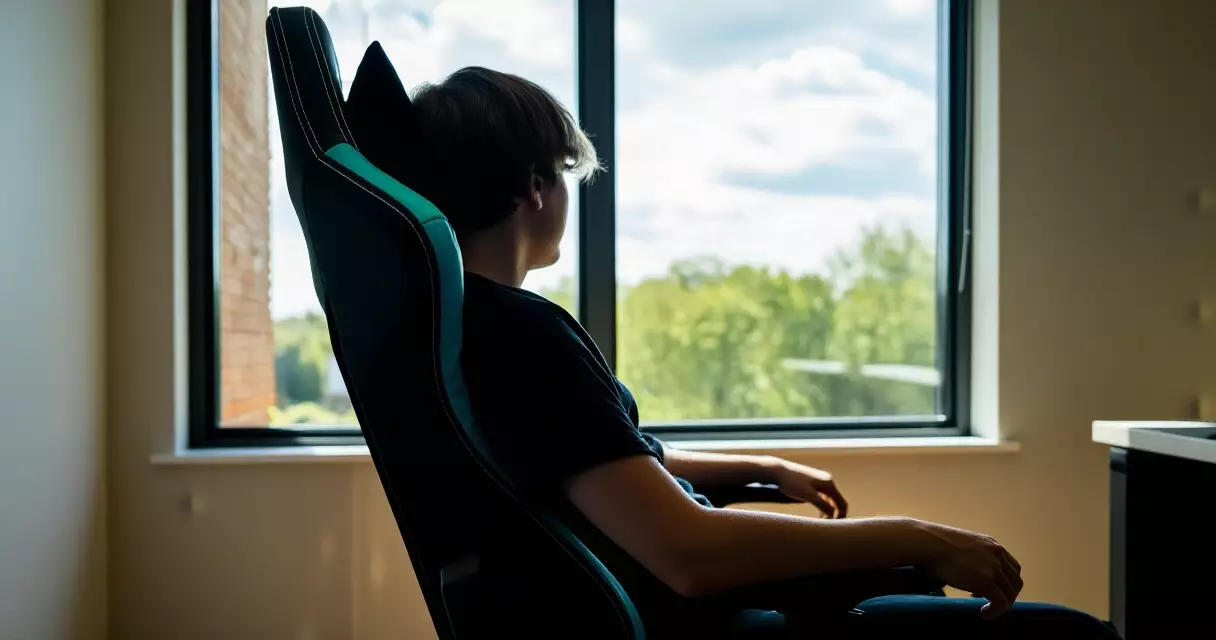
The rule breaks down into three identical numbers: 20 minutes, 20 feet, 20 seconds. Every 20 minutes of uninterrupted screen use, you shift your gaze to an object approximately 20 feet away and hold that focus for 20 seconds. The distance relaxes the ciliary muscles inside the eye that work continuously to maintain sharp focus on a close screen. The 20-second duration gives those muscles just enough time to release tension before you return to the game.
According to the Games Learning Society, the rule is specifically designed to reduce digital eye strain symptoms — including dryness, blurred vision, headaches, and general eye fatigue — that accumulate during prolonged video game sessions.
Where the Rule Came From: A Brief History
The 20-20-20 rule was first proposed by optometrist Jeffrey Anshel in the late 1990s as an easy-to-remember mnemonic for patients experiencing eye fatigue from early computer use. According to a 2023 review published in PubMed, the rule quickly spread through clinical guidance and eye-care organisations despite limited formal clinical trials directly validating the exact numbers. It entered mainstream gamer culture as monitor sizes grew, session lengths increased, and digital eye strain became a recognised occupational and recreational health concern. The American Optometric Association now lists it as a core recommendation within its gaming and digital eye strain guidance.
Why Gaming Makes Eye Strain Worse Than Most Screen Use
Gaming demands a level of visual concentration that most other screen activities do not. You rarely glance away from a fast-moving game the way you might during a video call or a reading session. Blink rates drop — sometimes by as much as half compared to normal waking rates, according to research cited in a 2023 PMC article on the 20/20/20 rule’s evidence base. Reduced blinking means the tear film on the cornea dries out faster, leading to the gritty, burning sensation that most long-session gamers recognise.
Add to that the sustained near focus on a monitor 24 to 28 inches away, high-refresh gameplay that demands split-second visual tracking, and sessions that routinely stretch past two hours, and the ciliary muscles that drive accommodation (the eye’s autofocus mechanism) have very little chance to rest. The 20-20-20 rule directly targets that sustained near-focus load by forcing a shift to distance vision at regular intervals.
What the Science Actually Says About the 20-20-20 Rule
The rule’s popularity has outrun the clinical evidence for its exact parameters. A 2023 peer-reviewed study in PubMed directly examined whether the 20-second break, 20-minute interval, and 20-foot distance are scientifically justified. Its conclusion was cautious: while the general principle of taking regular breaks from near work is well-supported, the specific numbers in the rule are not strongly validated by controlled clinical trials. The authors noted that 20 seconds of looking at distance “does not have strong evidence as a therapeutic intervention for digital eye strain” when treated as a standalone treatment.
A separate PMC review from 2023 calculated that in an eight-hour computer session, following the rule exactly would produce only about eight minutes of total distance-viewing time — a small fraction of overall session time. The researchers characterised the rule as a useful habit and memory aid rather than a therapeutic protocol with precise dosing requirements.
The practical takeaway: the numbers are a mnemonic, not a medical prescription. Using them as a rough rhythm is sensible; obsessing over exact timing is not necessary. What matters is the underlying behaviour — breaking sustained near focus regularly.
The numbers in the 20-20-20 rule are a mnemonic, not a medical prescription — the real value is in building the habit of breaking sustained near focus at all.
How to Apply the 20-20-20 Rule During Real Gaming Sessions
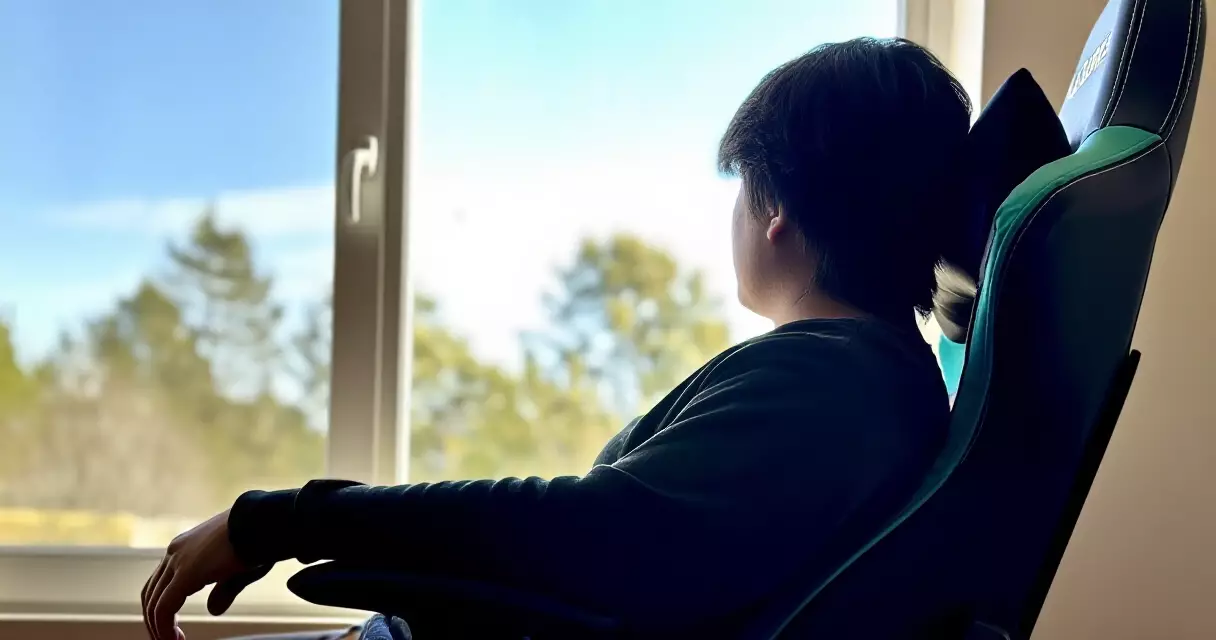
The biggest practical challenge is that the rule asks you to interrupt a game every 20 minutes, which is often impossible during active play. Guidance published by KTC Play’s gaming eye-care blog in June 2026 offers a sensible adaptation: treat the rule as a flexible rhythm rather than a hard timer, using natural gameplay pauses — matchmaking queues, loading screens, death/respawn moments, cutscenes, and round transitions — as your 20-second windows. This means you are not stopping mid-fight or interrupting a ranked match; you are redirecting attention that would otherwise be idle anyway.
Practical Techniques for Different Game Genres
| Game Genre | Natural Break Opportunity | What to Do |
|---|---|---|
| Battle Royale (Fortnite, Apex Legends) | Spectating after elimination, lobby wait | Turn away from monitor, focus on far wall for 20 sec |
| MOBA / Team Fight Tactics | Shop / planning phase, respawn timer | Look out a window or at a distant object |
| Single-Player RPG / Open World | Fast-travel loading, inventory management | Close eyes briefly or look to the far side of the room |
| Fighting Games (SF6, Tekken 8) | Round end screen, character select | Shift gaze past the monitor to any distant point |
| Handheld / Mobile (Steam Deck, Switch 2) | Auto-saves, menu navigation | Hold device down and look up at something far away |
Timers and Apps That Help
If you find it hard to track 20-minute intervals mentally, purpose-built timers exist for exactly this use case. NowDo20 (nowdo20.com) is a free browser-based tool designed specifically for gamers that fires a reminder every 20 minutes without requiring any download. Windows 11’s built-in Focus Sessions feature in the Clock app can be configured to alert at custom intervals. On macOS, the accessibility feature “Screen Time” notifications and third-party apps like Time Out offer similar functionality. For console-only players, a simple phone timer set on repeat is the most friction-free option.
The 20-20-20 Rule as Part of a Broader Eye-Health Strategy
Current eye-care guidance consistently frames the 20-20-20 rule as one component of a larger prevention plan, not a complete solution on its own. The American Optometric Association’s gaming and digital eye strain page pairs it with recommendations for screen distance (roughly arm’s length), room lighting that reduces glare on the monitor, and annual comprehensive eye exams. The following comparison shows how the rule fits relative to other common interventions:
| Intervention | Targets | Cost | Evidence Level |
|---|---|---|---|
| 20-20-20 rule | Ciliary muscle fatigue, dry eyes | Free | Moderate (general break evidence strong; exact numbers less so) |
| Proper screen distance (arm’s length) | Focal strain, posture | Free | Strong (AOA clinical recommendation) |
| Anti-reflective / blue-light glasses | Glare, scattering light | $30–$200+ | Mixed (anti-reflective has better evidence than blue-light filtering alone) |
| Lubricating eye drops | Dry eye symptoms | $8–$25 | Strong for symptom relief (clinically validated) |
| Room lighting adjustment | Glare, contrast fatigue | Free–low | Moderate (AOA guidance) |
Common Mistakes When Following the 20-20-20 Rule
The rule is simple, but several easy misapplications reduce its effectiveness. These are the most frequent errors gamers make:
- Looking at another screen: Glancing at your phone during a 20-second break does not count. Your eye needs to refocus at distance — a phone held 12 inches away keeps the ciliary muscles contracted.
- Closing your eyes instead of looking far: Closing your eyes is restful but it does not exercise the distance-accommodation reflex. Look at something genuinely far away.
- Skipping the break if eyes feel fine: The strain that accumulates over a long session often is not felt until after the session ends. Consistent micro-breaks prevent buildup rather than treating symptoms after they appear.
- Using 20-20-20 as an excuse to skip longer breaks: The rule covers micro-breaks. Most eye-care guidance also recommends a 10 to 15 minute full break after roughly every two hours of continuous gaming.
- Ignoring the room environment: If your monitor is directly in front of a bright window, glare will undermine any break benefit. The AOA recommends positioning screens to minimise reflected light.
Looking at your phone during a 20-second break is the most common mistake — your ciliary muscles stay contracted, and the whole point of the rule is lost.
Frequently Asked Questions About the 20-20-20 Rule for Gaming
Does the 20-20-20 rule actually work for gaming eye strain?
The general principle of taking regular breaks from near work is well-supported by eye-care research. However, a 2023 PubMed review found that the specific 20-second duration is not strongly validated as a therapeutic intervention in isolation. The consensus among eye-care professionals, including the American Optometric Association, is that the rule is a low-risk, practical habit worth following — even if the exact numbers are a mnemonic rather than a clinically precise dose.
What if I cannot take a break every 20 minutes during competitive play?
You do not need to interrupt an active match. Use the natural downtime built into almost every game — loading screens, respawn timers, lobby waits, round-end screens — as your 20-second window. Per updated gaming guidance from KTC Play (June 2026), treating the rule as a flexible rhythm rather than a rigid alarm significantly improves long-term adherence without disrupting gameplay.
Is 20 feet the exact distance I need to look at?
No. Twenty feet is an approximation that ensures the focal distance is beyond the range where your eyes must actively accommodate (adjust focus). In a typical room, looking at any object on the opposite wall or through a window to the outdoors achieves the same effect. The important thing is that the object is far enough away that your ciliary muscles can fully relax.
Should I use the rule when gaming on a handheld like the Steam Deck or Switch 2?
Yes, and it may matter even more on handhelds. Handheld screens are typically held closer than a desktop monitor — often 12 to 18 inches — which increases the near-focus demand on the ciliary muscles. During any loading or menu pause, set the device down and look across the room. If you want a deeper look at handheld gaming performance, the Steam Deck OLED long-term review covers extended play comfort in detail.
Does the 20-20-20 rule help with dry eyes specifically?
Indirectly, yes. Taking a 20-second break tends to trigger more frequent blinking, which redistributes the tear film across the cornea. However, if dry eyes are a persistent problem during gaming sessions, lubricating eye drops (artificial tears) are the more directly validated intervention. The 20-20-20 rule addresses the focusing muscle fatigue aspect; dry eye management may require a separate step.
Are there any situations where the 20-20-20 rule is not enough?
Yes. The rule is a preventive micro-habit, not a treatment for existing eye conditions. If you experience persistent eye pain, significant blurred vision that does not clear after rest, frequent headaches behind the eyes, or double vision during or after gaming, those symptoms warrant a comprehensive eye exam rather than a self-managed break schedule. The American Optometric Association recommends regular eye exams for all heavy screen users regardless of whether they are following the 20-20-20 rule.
Key Takeaways
- The 20-20-20 rule means looking at an object about 20 feet away for 20 seconds every 20 minutes of gaming — endorsed by the American Optometric Association as part of a digital eye strain prevention plan.
- The numbers are a practical mnemonic: clinical research (PubMed 2023) confirms the general principle of break-taking is well-supported, while the exact figures are approximations rather than clinically precise doses.
- For gaming specifically, use natural gameplay pauses (loading screens, respawn timers, lobby waits) as your break windows rather than interrupting active play.
- The rule works best alongside proper screen distance, good room lighting, and longer breaks every two hours — not as a standalone fix.
- Persistent symptoms like ongoing blurred vision, eye pain, or headaches during gaming are signals to see an optometrist rather than relying on self-managed habits alone.
Sources
- American Optometric Association — Gaming and Digital Eye Strain — retrieved August 7, 2026
- PubMed — 20-20-20 Rule: Are These Numbers Justified? (2023) — retrieved August 7, 2026
- PMC / NCBI — The 20/20/20 Rule: Practicing Pattern and Associations (2023) — retrieved August 7, 2026
- Games Learning Society — What Is the 20-20-20 Rule in Video Games? — retrieved August 7, 2026
- KTC Play — Adapt the 20-20-20 Rule for Gaming (June 2026) — retrieved August 7, 2026