Summary
✓Reviewed by Laura Bennett Singapore's streaming and creator culture fits a very specific mould: a compact, hyper-connected market where per-capita digital spending ranks among the highest in Asia, yet where the real prize for creators is the 650 million-person Southeast...
Table of contents
- 1 Why Singapore Is a Natural Fit for Streaming and Creator Culture
- 2 A Brief History: From MDA to IMDA and the Creator Economy
- 3 Which Platforms Drive Streaming and Creator Culture in Singapore
- 3.1 YouTube and Long-Form Video
- 3.2 TikTok and Short-Form
- 3.3 Livestreaming and Live Commerce
- 4 How Streaming & Creator Culture Fits Singapore’s Digital Economy Policy
- 5 Monetisation Models That Actually Work in Singapore
- 6 Gaming Creators and the Streaming & Creator Culture Fits Opportunity
- 7 The Professionalisation of Creator Culture: Skills, Analytics, and IP
- 8 VTubing, Podcasting, and Niche Formats That Fit Singapore’s Creator Culture
- 9 Frequently Asked Questions
- 9.1 What does “streaming and creator culture fits” mean in the Singapore context?
- 9.2 Which platforms are most important for Singapore-based creators in 2026?
- 9.3 How does IMDA support content creators in Singapore?
- 9.4 Can gaming creators build a sustainable career in Singapore’s creator economy?
- 9.5 What role does live commerce play in Singapore’s creator economy?
- 9.6 Is the VTubing format a good fit for Singapore creators?
- 10 Key Takeaways
- 11 Sources
Singapore’s streaming and creator culture fits a very specific mould: a compact, hyper-connected market where per-capita digital spending ranks among the highest in Asia, yet where the real prize for creators is the 650 million-person Southeast Asian audience that lies just beyond the city-state’s borders. As of September 2026, the intersection of platform growth, government-backed talent development, and regional live-commerce expansion is reshaping what it means to build a sustainable career in content here.
Why Singapore Is a Natural Fit for Streaming and Creator Culture
At first glance, Singapore seems like an unlikely centre of gravity for streaming and creator culture. Its population of roughly 5.9 million is modest by regional standards, and the domestic audience alone cannot sustain most full-time creator careers. Yet that limitation is, paradoxically, one of the reasons the streaming and creator culture fits so well here: Singapore-based creators are forced from the start to think regionally, to work across languages, and to build monetisation strategies that do not rely solely on ad revenue from a single platform in a single market.
The infrastructure is also unusually strong. Singapore ranks among the top countries globally for internet speed, digital payment penetration, and smartphone adoption — all prerequisites for the kind of live commerce, subscription, and affiliate-driven revenue models that define professional creator work in 2026.
A Brief History: From MDA to IMDA and the Creator Economy
Singapore’s media sector has been deliberately shaped by government policy for decades. The Media Development Authority (MDA) was established to grow the industry systematically; by 2005, the media sector’s contribution to GDP had risen to a projected 1.54%, up from 1.42% in 2004, with an estimated 38,156 people employed in the sector, according to the IMDA’s archived MDA report. When MDA merged with the Infocomm Development Authority to form the Infocomm Media Development Authority (IMDA) in 2016, the mandate broadened to include the digital economy — and with it, the emerging creator class.
By December 2021, IMDA was actively partnering with YouTube and creative service providers such as Titan and KOBE to train local content creators in audience engagement, content marketing, and data analytics. This was not incidental: it reflected a policy conviction that individual creators, not just broadcasters and studios, were now a meaningful part of Singapore’s media value chain.
Which Platforms Drive Streaming and Creator Culture in Singapore
Platform choice is one of the first practical questions any creator in Singapore must answer, and the answer has become more complex as the ecosystem matures. According to industry intelligence from MCN Singapore, the dominant platforms for Singapore creators in 2026 are YouTube, TikTok, Instagram, podcasts, and livestreaming services — with commercial models spanning sponsorships, affiliate campaigns, live commerce, and licensing.
YouTube and Long-Form Video
YouTube remains the anchor platform for creators building durable, search-discoverable libraries. Its ad-revenue model rewards evergreen content, and its partnership with IMDA — which included a formal creator capability programme — has given Singapore-based YouTubers access to training in analytics and audience development that many markets lack. For gaming and entertainment creators specifically, YouTube’s dual role as video host and search engine makes it indispensable.
TikTok and Short-Form
TikTok’s regional headquarters are in Singapore, which has practical implications: creators here often get earlier access to monetisation features, creator funds, and brand partnership programmes than counterparts in other Southeast Asian markets. Short-form video on TikTok and Instagram Reels suits the kind of bilingual, culturally agile content that Singapore creators naturally produce.
Livestreaming and Live Commerce
Livestreaming is arguably the most structurally significant channel for the creator economy in Southeast Asia. The Straits Times reported in 2021 that a single Thai creator generated more than 250,000 orders in a three-hour Facebook live-selling session — illustrating the scale that live commerce can reach across the region. Singapore’s role as a financial and logistics hub means that creators who master live commerce here can connect directly to fulfilment infrastructure serving the broader region. 17Live’s listing on the Singapore Exchange via a SPAC transaction further signalled the sector’s maturation.
How Streaming & Creator Culture Fits Singapore’s Digital Economy Policy
Government alignment is not a minor footnote — it is one of the defining reasons streaming and creator culture fits Singapore so durably. IMDA’s Talent Accelerator Programme is designed to develop Singapore’s media industry talent, grow original IPs, and expand global partnerships — objectives that map almost exactly onto the ambitions of professional creators. The programme targets not hobbyists but media professionals who want to scale.
According to the Singapore Creative Industry statistics compiled by worldmetrics.org, Singapore’s creative economy contributed SGD 45.6 billion to GDP in 2022, accounting for 5.5% of total GDP, with digital media being the largest subsector at SGD 18.2 billion. Creative industries grew at a compound annual growth rate of 3.2% from 2019 to 2022, outpacing the overall economy’s 1.8% CAGR during the same period.
This policy environment also covers intellectual property protections, content licensing frameworks, and cross-border co-production agreements — all of which matter to creators who want to monetise their work beyond the domestic market. For gaming and entertainment creators in particular, Singapore’s IP regime is a genuine competitive advantage compared with other Southeast Asian hubs.
Monetisation Models That Actually Work in Singapore
Creator monetisation in Singapore has diversified substantially from the early era of pure ad-revenue dependency. Based on MCN Singapore’s 2026 market intelligence and IMDA’s published creator initiatives, the most viable commercial models as of September 2026 are:
| Monetisation Model | Typical Revenue Source | Best Platform Fit | Regional Scalability |
|---|---|---|---|
| Brand sponsorships | Fixed-fee or CPM deals with brands | YouTube, Instagram, podcasts | High — regional brands seek SGP creators |
| Affiliate marketing | Commission on referred purchases | All platforms | Medium — depends on cross-border e-commerce infrastructure |
| Live commerce | Product sales during live streams | TikTok Shop, Shopee Live, 17Live | Very high — SEA market is live-commerce-native |
| Subscriptions / memberships | Recurring fan payments | YouTube Memberships, Patreon | Medium — requires English or bilingual content |
| Content licensing | IP sales or syndication fees | Platform-agnostic | High — supported by Singapore’s IP framework |
Singapore’s creator economy is not built on the domestic audience alone — it is built on using Singapore as a launchpad for Southeast Asia, where live commerce, multilingual content, and regional brand relationships converge.
Gaming Creators and the Streaming & Creator Culture Fits Opportunity
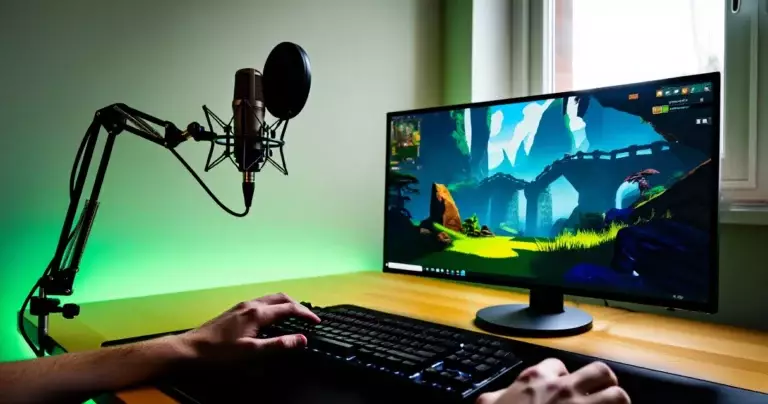
For gaming creators specifically, Singapore’s streaming and creator culture fits an especially productive pattern. The country hosts a disproportionate number of esports organisations, game publishers’ regional offices, and gaming events — giving gaming content creators access to exclusive previews, developer interviews, and tournament coverage that creators in other markets cannot easily replicate.
Titles like the ones covered across The Play Journal — from Nintendo Switch 2 exclusives to the ongoing GTA 6 ecosystem — generate the kind of sustained search demand that gaming creators can build evergreen libraries around. A gaming creator based in Singapore who covers both the global release calendar and regional gaming culture (including Southeast Asian mobile gaming, which is enormous) is positioned to serve audiences that no single-market creator can reach. You can read more about the platforms shaping gaming in the region in our Twitch vs Kick creator splits 2026 breakdown.
The Professionalisation of Creator Culture: Skills, Analytics, and IP
One of the clearest trends in Singapore’s creator ecosystem in 2026 is professionalisation. The era of hobbyist creators stumbling into income has given way to a more structured model in which the most successful creators operate like small media businesses — with audience analytics dashboards, content calendars, licensing agreements, and diversified revenue stacks.
IMDA’s 2021 creator capability initiative named audience growth, monetisation strategy, and data analytics as the three core skill areas for sustainable creator careers. Those priorities have only intensified since: platform algorithm complexity has increased, brand expectations for creator-side reporting have risen, and audience fragmentation across short-form, long-form, and live formats means creators must make deliberate choices about where to invest their production time.
| Creator Skill Area | Why It Matters in 2026 | Key Resource |
|---|---|---|
| Audience analytics | Algorithm complexity demands data-driven decisions on publishing cadence and format | YouTube Studio, TikTok Analytics, Chartable (podcasts) |
| IP strategy | Singapore’s IP framework enables licensing; creators who understand their rights earn more | IMDA creator resources, IP Singapore |
| Live commerce execution | SEA’s live-selling culture rewards technical production quality and audience trust | TikTok Shop Academy, Shopee Live tutorials |
| Cross-platform distribution | Audience fragmentation means no single platform captures the full addressable market | Creator management agencies (MCN Singapore) |
| Brand partnership negotiation | Sponsorship rates have standardised; creators who understand CPM benchmarks earn fairer deals | IAB SEA rate cards, agency benchmarks |
VTubing, Podcasting, and Niche Formats That Fit Singapore’s Creator Culture
Beyond the mainstream platforms, several niche formats have found an unusually strong footing in Singapore. VTubing — live streaming using animated virtual avatars — has grown significantly as a format, with Singapore-based VTubers carving out bilingual audiences across English and Mandarin. The Play Journal has covered the evolution of VTubing in depth, tracking how the format moved from a niche Japanese export to a mainstream entertainment category with real commercial infrastructure.
Podcasting has similarly matured. Singapore’s English-speaking, globally connected professional class represents an ideal podcast audience — educated, high-income, and commute-heavy. Gaming podcasts, in particular, have grown alongside the broader creator economy: shows covering game reviews, industry news, and developer interviews can attract sponsorships from hardware brands, game publishers, and gaming peripheral companies in ways that pure video channels cannot always access.
The streaming and creator culture fits Singapore not despite its small domestic market, but because of it — creators here build for the region from day one, which produces more durable, scalable content businesses than domestic-only strategies allow.
Frequently Asked Questions
What does “streaming and creator culture fits” mean in the Singapore context?
In Singapore, the phrase refers to how the local market conditions — strong digital infrastructure, government support via IMDA, regional platform presence, and high per-capita digital spending — align with the requirements for building a sustainable streaming or content creator career. Unlike markets where creator culture developed organically with no institutional support, Singapore’s creator ecosystem has been actively shaped by policy, platform partnerships, and talent programmes since at least 2021.
Which platforms are most important for Singapore-based creators in 2026?
According to MCN Singapore’s 2026 market intelligence, the dominant platforms are YouTube, TikTok, Instagram, podcasting platforms, and livestreaming services. The right mix depends on content type: long-form educational or gaming content suits YouTube; entertainment and lifestyle content performs well on TikTok and Instagram Reels; live commerce thrives on TikTok Shop, Shopee Live, and dedicated livestreaming platforms like 17Live.
How does IMDA support content creators in Singapore?
IMDA supports creators through formal training partnerships (including with YouTube, and agencies such as Titan and KOBE), talent accelerator programmes designed to develop original IP and global partnerships, and research into the media value chain. The agency also maintains a broader digital economy framework that covers IP protections, content licensing, and co-production support — all of which benefit professional creators who want to commercialise their work internationally.
Can gaming creators build a sustainable career in Singapore’s creator economy?
Yes, particularly those who position themselves for both global and regional audiences. Singapore’s gaming creator ecosystem benefits from the country’s role as a hub for game publishers’ regional offices and esports events, giving local creators access to exclusive content opportunities. The key is diversifying revenue beyond platform ad revenue — gaming creators who combine sponsorships, affiliate deals for hardware or game sales, and live commerce partnerships are best positioned for longevity.
What role does live commerce play in Singapore’s creator economy?
Live commerce is one of the fastest-growing creator revenue channels in Southeast Asia, and Singapore is well-positioned to benefit. The Straits Times reported in 2021 that regional live commerce scale can reach hundreds of thousands of orders in a single session. Singapore’s logistics infrastructure and TikTok’s regional headquarters here mean that creators who develop live-selling skills can connect directly to a market of several hundred million potential buyers across Southeast Asia.
Is the VTubing format a good fit for Singapore creators?
VTubing fits Singapore’s creator culture well for several structural reasons: the format suits bilingual content (English and Mandarin) that reaches both local and regional audiences, it reduces the production overhead associated with traditional live-streaming (no camera required), and it has attracted genuine commercial infrastructure including sponsorships, merchandise, and concert-style live events. Singapore’s gaming and anime communities provide a natural domestic fanbase that can anchor a VTuber’s growth before regional expansion.
Key Takeaways
Streaming and creator culture fits Singapore because of a rare alignment of factors: deliberate government investment through IMDA, strong digital infrastructure, a natural gateway to Southeast Asia’s live-commerce-native audience, and a regulatory environment that respects IP. The top creator economy trends for 2026 — professionalisation, platform diversification, live commerce, and regional audience strategy — all map cleanly onto Singapore’s structural strengths. Creators who understand this alignment and build accordingly, rather than treating Singapore as a small domestic market, are best positioned for long-term success.
For a broader view of where the creator economy is heading, see The Play Journal’s coverage of top creator economy trends in 2026, including the crowdfunded content models reshaping independent creator finance.
Sources
- IMDA — Media Development Authority Historical Report — Retrieved September 4, 2026
- IMDA — Local Media Talent and Content Creators Partner International Players (2021) — Retrieved September 4, 2026
- IMDA Talent Accelerator Programme Press Release (sgpc.gov.sg) — Retrieved September 4, 2026
- Straits Times — New Training Plan to Help Local Digital Creators (2021) — Retrieved September 4, 2026
- worldmetrics.org — Singapore Creative Industry Statistics 2026 — Retrieved September 4, 2026
- worldmetrics.org — Singapore Media Industry Statistics 2026 — Retrieved September 4, 2026
- MCN Singapore — Creator Economy and MCN Industry Intelligence 2026 — Retrieved September 4, 2026