Summary
When CD Projekt Red released The Witcher 3: Wild Hunt in May 2015, it claimed 800 Game of the Year awards in its first 12 months alone – a record that stood for years and still defines what open-world RPG...
Table of contents
- 1 The Witcher 3 at a Glance: Specs and Key Details
- 2 A Brief History: From Books to Blockbuster Game
- 3 Story and World: Where the Game Truly Shines
- 4 Gameplay and Combat: Functional, Not Flawless
- 5 The DLC Expansions: Hearts of Stone and Blood and Wine
- 6 The Next-Gen Update: What Changed in 2022
- 7 Pros, Cons, and Who It’s For
- 8 How It Compares to Other Top RPGs
- 9 Performance and Technical State in 2025
- 10 Verdict: Our Score and Final Recommendation
- 11 Frequently Asked Questions
- 11.1 Is The Witcher 3 worth playing in 2025 if you’ve never played the first two games?
- 11.2 How long does it take to finish The Witcher 3?
- 11.3 What difficulty should I choose as a new player?
- 11.4 Is the next-gen update free, and is it worth installing?
- 11.5 Should I play the DLC expansions, and in what order?
- 11.6 How does The Witcher 3 compare to Baldur’s Gate 3?
- 11.7 What platform is best to play The Witcher 3 on in 2025?
- 12 Related Reading
- 13 Sources
When CD Projekt Red released The Witcher 3: Wild Hunt in May 2015, it claimed 800 Game of the Year awards in its first 12 months alone – a record that stood for years and still defines what open-world RPG storytelling can achieve. Nearly a decade later, after a free next-gen update in December 2022 and sustained sales crossing 50 million copies worldwide, the question is no longer whether the game was great – it’s whether it has aged well enough to justify a first playthrough, or a return trip, in 2025.
The Witcher 3 at a Glance: Specs and Key Details
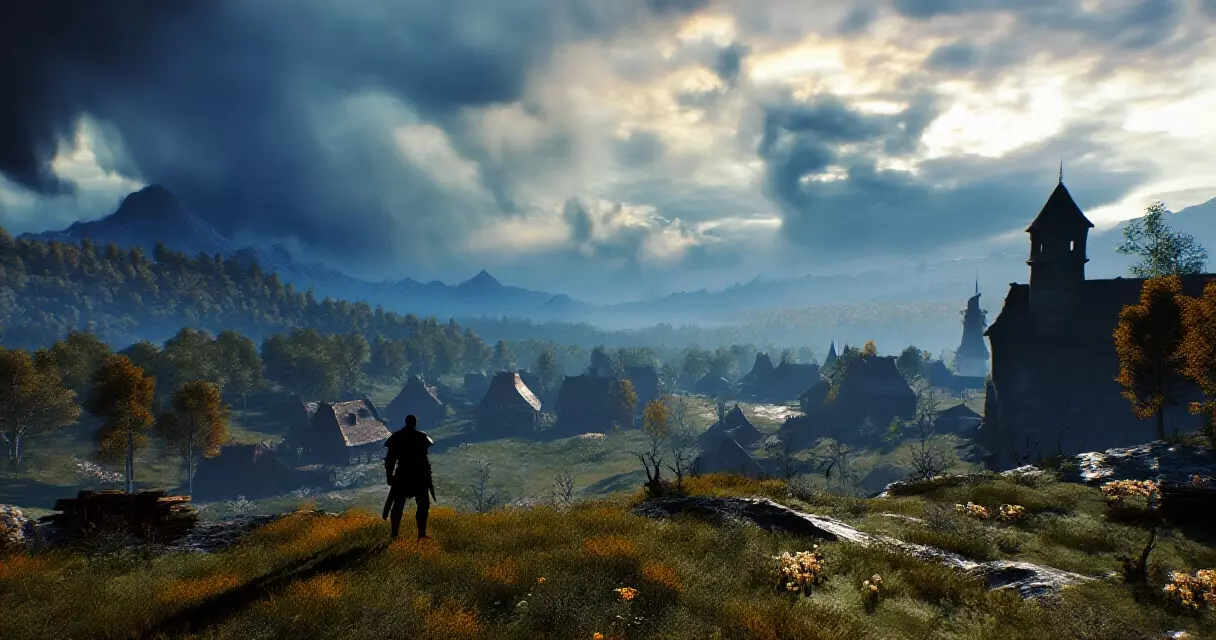
Before going deeper, here is every key fact you need to evaluate the game at a glance. The Witcher 3 is a third-person action RPG set in a dark fantasy world inspired by Polish author Andrzej Sapkowski’s book series. You play Geralt of Rivia, a monster hunter (Witcher) searching for his surrogate daughter Ciri across a war-ravaged Northern Realm.
| Spec | Detail |
|---|---|
| Developer | CD Projekt Red |
| Publisher | CD Projekt |
| Original release | May 19, 2015 |
| Next-gen update | December 14, 2022 (free for existing owners) |
| Platforms | PC, PS4, PS5, Xbox One, Xbox Series X/S, Nintendo Switch |
| Genre | Open-world action RPG |
| Main story length | ~50 hours (completionist: 100-170 hours) |
| DLC included | Hearts of Stone, Blood and Wine (Complete Edition) |
| Current base price (PC) | ~$39.99 (Complete Edition); frequently on sale under $10 |
| Metacritic score | 92/100 (PC); 93/100 (PS4) |
| Copies sold | 50+ million (as of 2023) |
| Age rating | ESRB M (Mature 17+) |
A Brief History: From Books to Blockbuster Game
The Witcher series did not begin in a game studio. Polish fantasy author Andrzej Sapkowski created Geralt of Rivia in a 1986 short story, and the character grew into a full book series spanning eight volumes. CD Projekt Red – then a small Warsaw-based developer – licensed the property in 2002 and released the first The Witcher game in 2007 to a positive but niche reception. The Witcher 2: Assassins of Kings (2011) elevated the studio’s reputation significantly, bringing sharper writing and more demanding combat to a broader PC audience.
The Witcher 3: Wild Hunt was announced in 2013 with an ambition that seemed almost reckless: an open world larger than any the studio had previously attempted, paired with the branching, consequence-driven narrative the series was known for. After several delays and a graphics downgrade controversy in the lead-up to launch, the game shipped on May 19, 2015, and essentially silenced every critic within its first week. For anyone curious about where the action RPG subgenre reached its creative peak during the mid-2010s, this is the answer.
Story and World: Where the Game Truly Shines
The central plot tasks you with finding Ciri, a girl with reality-bending powers who is being hunted by a spectral army called the Wild Hunt. On paper that sounds like a conventional fantasy quest. In practice, the story is a series of morally ambiguous decisions where the "right" answer rarely exists. You negotiate between warring political factions, watch villages burn because of choices you made two hours earlier, and discover that monsters – in this world – are often more humane than people.
The writing quality is particularly striking at the quest level. Side quests in most RPGs exist to give you something to do between story beats. In The Witcher 3, quests like "The Bloody Baron" – a multi-hour storyline involving domestic abuse, a missing family, and a curse – are as carefully constructed as the main plot. Players routinely cite it as one of the finest individual questlines in any game ever made. The RPGs with the best-written stories all share this quality: the world feels like it existed before you arrived and will continue after you leave.
The world itself spans three major regions – Velen, Novigrad, and Skellige – plus the walled city of Oxenfurt and the sun-soaked region of Toussaint (added in the Blood and Wine expansion). Each area has its own visual identity, political climate, and population of creatures drawn from Slavic mythology. The contrast between rain-soaked Velen and the wine-country warmth of Toussaint alone demonstrates a range that most open-world games achieve only across different titles, not within a single one.
Gameplay and Combat: Functional, Not Flawless
The combat system is where The Witcher 3 earns its most divided opinions. Geralt fights using a combination of fast and strong sword attacks, five elemental signs (essentially spells), bombs, crossbow shots, and consumable potions. The variety is there. The execution, particularly at launch in 2015, felt clunky – a common criticism centred on Geralt’s slow responsiveness and the awkward lock-on system.
The next-gen update improved some of this with updated animations and optional alternative movement controls. Combat on higher difficulties – especially the "Death March" setting – demands preparation: studying enemy weaknesses, brewing the right potions, applying blade oils, and using signs tactically. At that level it becomes genuinely engaging. On lower difficulties, the combat recedes into the background and lets the story take focus, which is a perfectly valid way to experience the game if you are here for the narrative rather than the challenge. Fans of demanding combat systems would be better served looking at Elden Ring, which prioritises mechanical depth above almost everything else.
The Witcher 3 does not ask you to be a skilled fighter – it asks you to be a thoughtful monster hunter, and that distinction changes everything about how the game feels.
Beyond swords, Gwent – the in-game card game – deserves its own mention. What began as a minor minigame became popular enough that CD Projekt Red released it as a standalone title (Gwent: The Witcher Card Game) in 2018. Inside The Witcher 3 it functions as both entertainment and a collectible hobby, with rare cards hidden across merchants and quest rewards throughout the world. Some players spend dozens of hours building the perfect Gwent deck alongside everything else the game offers. If you want to understand how RPG mechanics work at their most layered, the interplay between Gwent, alchemy, crafting, and combat in this game is a masterclass.
The DLC Expansions: Hearts of Stone and Blood and Wine
Both expansions were released in 2015 and 2016 and are included in the Complete Edition. They are not padding – they are among the best game expansions ever shipped by any studio.
Hearts of Stone (October 2015, ~10-15 hours) introduces Gaunter O’Dimm, a villain who ranks among the most unsettling characters in RPG history, and a heist storyline that takes the game in an almost supernatural thriller direction. Blood and Wine (May 2016, ~20-30 hours) shifts the tone entirely, adding the brand-new region of Toussaint and a storyline about knightly codes and the corruption underneath chivalry. Blood and Wine alone was reviewed by PC Gamer as one of the best RPG expansions of the decade. Players picking up the Complete Edition today get roughly 170 hours of content across the base game and both DLCs at prices that frequently drop below $10 during Steam sales.
The Next-Gen Update: What Changed in 2022
CD Projekt Red released a free next-gen update on December 14, 2022, targeting PC, PlayStation 5, and Xbox Series X/S. The patch delivered ray-traced lighting, faster loading times (near-instant on SSD-equipped consoles), a reworked camera system for combat, and integration of popular community mods – including improved NPC detail and richer crowd behavior in cities like Novigrad.
The update also added Netflix-series-inspired cosmetic items (alternate Geralt and Ciri outfits) and a "quick signs" shortcut menu that significantly reduces the friction of switching between combat spells. For PS5 players specifically, DualSense haptic feedback and adaptive triggers were implemented, though the effect is subtler than in games like Returnal that were built from the ground up for the controller.
The launch of the next-gen update was rocky – several PC players reported crashes and performance issues that were not present in the original build, and CD Projekt Red spent several weeks issuing patches to stabilise it. By mid-2023 the update had settled into a stable state. If you are playing on console, the PS5 and Xbox Series X versions now offer the cleanest, most visually polished way to experience the game.
Pros, Cons, and Who It’s For
No game earns universal praise without caveats, and The Witcher 3 has a few that matter depending on what you want from an RPG. Here is the honest breakdown:
| Pros | Cons |
|---|---|
| World-class narrative writing and quest design | Combat feels clunky compared to 2025 action RPG standards |
| Two excellent full-length expansions included in Complete Edition | Early next-gen patch introduced PC instability (largely fixed now) |
| Stunning open world with genuine environmental variety | Inventory and crafting UI remains unwieldy |
| Morally complex characters – very few clear villains or heroes | Horse-riding controls (Roach) still feel imprecise |
| Exceptional value – 100-170 hours for under $10 on sale | Slow opening 5-10 hours can deter new players |
| Free next-gen update with ray tracing and faster loads | Not beginner-friendly – assumes familiarity with the series lore |
The Witcher 3 is best suited for players who prioritise story and world-building above mechanical challenge. If you bounced off the game’s first two hours – which drop you into White Orchard, a tutorial area that many players find dreary – the general advice from long-time fans is to push through to the Bloody Baron questline in Velen. Most people who reach that point don’t put the controller down for a week. Anyone starting their RPG journey would also benefit from reading our beginner’s guide to getting into RPGs before diving in.
How It Compares to Other Top RPGs
In 2025, The Witcher 3 does not exist in a vacuum. Baldur’s Gate 3, Elden Ring, Cyberpunk 2077 (post-2.0 update), and Dragon Age: The Veilguard all compete for time in the same genre space. Here is how they stack up on the metrics that matter most:
| Game | Story Quality | Combat Depth | Open World | Value | Metacritic |
|---|---|---|---|---|---|
| The Witcher 3 | ★★★★★ | ★★★ | ★★★★★ | ★★★★★ | 92 |
| Baldur’s Gate 3 | ★★★★★ | ★★★★★ | ★★★★ | ★★★★ | 96 |
| Elden Ring | ★★★ | ★★★★★ | ★★★★★ | ★★★★ | 96 |
| Cyberpunk 2077 (2.0) | ★★★★ | ★★★★ | ★★★★ | ★★★★ | 86 (original) |
| Dragon Age: The Veilguard | ★★★ | ★★★★ | ★★★ | ★★★ | 78 |
The honest assessment is that Baldur’s Gate 3 has surpassed The Witcher 3 in critical reception and in the overall scope of player choice. But the two games target slightly different audiences: BG3 demands tactical patience and rules literacy (it’s built on D&D 5e), while The Witcher 3 is more immediately accessible to players who prefer narrative immersion over combat systems. Neither is the wrong choice – they are the two pillars of modern story-driven RPG design. For a broader look at the genre’s top releases, our list of the 50 best RPGs of all time puts both in context alongside the classics.
Where Elden Ring teaches players to read environments, and Baldur’s Gate 3 teaches them to read rules, The Witcher 3 teaches them to read people – and that skill stays with you long after the credits roll.
Performance and Technical State in 2025
As of mid-2025, the PC version runs well on modern hardware. An NVIDIA RTX 3060 or AMD RX 6700 XT can push the game above 60 fps at 1440p with the next-gen visual features enabled. Ray-traced global illumination – the most demanding new option – requires higher-end cards (RTX 3080 or better) for a stable 60 fps at 4K. The console versions on PS5 and Xbox Series X hold a steady 60 fps in Performance mode with ray tracing active, which is a significantly cleaner experience than the original console builds.
PC modding support remains robust. The Witcher 3’s modding community on Nexus Mods hosts thousands of modifications ranging from UI overhauls to expanded dialogue, new textures, and total-conversion quest packs. Mods like "The Witcher 3 HD Reworked Project Main" bring texture quality beyond even the official next-gen update. The Nintendo Switch version, while an impressive technical achievement at launch in 2019, is the least recommended platform in 2025 – it runs at reduced resolution and lower frame rates, though it remains the only portable native option.
Verdict: Our Score and Final Recommendation
The Witcher 3: Wild Hunt earns a 9.2 out of 10 in 2025. The half-point it doesn’t earn comes from combat that still lags behind contemporaries and an opening chapter that asks too much patience from new players before delivering its best material.
Everything else holds up remarkably well. The writing is better than most games released in the decade since. The world is still one of the most credible open environments ever built. The value proposition – 100-170 hours of content at prices that regularly drop to single digits – is almost embarrassing by modern standards. And the next-gen update, patchy at launch, now gives the game a visual quality that does not look like a ten-year-old title.
The Witcher 3 belongs on the short list of games that justify calling the medium an art form. If you have never played it, 2025 is as good a time to start as any. If you played it at launch and moved on, Blood and Wine alone is worth revisiting. For anyone building a ranked list of the best single-player RPGs with 100+ hours of story, this game belongs at or near the top.
Frequently Asked Questions
Is The Witcher 3 worth playing in 2025 if you’ve never played the first two games?
Yes, The Witcher 3 is largely accessible without prior series experience. CD Projekt Red designed the game knowing that many players would be arriving fresh, and the main plot stands on its own. That said, the emotional weight of certain character relationships – particularly Geralt’s history with Yennefer and Triss – lands harder if you have context from the earlier games or Sapkowski’s novels. A brief Wikipedia read on the series lore before you start will add depth without requiring dozens of hours of prerequisites. The game includes a storybook introduction that catches newcomers up on the essential beats.
How long does it take to finish The Witcher 3?
According to HowLongToBeat community data, the main story takes approximately 50 hours if you focus on the critical path with minimal detours. A "main story plus sides" playthrough – catching the most-recommended side quests – runs closer to 100 hours. A completionist run covering all quests, all locations, all Gwent cards, and both DLC expansions can reach 150-170 hours. Most players land somewhere in the 80-100 hour range for a satisfying first experience that includes the expansions.
What difficulty should I choose as a new player?
For first-time players who are primarily interested in the story and world, "Just the Story" or "Story and Sword" (the two easier settings) are perfectly valid choices. They reduce the penalty for poor combat preparation and let you focus on questing. Players who want genuine challenge from the combat should start on "Blood and Broken Bones" – "Death March" (the hardest setting) is rewarding but significantly increases the importance of alchemy preparation and can be punishing if you skip crafting systems. You can change the difficulty at any time from the pause menu, so there is no permanent penalty for starting easier and adjusting upward.
Is the next-gen update free, and is it worth installing?
Yes, the December 2022 next-gen update was a free patch for all existing PC, PS4, and Xbox One owners who upgrade to PS5 or Xbox Series X/S. If you own the game on those platforms, you receive the update automatically. On PC it was a free update through GOG and Steam. The update is worth installing for the improved lighting, faster load times, and the alternative movement controls that make Geralt feel more responsive. The only caution is that a small number of older PC hardware configurations still report occasional stability issues with the updated build – a subset of community mods can help address these.
Should I play the DLC expansions, and in what order?
Both expansions are strongly recommended and are worth finishing before the main game’s ending for narrative reasons. The recommended order is: complete the base game’s main story up to (but not including) the final act, play Hearts of Stone, then play Blood and Wine, and then return to finish the main game’s conclusion. This order preserves the emotional arc of Geralt’s story and lets Blood and Wine – which provides the most natural ending point for the character – serve as a genuine send-off. Hearts of Stone takes roughly 10-15 hours; Blood and Wine runs 20-30 hours.
How does The Witcher 3 compare to Baldur’s Gate 3?
These are two of the best story-driven RPGs available, but they serve different preferences. The Witcher 3 is a third-person action RPG with a fixed protagonist (Geralt), real-time combat, and an emphasis on authored narrative. Baldur’s Gate 3 is a top-down turn-based RPG built on D&D 5e rules, with a fully custom character and dramatically broader player agency in how stories unfold. BG3 is mechanically deeper and more demanding; The Witcher 3 is more immediately accessible for players who are not familiar with tabletop RPG systems. Both are worth playing. If you only have time for one, choose based on whether you prefer authored narrative (Witcher 3) or emergent player-driven stories (BG3).
What platform is best to play The Witcher 3 on in 2025?
PC is the best platform for players who want access to the modding community and the highest possible visual fidelity. The PS5 and Xbox Series X versions are close behind, offering stable 60 fps with ray tracing in a plug-and-play setup that requires no configuration. The Nintendo Switch version remains playable but is the least technically polished option – resolution and frame rate are both reduced compared to other platforms. If you are deciding between PC and console specifically for the modding potential, PC wins easily: thousands of community mods can extend the experience far beyond what CD Projekt Red shipped.
Related Reading
- RPG Games Master Guide: Best Titles, Subgenres & How to Start
- 50 Best RPG Games of All Time, Ranked by Players and Critics
- Best Multiplayer RPG Games Online: MMORPGs, Co-op & Party RPGs
- Best RPG Games for PC in 2025: Top Picks Across Every Subgenre
- Best Single-Player RPG Games That Deliver 100+ Hours of Story
- Every Type of RPG Game Explained: JRPG vs CRPG vs Action RPG
- How to Get Into RPG Games: A Beginner's Roadmap for 2025
- RPG Game Mechanics Explained: Stats, Leveling, Loot, and Combat
- RPG Games vs Action Games: Key Differences, Hybrids & Which to Play
- RPG Games With the Best Stories Ever Written, According to Fans
- Upcoming RPG Games in 2025 and 2026: Every Major Release on the Radar
- Baldur's Gate 3 Review: Is It the Greatest RPG Ever Made?
- Divinity: Original Sin 2 Review — The Benchmark for Modern CRPGs
- Dragon Age: The Veilguard Review — Does BioWare Recapture Its RPG Crown?
- Elden Ring Review: How FromSoftware Redefined the Action RPG Genre
- Final Fantasy XVI Review: A Bold Action-RPG Departure
- Pathfinder: Wrath of the Righteous Review — The CRPG Fans Deserve
- Persona 5 Royal Review: Why This JRPG Is a Once-in-a-Generation Game
Sources
- Wikipedia – The Witcher 3: Wild Hunt: https://en.wikipedia.org/wiki/The_Witcher_3:_Wild_Hunt
- HowLongToBeat – The Witcher 3 playtime data: https://howlongtobeat.com/game/10270
- PC Gamer – Blood and Wine review: https://www.pcgamer.com/the-witcher-3-blood-and-wine-review/
- Metacritic – The Witcher 3: Wild Hunt scores: https://www.metacritic.com/game/the-witcher-3-wild-hunt/
Gaming Laptop Buyer’s Guide: Performance, Portability & Best Models