Summary
When Elden Ring launched on February 25, 2022, it achieved something the games industry rarely sees: a critic score of 96 on Metacritic – making it the highest-rated game of that year – while simultaneously selling over 25 million copies...
Table of contents
- 1 What Is Elden Ring? A Quick Overview
- 2 Game Specs and Technical Overview
- 3 The History Behind FromSoftware’s Open-World Gamble
- 4 Combat, Mechanics, and Character Building
- 5 Open World Design: What FromSoftware Got Right
- 6 Bosses, Difficulty, and the Accessibility Debate
- 7 Shadow of the Erdtree: The DLC That Matched the Base Game
- 8 Elden Ring vs. Alternatives: How It Compares
- 9 Pros and Cons: An Honest Assessment
- 10 Pricing and Editions
- 11 Frequently Asked Questions
- 11.1 Is Elden Ring too hard for beginners?
- 11.2 How long does it take to complete Elden Ring?
- 11.3 Does Elden Ring have a good story?
- 11.4 Is Elden Ring worth buying in 2026?
- 11.5 What is the best starting class in Elden Ring?
- 11.6 How does Elden Ring’s multiplayer work?
- 11.7 Do I need to play Dark Souls before Elden Ring?
- 11.8 Is Shadow of the Erdtree worth buying?
- 12 Related Reading
- 13 Sources
When Elden Ring launched on February 25, 2022, it achieved something the games industry rarely sees: a critic score of 96 on Metacritic – making it the highest-rated game of that year – while simultaneously selling over 25 million copies by 2024 (Bandai Namco, 2024). That combination of critical near-unanimity and mainstream commercial success is almost unheard of for a game rooted in the notoriously demanding Soulsborne design philosophy. FromSoftware, working alongside writer George R. R. Martin on the underlying mythology, built something that transcended its niche: an open-world action RPG that redrew the boundaries of what the genre could be.
What Is Elden Ring? A Quick Overview
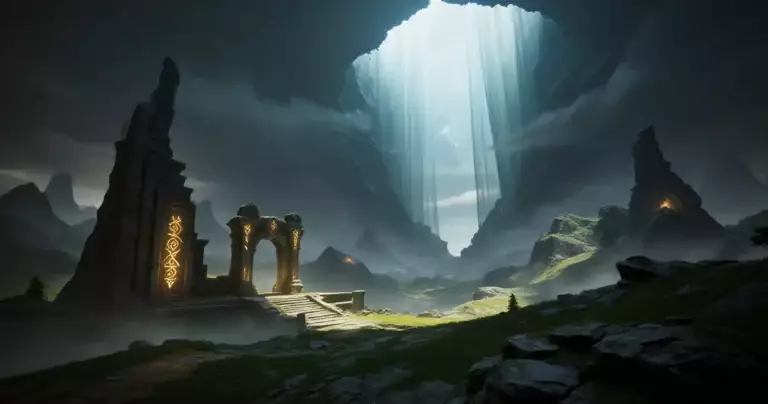
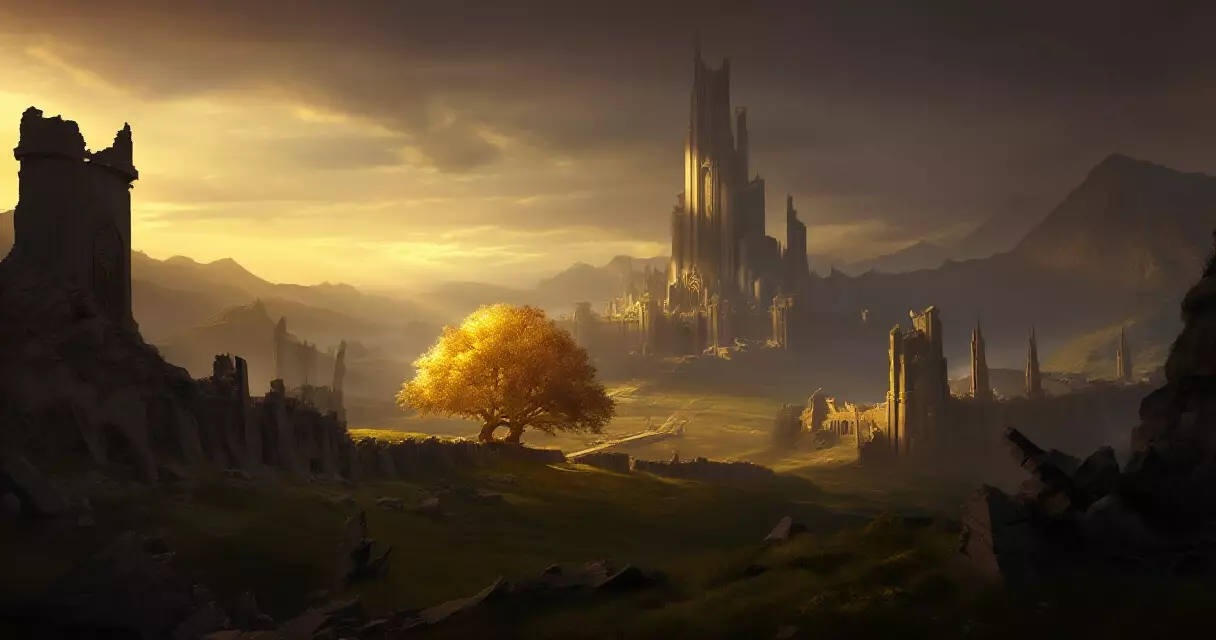
Elden Ring is a third-person action RPG developed by FromSoftware and published by Bandai Namco Entertainment. Set in the Lands Between – a vast open world steeped in dark fantasy – players take on the role of a Tarnished, an exiled warrior who returns to claim the shattered Elden Ring and become the Elden Lord. The game draws directly on FromSoftware’s legacy of titles like Dark Souls, Bloodborne, and Sekiro: Shadows Die Twice, but expands the formula into a fully open-world structure for the first time in the studio’s history.
The mythology of the Lands Between was crafted in collaboration with George R. R. Martin, author of A Song of Ice and Fire, who wrote the foundational lore before FromSoftware director Hidetaka Miyazaki built the game world on top of it. The result is a setting with unusually rich backstory told almost entirely through item descriptions, environmental storytelling, and NPC dialogue – never cutscenes or exposition dumps.
Game Specs and Technical Overview
Before diving into what makes the experience special, here is a factual breakdown of what Elden Ring actually is as a product. This table covers the key details you need to know before purchasing.
| Detail | Information |
|---|---|
| Developer | FromSoftware |
| Publisher | Bandai Namco Entertainment |
| Release Date | February 25, 2022 |
| Platforms | PS4, PS5, Xbox One, Xbox Series X/S, PC (Steam) |
| Genre | Action RPG / Open World |
| Director | Hidetaka Miyazaki |
| Lore Writer | George R. R. Martin |
| Estimated Playtime | 50–150+ hours (depending on completion level) |
| Multiplayer | Asynchronous co-op and PvP invasion (online) |
| DLC | Shadow of the Erdtree (June 21, 2024) |
| Base Game Price | $59.99 USD (PC/Console) |
| ESRB Rating | Mature (M) – Blood and Gore, Language, Violence |
The History Behind FromSoftware’s Open-World Gamble
To understand why Elden Ring matters, you need to understand where it came from. FromSoftware spent the decade from 2011 to 2019 building one of the most distinctive design languages in games: the Soulsborne formula. Starting with Dark Souls in 2011, the studio established a template built on demanding combat, cryptic storytelling, and environments that punished carelessness but rewarded patience and curiosity.
Each successive title – Dark Souls II (2014), Bloodborne (2015), Dark Souls III (2016), and Sekiro: Shadows Die Twice (2019) – refined and varied the formula, but all were built around tightly designed, corridor-adjacent linear zones linked into a carefully constructed whole. Going truly open world was a major structural risk. Fans worried the density and intentionality that made those games special would be diluted across a sprawling map.
Miyazaki addressed that concern directly in pre-release interviews, explaining that the open world was designed not as filler but as a means of player agency – allowing players to sequence their approach to bosses, find equipment suited to their build, and discover content organically. That philosophy, combined with Martin’s lore foundation, produced something that felt both familiar to Soulsborne veterans and accessible to a far wider audience. As our guide to RPG types notes, the action RPG subgenre has long bridged reflex-heavy combat with deep character progression – Elden Ring pushed that fusion further than any previous title.
Combat, Mechanics, and Character Building
Elden Ring’s combat is real-time and third-person, built around stamina management, weapon timing, and reading enemy attack patterns. At its core, the system rewards patience. Rushing in without understanding a boss’s moveset leads to death; learning those patterns and exploiting openings leads to one of the most satisfying feedback loops in gaming. The RPG mechanics that underpin it – stats, leveling, and loot – are as deep as any classic CRPG, even if they are expressed through action gameplay rather than menus.
The character system uses eight core attributes: Vigor, Mind, Endurance, Strength, Dexterity, Intelligence, Faith, and Arcane. Each governs a different aspect of your character – health, FP (mana), stamina, physical damage scaling, skill damage, sorcery scaling, incantation scaling, and discovery/bleed scaling respectively. Ten starting classes – Vagabond, Warrior, Hero, Bandit, Astrologer, Prophet, Samurai, Prisoner, Confessor, and Wretch – give players a starting point but impose no hard locks on build direction.
Weapons use a unique Ash of War system, which allows players to swap special weapon skills onto most weapons, enabling enormous build variety. A Strength-focused player can give their greatsword a parry skill; an Intelligence build can infuse almost any weapon with magic damage. This flexibility was a marked evolution from Dark Souls’ more rigid weapon upgrade paths and opened up creative builds that kept the community experimenting for months after launch – and years, given the active modding scene on PC.
Elden Ring does not lower its difficulty – it widens the tools you have to meet that difficulty on your own terms.
Open World Design: What FromSoftware Got Right
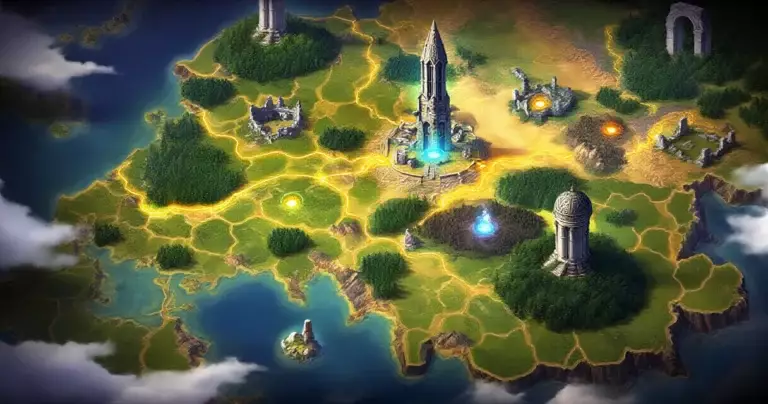
The Lands Between is divided into six major regions – Limgrave, Liurnia of the Lakes, Caelid, Altus Plateau, Mountaintops of the Giants, and Farum Azula – plus several underground areas and the DLC region of the Shadow Realm. Each zone has a distinct visual identity, enemy set, and narrative thread. Caelid, a rot-blasted wasteland, looks and feels nothing like the misty lake district of Liurnia. This differentiation prevents the open world from feeling like an undifferentiated soup of content.
The world rewards curiosity in a way most open-world games talk about but fail to deliver. Hidden behind an illusory wall, down an unmarked cliffside path, or inside a cave that appears on no map marker – some of the best equipment and story beats in the game are found only by players who stop following objective markers and simply explore. There are no quest trackers. No waypoints for optional content. That design choice divides players, but it also makes discovery feel genuinely earned.
The legacy dungeons – Stormveil Castle, Raya Lucaria Academy, Leyndell Royal Capital, and others – function as self-contained, intricately designed zones reminiscent of FromSoftware’s earlier work. They sit within the open world but operate on their own logic: interconnected paths, shortcuts that loop back on themselves, environmental storytelling layered into the architecture. These areas alone would constitute a strong Souls game; they form the structural spine of a much larger one.
Bosses, Difficulty, and the Accessibility Debate
No Elden Ring review can avoid the difficulty conversation. FromSoftware games are defined by challenge, and Elden Ring is no exception. Bosses like Margit the Fell Omen, Starscourge Radahn, Malenia Blade of Miquella, and the Elden Beast represent some of the most demanding encounters in the history of action games. Malenia in particular became a cultural moment: her fight spawned an entire online support network called “Let Me Solo Her,” where a player in only a jar helmet offered free summon assistance and – by their own count – defeated Malenia solo over 1,000 times for other players.
The game does offer meaningful tools to soften the difficulty curve without removing it. Spirit Ashes allow players to summon AI companions in boss fights. Cooperative multiplayer lets human players join your world to assist. The open world lets you grind runes (the in-game currency/XP) to overlevel before a troublesome encounter. None of these require external mods or menu adjustments – they are built-in design choices that make the game accessible without making it easy.
That said, players with certain disabilities have raised legitimate concerns about the lack of formal difficulty options, slowdowns for reaction-speed-dependent mechanics, or remapping flexibility on console. These are real gaps. The accessibility community has documented them thoroughly, and it is worth acknowledging that for some players, no amount of build optimization makes certain encounters physically manageable. This remains an ongoing conversation in the broader action RPG space.
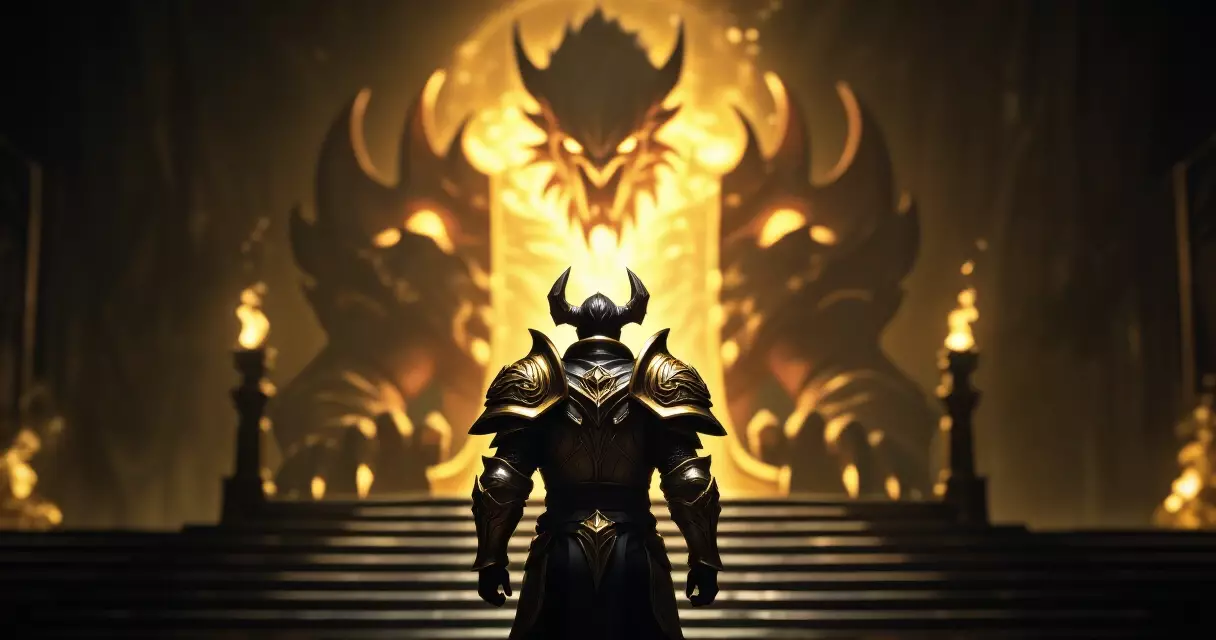
Shadow of the Erdtree: The DLC That Matched the Base Game
Released on June 21, 2024, Shadow of the Erdtree is Elden Ring’s sole expansion and one of the most critically acclaimed DLC releases in recent memory. Scoring 95 on Metacritic (PC version), it tied the base game’s critical standing nearly note for note. The expansion adds an entirely new region – the Shadow Realm – accessible only after defeating Mohg, Lord of Blood. It introduces new weapon classes including the Hand-to-Hand arts and Dryleaf Arts, new Spirit Ashes, new spells and incantations, and a new scadutree blessing system that scales player power specifically for the DLC area.
The boss lineup in Shadow of the Erdtree is arguably the strongest FromSoftware has ever assembled in a single package. Messmer the Impaler, Midra Lord of Frenzied Flame, and the final boss Radahn Consort of Miquella are all considered among the best encounters in the entire Elden Ring ecosystem. The expansion also resolved – or at least deepened – several major lore questions about Miquella, one of the most discussed characters in the base game who never actually appears on screen.
At approximately 20–40 hours of content depending on exploration depth, Shadow of the Erdtree functions less like a traditional DLC and more like a standalone chapter. At its launch price of $39.99 (or $89.98 for the Deluxe Edition including the base game), it represents strong value for existing fans – though the requirement to defeat Mohg before accessing it creates a meaningful barrier for casual players.
Shadow of the Erdtree did not coast on the base game’s goodwill – it earned its own 95 Metacritic score through genuinely exceptional design.
Elden Ring vs. Alternatives: How It Compares
Elden Ring does not exist in a vacuum. The action RPG genre has multiple strong contenders, and readers comparing options deserve an honest comparison. The table below covers the most relevant alternatives for players deciding where to spend their time. For a broader ranking of the genre’s best, see our list of the 50 best RPG games of all time.
| Game | Metacritic Score | Approx. Playtime | Difficulty | Open World | Best For |
|---|---|---|---|---|---|
| Elden Ring (2022) | 96 | 60–150 hrs | Very High | Yes (large) | Players who want challenge + exploration |
| Baldur’s Gate 3 (2023) | 96 | 100–200 hrs | Moderate (adjustable) | Semi-open | Story, tactics, co-op RPG fans |
| The Witcher 3 (2015) | 92 | 50–200 hrs | Low–Moderate | Yes (large) | Narrative-driven open-world fans |
| Dark Souls III (2016) | 89 | 30–60 hrs | Very High | No (linear) | Purist Soulsborne fans |
| God of War Ragnarök (2022) | 94 | 20–50 hrs | Moderate–High | Semi-open | Story-first action RPG players |
| Sekiro: Shadows Die Twice (2019) | 90 | 25–60 hrs | Extreme | No (semi-linear) | Players who love pure parry-based combat |
Against Baldur’s Gate 3, Elden Ring trades the collaborative storytelling and adjustable difficulty for a purer, more demanding moment-to-moment gameplay experience. Both earned identical Metacritic scores of 96, and debates about which is the superior game will likely never be resolved – they serve genuinely different player needs. Players interested in how these titles fit the broader RPG genre can read our RPG master guide for context.
Pros and Cons: An Honest Assessment
Elden Ring is exceptional, but no game is without fault. Here is a structured breakdown of what it gets right and where it falls short, based on the critical and community consensus since launch.
| Pros | Cons |
|---|---|
| Stunning, hand-crafted open world with genuine density | PC port had significant technical issues at launch (frame-rate, stuttering) |
| Deep, flexible character building with hundreds of viable builds | No in-game difficulty options or formal accessibility features |
| Best boss lineup in FromSoftware’s history | Late-game area reuse (several underground zones feel recycled) |
| Rich lore co-developed with George R. R. Martin | Multiplayer system is clunky and region-locked behind passwords |
| Shadow of the Erdtree DLC extends and deepens the experience | Some legacy dungeon bosses are copy-pasted (Ulcerated Tree Spirit, etc.) |
| Enormous replayability across multiple build archetypes | NPC quest lines are nearly impossible to complete without a guide |
| Asynchronous multiplayer adds a unique community layer | Magic and incantation builds feel underpowered in some DLC sections |
Pricing and Editions
Elden Ring has been available since 2022 and regularly appears in sales across all platforms. Here is the current structure as of mid-2026:
- Base Game: $59.99 USD (PC/Console) – often discounted 40–60% during major sales
- Shadow of the Erdtree DLC: $39.99 USD standalone (requires base game ownership)
- Deluxe Edition (base game + DLC): $89.98 USD – available on Steam and console stores
- Collector’s Editions: Various limited-run physical editions (SteelBook, figure sets) available via third-party retailers at premium prices
For players new to FromSoftware titles, the Deluxe Edition at a sale price represents the best entry point – both because the DLC is worth experiencing and because you avoid the access barrier of needing to defeat Mohg before the Shadow Realm unlocks. New players looking for guidance on where to start can also check our beginner’s roadmap for RPG games, which covers how to approach the genre from scratch.
Frequently Asked Questions
Is Elden Ring too hard for beginners?
Elden Ring is challenging by design, but it is more accessible to beginners than any previous FromSoftware title. The open world structure means that if you hit a difficulty wall at one boss, you can go explore another area, find better equipment, level up your character, and come back stronger. The game also includes Spirit Ashes – summonable AI companions that assist in boss fights – and supports cooperative multiplayer where experienced players can join your session to help. None of this removes the difficulty, but it provides enough tools that patient beginners who are willing to learn from failure can absolutely complete the game. Our guide to long single-player RPGs also lists other approachable options if Elden Ring’s challenge level proves prohibitive.
How long does it take to complete Elden Ring?
According to HowLongToBeat community averages, the main story of Elden Ring takes approximately 55–60 hours for players who focus on the critical path. A more typical playthrough that includes most side content runs 90–110 hours. True completionists who attempt all optional bosses, NPC quests, and underground zones often clock 120–150 hours on a single character. Adding Shadow of the Erdtree extends these numbers by 20–40 hours depending on exploration depth. Elden Ring is one of the densest value propositions in gaming at its price point – even at full price, the cost-per-hour ratio is extremely favorable compared to most AAA releases.
Does Elden Ring have a good story?
Elden Ring’s story is exceptional, but it is told in a way that requires active engagement. Rather than delivering its narrative through cutscenes or voiced exposition, it embeds the lore in item descriptions, environmental details, boss introductions, and NPC dialogue. Players who engage with this system and piece the story together themselves tend to find it among the richest in gaming, with George R. R. Martin’s foundational mythology providing genuinely complex characters – Ranni the Witch, Miquella, Radahn, Marika – whose arcs rival those in traditional narrative RPGs. Players who prefer their stories delivered more directly will find Elden Ring cryptic and unsatisfying. The game is worth exploring alongside our roundup of RPG games with the best stories, which provides useful genre context.
Is Elden Ring worth buying in 2026?
Yes, without qualification. Elden Ring’s open world, combat system, and boss design have not been surpassed by any subsequent release as of mid-2026, and the game regularly sells at significant discounts across Steam, PlayStation Store, and Xbox digital storefronts. The active modding community on PC has also extended its lifespan considerably, with overhaul mods, co-op mods (Seamless Co-op being the most popular), and new content additions keeping the experience fresh. With Shadow of the Erdtree included, Elden Ring represents somewhere between 80 and 180 hours of high-quality content depending on how deeply you engage. Few games at any price offer that combination of quality and quantity.
What is the best starting class in Elden Ring?
For new players, the Vagabond class is widely recommended as the best starting point. It begins with high Vigor (HP) and solid Strength and Dexterity stats, wears medium armor with good physical defense, and starts with a longsword and halberd – giving you flexibility from the first moment. The Astrologer is the best starting class for players who prefer magic builds, as it begins with useful sorceries and Intelligence investment. The Wretch – a level 1 class with balanced but minimal stats – is technically the most efficient for experienced players optimizing a specific end-game build, but it is a miserable experience for anyone unfamiliar with how the attribute system works. The key point: no starting class locks you out of any build direction.
How does Elden Ring’s multiplayer work?
Elden Ring uses an asynchronous multiplayer system inherited from Dark Souls. In co-op, players leave gold summon signs on the ground; other players in the same area can see and activate those signs to summon the sign-writer into their game as a gold phantom. Co-op sessions end when the area boss is defeated or the host player dies. In PvP, red invasion signs and dedicated dueling areas (Arenas) allow competitive combat. The system also includes passive asynchronous features: bloodstains showing how nearby players died, ghostly echoes of other players’ actions, and message leaving (short notes using preset words) that other players can rate. For players who want a more traditional co-op experience, the Seamless Co-op PC mod removes many of the vanilla multiplayer restrictions. More structured multiplayer RPG options are covered in our best multiplayer RPG guide.
Do I need to play Dark Souls before Elden Ring?
No. Elden Ring is a standalone game with no narrative connection to the Dark Souls trilogy, Bloodborne, or Sekiro. Its story takes place in an original world built specifically for this game. Prior FromSoftware experience will give you a mechanical head start – you will recognize stamina management, the importance of rolling, and the dodge-and-strike combat rhythm – but it is not required. Many of Elden Ring’s biggest fans came to FromSoftware for the first time through this game. That said, players who enjoy Elden Ring and want to explore the studio’s back catalog will find Dark Souls III and Bloodborne excellent follow-up experiences, and both regularly appear on our lists of the best RPGs ever made.
Is Shadow of the Erdtree worth buying?
Shadow of the Erdtree is worth buying if you have completed at least the mid-game content of Elden Ring – specifically, if you have defeated Morgott the Omen King and are ready to engage with the DLC’s difficulty, which is calibrated for late-game characters. At 95 on Metacritic, it is the highest-rated game expansion in recent history and contains some of the best boss fights FromSoftware has ever created. The $39.99 standalone price is steep as DLC goes, but the content volume and quality justify it. If you are newer to Elden Ring and have not yet defeated Mohg, Lord of Blood (the access requirement), focus on the base game first – there is more than enough content to justify the purchase without the DLC.
Related Reading
- RPG Games Master Guide: Best Titles, Subgenres & How to Start
- 50 Best RPG Games of All Time, Ranked by Players and Critics
- Best Multiplayer RPG Games Online: MMORPGs, Co-op & Party RPGs
- Best RPG Games for PC in 2025: Top Picks Across Every Subgenre
- Best Single-Player RPG Games That Deliver 100+ Hours of Story
- Every Type of RPG Game Explained: JRPG vs CRPG vs Action RPG
- How to Get Into RPG Games: A Beginner's Roadmap for 2025
- RPG Game Mechanics Explained: Stats, Leveling, Loot, and Combat
- RPG Games vs Action Games: Key Differences, Hybrids & Which to Play
- RPG Games With the Best Stories Ever Written, According to Fans
- Upcoming RPG Games in 2025 and 2026: Every Major Release on the Radar
- Baldur's Gate 3 Review: Is It the Greatest RPG Ever Made?
- Divinity: Original Sin 2 Review — The Benchmark for Modern CRPGs
- Dragon Age: The Veilguard Review — Does BioWare Recapture Its RPG Crown?
- Final Fantasy XVI Review: A Bold Action-RPG Departure
- Pathfinder: Wrath of the Righteous Review — The CRPG Fans Deserve
- Persona 5 Royal Review: Why This JRPG Is a Once-in-a-Generation Game
- The Witcher 3: Wild Hunt Review — Still Gold Standard in 2025?
Sources
- Elden Ring – Wikipedia
- Shadow of the Erdtree – Wikipedia
- FromSoftware – Wikipedia
- George R. R. Martin – Wikipedia
- Elden Ring – Metacritic
- Elden Ring: Shadow of the Erdtree – Metacritic
- Elden Ring review – The Guardian
Gaming Laptop Buyer’s Guide: Performance, Portability & Best Models