Summary
When Final Fantasy XVI launched on June 22, 2023, it sold over 3 million copies in its first week alone, according to Square Enix's official sales announcement – a commercial signal that fans were ready for something radically different. Producer...
Table of contents
- 1 What Is Final Fantasy XVI?
- 2 A Brief History: How Final Fantasy Got Here
- 3 Story and World-Building
- 4 Combat System: Action Over Abstraction
- 5 RPG Systems: How Much Depth Remains?
- 6 Specifications and Technical Overview
- 7 Eikon Boss Battles: The Game’s Defining Moments
- 8 Visuals, Audio, and Performance
- 9 Pros and Cons
- 10 How It Compares to Other Major Action-RPGs
- 11 DLC: Echoes of the Fallen and The Rising Tide
- 12 Who Should Play Final Fantasy XVI?
- 13 Verdict and Score
- 14 Frequently Asked Questions
- 14.1 Is Final Fantasy XVI a true RPG or more of an action game?
- 14.2 How long does it take to complete Final Fantasy XVI?
- 14.3 Do you need to have played previous Final Fantasy games to understand XVI?
- 14.4 Is Final Fantasy XVI available on PC and Xbox?
- 14.5 How does Final Fantasy XVI compare to Final Fantasy VII Remake?
- 14.6 What is the Eikon ability system and how does it work?
- 14.7 Is Final Fantasy XVI worth playing in 2026?
- 15 Related Reading
- 16 Sources
When Final Fantasy XVI launched on June 22, 2023, it sold over 3 million copies in its first week alone, according to Square Enix’s official sales announcement – a commercial signal that fans were ready for something radically different. Producer Naoki Yoshida and director Hiroshi Takai swapped the franchise’s traditional turn-based roots for a full-throttle character action system closer to Devil May Cry than anything the numbered Final Fantasy series had attempted before. The result is a game that splits opinion sharply: a cinematic masterpiece for some, a betrayal of RPG identity for others.
What Is Final Fantasy XVI?
Final Fantasy XVI is the sixteenth mainline entry in Square Enix’s flagship JRPG series, released exclusively on PlayStation 5 on June 22, 2023. A PC version followed on September 17, 2024. Set in Valisthea, the game follows Clive Rosfield, a disgraced warrior caught up in a continent-spanning war fueled by magical crystals called Mothercrystals and the god-like beings known as Eikons. Think Game of Thrones crossed with kaiju battles.
The development was led by Creative Business Unit III at Square Enix, the same team behind Final Fantasy XIV’s acclaimed revival under Yoshida. That background shows: the world-building is dense and confident, the political plotting is layered, and the production values sit comfortably at the top of the PlayStation 5’s launch window.
A Brief History: How Final Fantasy Got Here
The Final Fantasy series launched in 1987 as a last-ditch effort to save Square from bankruptcy – a fact its creator, Hironobu Sakaguchi, has spoken about publicly for decades. That original game established a template built on menus, parties, and turn-based encounters that defined Japanese RPGs for a generation. Even as the series evolved – from the Active Time Battle system of Final Fantasy IV onward, through the real-time Gambit system of Final Fantasy XII – the core remained recognizable: you managed a party, you watched numbers climb, and you chose your actions from a menu.
Final Fantasy XV (2016) was the first real crack in that tradition, mixing open-world exploration with a blend of automatic and input-driven combat. But XV still kept its party and its RPG scaffolding intact. XVI dispenses with nearly all of that. There is no party to manage. Equipment is largely vestigial. The skill system is tied entirely to Eikon abilities you equip in a loadout. As our sister article on every type of RPG game explained covers, this puts XVI squarely in action-RPG territory rather than traditional JRPG – and that choice is the source of almost every debate the game has sparked.
Story and World-Building
The narrative centers on Clive Rosfield, eldest son of the Archduke of Rosaria, who witnesses his younger brother Joshua – the Dominant of Phoenix, a being who can transform into the fire Eikon – killed in a catastrophic battle. Clive spends the next two decades hunting the Dominant of Ifrit, the dark Eikon he holds responsible. The setup is familiar: revenge-driven protagonist, dead family member, slowly-revealed conspiracy. What sets XVI apart is the commitment to its dark register.
The game depicts slavery, genocide, and political oppression with a directness rare for a mainstream Japanese release. The Bearers – people born with innate magical ability who are branded and forced into servitude – function as a metaphor for systemic oppression, and the game does not soften the horror. Clive’s emotional arc across the roughly 35-40 hour campaign (as tracked by HowLongToBeat) is genuinely affecting, anchored by a strong English voice cast including Ben Starr as Clive and Ralph Ineson as the antagonist Barnabas.
Valisthea itself is a world in slow collapse. Blight is spreading across the land, smothering the Mothercrystals that provide magical power to the warring nations. The geopolitical texture – six rival factions, each tied to an Eikon – is impressive in scope, though the game parcels out its lore through extensive reading material in the Active Time Lore system, which pauses cutscenes to deliver encyclopedia-style explanations. Whether you find this enriching or interrupting depends largely on your tolerance for world-building density.
“Final Fantasy XVI commits to its dark fantasy register more fully than any numbered entry before it, and the courage of that commitment is exactly what makes it divisive.”
Combat System: Action Over Abstraction
The combat system was developed with Ryota Suzuki, who previously worked on Devil May Cry 5 at Capcom, and his fingerprints are everywhere. Clive fights in real time using a sword, a magic-bolt ranged attack, and a dodge. The depth comes from Eikon abilities – special powers borrowed from defeated Eikons like Phoenix, Garuda, Ramuh, Titan, Shiva, and Bahamut. Each Eikon offers a set of moves with cooldowns, and you equip three Eikons at once, hot-swapping between them mid-combo to extend juggle strings and chain abilities.
At its ceiling, the combat is genuinely thrilling. A skilled player cycling through Garuda’s grapple pull, Phoenix’s upward launcher, and Bahamut’s screen-clearing laser burst looks like a highlight reel. The Stagger system – building a second bar on enemies to expose them to amplified damage – adds tactical texture and rewards aggression over attrition. The Eikonic Feat system lets you assign one persistent passive modifier per Eikon slot, adding another layer of build expression.
The problem is the floor. On the default difficulty, standard enemies present almost no threat. Clive’s base stats are high, Limit Breaks restore health, and Torgal the wolf companion provides free additional damage. Square Enix addressed this criticism by adding a Final Fantasy mode (New Game Plus difficulty) and by shipping the game with three toggle-on rings that automate dodges, abilities, and combos – accessibility aids that double as training wheels for players uncomfortable with action-game inputs. These are reasonable solutions, but they highlight a design tension: the combat was built for spectacle first and challenge second.
RPG Systems: How Much Depth Remains?
This is where Final Fantasy XVI will lose the most traditional RPG fans. The systems that have defined RPG mechanics across decades – party composition, stat allocation, equipment choices with meaningful tradeoffs – are either absent or stripped back to vestigial form.
Leveling up is automatic and yields small stat bumps with no player input. Equipment consists of a single weapon, a single belt, and two accessories – the accessories offer builds (like increasing Eikon ability damage or shortening cooldowns), but the weapon and belt are pure stat sticks. There is no elemental system to exploit, no status effect economy to manage, and no character build differentiation because there is only one playable character.
The Eikon ability mastery system provides the closest thing to build expression: after leveling an ability enough times, you can attach its passive bonus to a different Eikon slot, theoretically mixing and matching effects. In practice, a handful of combinations dominate, and the game’s low standard difficulty means experimentation rarely matters until New Game Plus.
Side quests exist in abundance – the game’s hub, The Hideaway, fills with optional missions as the story progresses – but most of these are simple fetch tasks with minimal mechanical reward. They serve primarily as character vignettes that develop supporting cast members like Cid, Jill, and Gav. For players invested in the world, they are worth completing. For players seeking systemic complexity, they offer little.
Specifications and Technical Overview
| Specification | Detail |
|---|---|
| Developer | Square Enix Creative Business Unit III |
| Director | Hiroshi Takai |
| Producer | Naoki Yoshida |
| Combat designer | Ryota Suzuki (formerly Capcom / DMC5) |
| Platform (original) | PlayStation 5 |
| Platform (PC) | Windows (September 17, 2024) |
| Genre | Action-RPG |
| Release date (PS5) | June 22, 2023 |
| ESRB rating | M (Mature 17+) |
| Main story length | ~35-40 hours |
| Completionist length | ~65-80 hours |
| Supported modes | Action Focused / Story Focused (assist rings) |
| Price at launch | $69.99 USD (PS5 standard) |
| DLC | Echoes of the Fallen; The Rising Tide |
Eikon Boss Battles: The Game’s Defining Moments
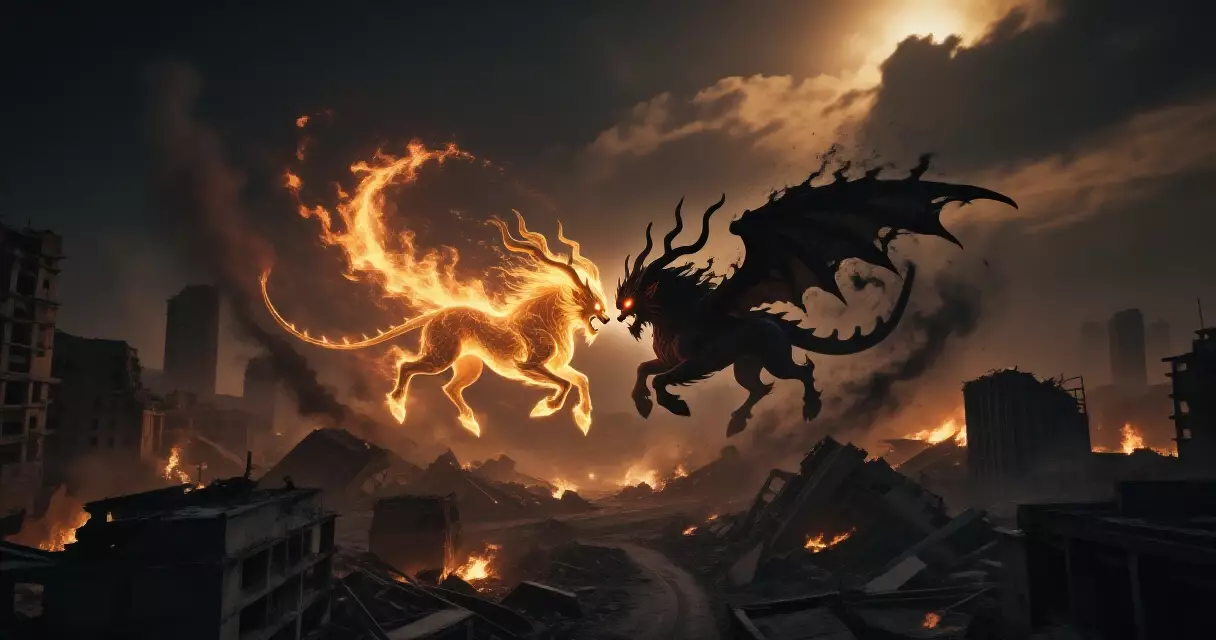
If one element of Final Fantasy XVI approaches universal praise, it is the Eikon-versus-Eikon boss encounters. These are set-piece battles in which Clive transforms into a full Eikon and fights another Eikon at titanic scale – think two kaiju grappling across a burning sky. The Phoenix-versus-Ifrit sequence early in the game functions as a vertical slice of the ambition, but later encounters – particularly Clive-as-Titan versus Titan Lost and the Bahamut sequence – escalate the scale to genuinely jaw-dropping effect.
These sections blend quick-time events, rail-shooter segments, and actual combat in a way that feels closer to interactive cinema than traditional gameplay. Critics including those at Eurogamer and IGN specifically cited the Bahamut fight as one of the most technically impressive sequences in a console game to date. The trade-off is control: the game takes the wheel during these moments, and player agency shrinks to pressing prompted buttons at the right time.
Visuals, Audio, and Performance
Final Fantasy XVI is one of the best-looking games on PlayStation 5. The art direction – European dark fantasy, closer to Berserk than to the vibrant anime palette of Final Fantasy VII Remake – is consistent and confident. Environments range from sun-scorched deserts to frozen tundra to lush woodland, and each biome achieves a high level of detail. The character models hold up in close-up during the game’s frequent dialogue scenes, and the particle work during Eikon battles is spectacular.
Two graphics modes were available at launch: a Performance mode targeting 60fps at a dynamic 1080p-to-1440p range, and a Quality mode targeting 30fps at 4K. A patch released after launch added a third mode offering improved resolution at 60fps. Most players recommend Performance mode – the combat reads far better at 60fps.
The soundtrack, composed by Masayoshi Soken (also responsible for Final Fantasy XIV’s acclaimed score), is exceptional. Tracks cycle between orchestral grandeur, prog-rock riffing, and quiet acoustic pieces depending on the scene. “Find the Flame” and “Titan Lost” are among the strongest pieces in series history. The English voice work is uniformly strong, with Ben Starr delivering a lead performance that carries emotional weight through a 40-hour arc – a tall order that he largely meets.
“The Eikon boss sequences are among the most technically astonishing things the PlayStation 5 has produced – interactive cinema at a scale that makes Clive’s moment-to-moment combat feel almost quaint by comparison.”
Pros and Cons
| Pros | Cons |
|---|---|
| Exceptional story with mature themes and strong performances | RPG systems are stripped back to near-bare minimum |
| Combat ceiling is genuinely high and satisfying for action fans | Default difficulty offers little challenge on first playthrough |
| Eikon boss battles are visually spectacular and technically impressive | Side quests are mostly simple fetch tasks with minimal narrative reward |
| World-building is rich and densely detailed | Heavy reliance on cinematics can make pacing feel stop-and-start |
| Outstanding soundtrack by Masayoshi Soken | No multiplayer or co-op mode of any kind |
| Mature ESRB rating allows genuine dramatic darkness | PC port at launch had some performance inconsistencies |
| Strong accessibility options via assist rings | Completionist side content can feel padded in later acts |
How It Compares to Other Major Action-RPGs
Placing Final Fantasy XVI in its competitive context is useful for deciding whether it belongs on your shelf. Elden Ring remains the gold standard for action-RPG depth in this generation: its systemic richness, open world, and punishing difficulty offer a fundamentally different experience that will satisfy players looking for RPG meat. Baldur’s Gate 3 occupies the opposite end of the spectrum – party management, turn-based tactics, branching narrative choices – and represents a maximalist vision of RPG tradition. Final Fantasy XVI sits in neither camp.
The closer comparison is Devil May Cry 5 (2019), also featuring combat design by Ryota Suzuki. XVI’s combat is less technically demanding than DMC5 but embeds that action framework within a 40-hour story-driven structure that DMC5 never attempts. If you want story-forward action with JRPG DNA, XVI delivers. If you want the mechanical complexity that older Final Fantasy games provided, you will need to look at titles like Final Fantasy XIV – the MMO that shares XVI’s production leadership – or earlier numbered entries. Our roundup of RPG games with the best stories places XVI among a strong class of narrative-first experiences.
The Witcher 3: Wild Hunt is also a useful reference: like XVI, it prioritizes story and world over combat depth, and was similarly criticized on release for combat that didn’t match its narrative ambition. In hindsight, Witcher 3 is remembered primarily for its writing. XVI may earn the same retrospective reassessment once the debate over its RPG credentials fades.
DLC: Echoes of the Fallen and The Rising Tide
Two downloadable expansions followed the base game. Echoes of the Fallen (released December 2023) is a shorter dungeon-focused add-on of roughly four hours, adding a new Eikon encounter and a set of end-game weapons. Critical response was positive but muted – it was seen as solid content without expanding the formula.
The Rising Tide (released April 2024) is the more substantial expansion, introducing Leviathan – the only major series Eikon absent from the base game – alongside a new region, new story content, and additional abilities. At approximately eight hours for the main content, it is a proper expansion rather than a content pack. Both DLCs are included in the Expansion Pass ($29.99 USD at launch) or bundled in the Complete Edition that appeared alongside the PC release.
Who Should Play Final Fantasy XVI?
Final Fantasy XVI is best suited for players who prioritize cinematic storytelling, action-game combat, and spectacular set-piece design over systemic depth. It is an excellent entry point for people new to the Final Fantasy franchise who might be intimidated by older titles’ menus and mechanics. It is also strong for fans of dark fantasy narratives – Game of Thrones viewers, Berserk readers, players who responded to the tone of Final Fantasy XIV’s Shadowbringers expansion.
It is a harder sell for players who came to Final Fantasy for its turn-based or strategy-adjacent combat traditions, for those who want a large party of characters to invest in equally, or for anyone seeking the systemic depth that games like the best single-player RPGs with 100+ hours typically offer. The game runs approximately 35-40 hours for the main story – unusually lean for a numbered Final Fantasy – which means it also doesn’t scratch the same itch as a sprawling 80-hour RPG.
For players wondering whether action RPGs are the right genre fit, our comparison of RPG games vs. action games breaks down the genre distinctions in detail. XVI lives firmly in the overlap zone.
Verdict and Score
Final Fantasy XVI is a confident, striking game that achieves most of what it sets out to do. The story is the best in the series since Final Fantasy X, the boss battles are jaw-dropping, the music is among Masayoshi Soken’s finest work, and the world of Valisthea earns its place among gaming’s more memorable fantasy settings. These are real accomplishments.
The cost of that confidence is clear. By shedding the RPG systems that defined the series – party management, stat-building, equipment depth – XVI asks you to accept a trade: depth for spectacle, complexity for accessibility. Whether that trade is worth it depends entirely on what you want from a 40-hour game. Action-game fans will find it a revelation. Traditional JRPG fans will find it incomplete. Both responses are legitimate.
The Play Journal Score: 8.5 / 10 – A bold, beautiful action-RPG that earns its ambition even as it abandons much of what made the series famous.
Frequently Asked Questions
Is Final Fantasy XVI a true RPG or more of an action game?
Final Fantasy XVI occupies an ambiguous position in genre classification. Its combat is a full real-time action system with no pause or command menus, designed by a developer (Ryota Suzuki) who came from Capcom’s Devil May Cry 5. The RPG elements – leveling, equipment, ability customization – are present but significantly simplified compared to series tradition. Metacritic and the ESRB classify it as an action-RPG, which is the most accurate label. Players who define RPG primarily by systemic depth, character builds, and party management will find XVI closer to an action game with RPG dressing. Players who define RPG by story scope, world-building, and character progression will find it comfortable territory. Our breakdown of every type of RPG explained covers where action-RPGs sit on the genre spectrum.
How long does it take to complete Final Fantasy XVI?
According to aggregated playtime data from HowLongToBeat, the main story takes approximately 35-40 hours for players moving at a moderate pace. Completing all major side quests alongside the main story pushes that to roughly 50-55 hours. Full completionists aiming for all trophies, high-difficulty content, and both DLC expansions should expect 65-80 hours of total content. This is shorter than many numbered Final Fantasy entries – Final Fantasy XII and Final Fantasy XIII both exceed 50 hours for main story completion – but longer than a typical action game. The two DLC packs (Echoes of the Fallen, approximately 4 hours; The Rising Tide, approximately 8 hours) add meaningful content for players who want to extend their time in Valisthea after the credits roll.
Do you need to have played previous Final Fantasy games to understand XVI?
No. Final Fantasy XVI is a standalone story with entirely original characters, world, and lore. The numbered mainline Final Fantasy games are anthology entries – each takes place in a separate universe with no shared continuity. The only connections between XVI and earlier entries are thematic (crystals, Eikons/Summons, Chocobos, a character named Cid) rather than narrative. This means XVI is one of the better entry points for newcomers to the franchise, particularly those who might be put off by the history of a series stretching back to 1987. The game’s Active Time Lore system also means it explains its own world extensively in-game, so there is no assumed knowledge required beyond familiarity with dark fantasy conventions.
Is Final Fantasy XVI available on PC and Xbox?
As of 2026, Final Fantasy XVI is available on PlayStation 5 (June 2023) and PC via Steam and the Epic Games Store (September 17, 2024). There is no Xbox version currently available or officially announced. The game was part of a timed PlayStation exclusivity arrangement, which is why the PC version arrived approximately 15 months after the console launch. The PC version includes both DLC expansions as part of the Complete Edition. Performance on PC at launch drew some criticism for optimization inconsistencies, though subsequent patches addressed the worst issues. An Xbox release has not been ruled out long-term, but Square Enix has made no official announcement regarding one as of mid-2026.
How does Final Fantasy XVI compare to Final Fantasy VII Remake?
Both games represent Square Enix moving the Final Fantasy franchise toward action combat, but they take different approaches. Final Fantasy VII Remake retains a party system, allows character switching mid-combat, includes a pressuring mechanic tied to enemy weaknesses, and features an ATB bar that introduces strategic pause. XVI removes all of that – there is one playable character, no party switching, no elemental weakness system, and no menu-based commands outside of Eikon ability selection. VII Remake is more complex mechanically. XVI is more spectacle-driven. Both games are story-heavy and cinematic, but XVI’s narrative is darker and more self-contained, while VII Remake’s story is explicitly the first part of a multi-game project. If you enjoyed VII Remake’s balance of action and RPG mechanics, XVI will feel like a more extreme version of that same direction.
What is the Eikon ability system and how does it work?
Eikons are the god-like summon creatures at the center of Final Fantasy XVI’s mythology and its combat system. As Clive defeats Dominants (humans who host Eikons), he absorbs their Eikon’s power and gains access to a set of abilities tied to that Eikon. You equip three Eikons simultaneously, each occupying a slot. Each Eikon provides several active abilities (assigned to button combinations), a passive Eikon Feat, and an main Limit Break attack. You can level abilities through use, and once mastered, their passive effects can be transferred to different Eikon slots, allowing for mix-and-match builds. The system becomes most interesting once you have access to a full roster of Eikons – roughly the second half of the game – and is most rewarding in New Game Plus difficulty, where you face enemies that actually require optimized loadouts.
Is Final Fantasy XVI worth playing in 2026?
Yes, particularly at its current reduced price point. The base game is widely available for $29.99-$39.99 USD as of 2026, and the Complete Edition (including both DLC expansions) frequently appears in PlayStation Store sales. The story holds up well – its political themes and character work are not time-sensitive. The combat remains among the best action systems in a story-driven game of its scale. For players who haven’t experienced it, 2026 is actually a good time to play: both DLC packs are complete, patches have addressed early performance concerns on both platforms, and you can play the full package without waiting. If you’re building a collection of the best action-RPGs of this console generation, XVI belongs on the list alongside Elden Ring and Final Fantasy VII Rebirth. Check our list of upcoming RPG games in 2025 and 2026 for what’s next in the genre.
Related Reading
- RPG Games Master Guide: Best Titles, Subgenres & How to Start
- 50 Best RPG Games of All Time, Ranked by Players and Critics
- Best Multiplayer RPG Games Online: MMORPGs, Co-op & Party RPGs
- Best RPG Games for PC in 2025: Top Picks Across Every Subgenre
- Best Single-Player RPG Games That Deliver 100+ Hours of Story
- Every Type of RPG Game Explained: JRPG vs CRPG vs Action RPG
- How to Get Into RPG Games: A Beginner's Roadmap for 2025
- RPG Game Mechanics Explained: Stats, Leveling, Loot, and Combat
- RPG Games vs Action Games: Key Differences, Hybrids & Which to Play
- RPG Games With the Best Stories Ever Written, According to Fans
- Upcoming RPG Games in 2025 and 2026: Every Major Release on the Radar
- Baldur's Gate 3 Review: Is It the Greatest RPG Ever Made?
- Divinity: Original Sin 2 Review — The Benchmark for Modern CRPGs
- Dragon Age: The Veilguard Review — Does BioWare Recapture Its RPG Crown?
- Elden Ring Review: How FromSoftware Redefined the Action RPG Genre
- Pathfinder: Wrath of the Righteous Review — The CRPG Fans Deserve
- Persona 5 Royal Review: Why This JRPG Is a Once-in-a-Generation Game
- The Witcher 3: Wild Hunt Review — Still Gold Standard in 2025?
Sources
- Square Enix sales announcement (June 2023) – square-enix.com
- Metacritic – Final Fantasy XVI PS5 score – metacritic.com/game/final-fantasy-xvi/
- HowLongToBeat – playtime aggregation – howlongtobeat.com
- Eurogamer review – Final Fantasy XVI – eurogamer.net
- IGN review – Final Fantasy XVI – ign.com
- Wikipedia – Final Fantasy XVI – en.wikipedia.org/wiki/Final_Fantasy_XVI
Gaming Laptop Buyer’s Guide: Performance, Portability & Best Models