

Summary
PC gaming has long been the natural home of the RPG genre. From the earliest text-based dungeon crawlers of the 1970s to sprawling open-world epics with hundreds of hours of content, the PC platform hosts more role-playing game options than...
Table of contents
- 1 Why PC Is Still the Best Platform for RPGs
- 2 The Best Action RPGs for PC
- 3 The Best CRPGs for PC (Classic Role-Playing Games)
- 4 The Best Open-World RPGs for PC
- 5 JRPGs on PC: The Best Japanese RPGs Available
- 6 Indie RPGs on PC: Hidden Gems Worth Playing
- 7 PC RPG Comparison: Quick Reference Table
- 8 PC RPG Hardware and Performance: What You Need
- 9 A Brief History of PC RPGs: From Dungeon Crawlers to Modern Masterpieces
- 10 How to Choose the Right PC RPG for You
- 11 Frequently Asked Questions About PC RPGs
- 11.1 What is the best RPG game for PC right now?
- 11.2 What is the difference between a CRPG and a JRPG?
- 11.3 Are there good free-to-play RPGs for PC?
- 11.4 What PC specs do I need to play modern RPGs?
- 11.5 What RPG should a complete beginner start with on PC?
- 11.6 Is Elden Ring considered an RPG?
- 11.7 How long does it take to finish a typical RPG on PC?
- 11.8 Are PC RPGs better with mods?
- 12 Related Reading
- 13 Sources
PC gaming has long been the natural home of the RPG genre. From the earliest text-based dungeon crawlers of the 1970s to sprawling open-world epics with hundreds of hours of content, the PC platform hosts more role-playing game options than any other. According to Wikipedia’s role-playing video game overview, the genre traces its direct roots to tabletop Dungeons & Dragons, and PC became its primary development platform almost immediately after the personal computer arrived in homes. Today, Steam alone lists over 15,000 games tagged “RPG,” making the selection both exciting and genuinely overwhelming for newcomers and veterans alike.
Why PC Is Still the Best Platform for RPGs
Console ports have improved dramatically, but PC retains several concrete advantages for RPG players. Modding support is the most cited reason: games like The Elder Scrolls V: Skyrim and Fallout 4 have active modding communities that have extended those games’ lifespans by a decade or more, adding new quests, visual overhauls, and gameplay systems that transform the base experience. The Nexus Mods platform hosts over 600,000 individual mod files across all supported games, the majority of which are for RPG titles.
Beyond mods, PC offers precise mouse-and-keyboard controls that many isometric and tactical RPGs were designed around. Games in the CRPG tradition – Divinity: Original Sin 2, Pillars of Eternity, Pathfinder: Wrath of the Righteous – are playable on consoles but genuinely feel at home on PC, where clicking through dialogue trees, managing inventory grids, and commanding party members in tactical combat is faster and more intuitive.
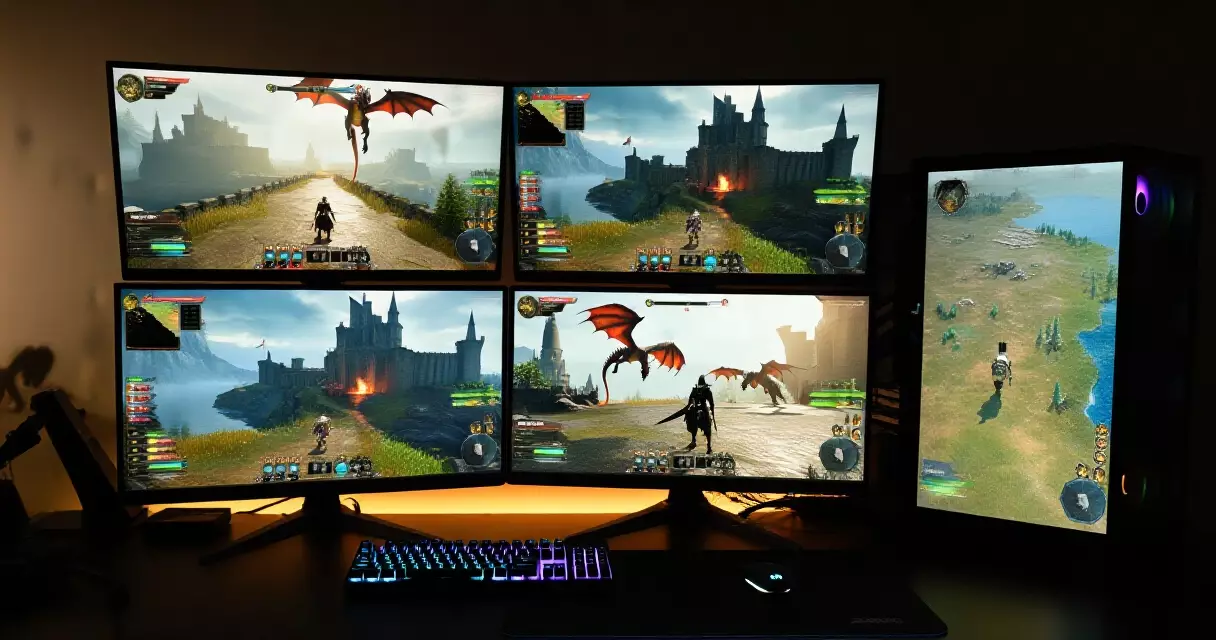
The Best Action RPGs for PC
Action RPGs blend real-time combat with character progression, skill trees, and loot systems. This subgenre has produced some of the most-played games on PC over the past decade. If you want to understand how action RPGs differ from other styles, our guide to every type of RPG explained breaks down the distinctions clearly.
Elden Ring (2022, FromSoftware) is the benchmark action RPG of this era. Its open-world design – a first for the Soulsborne series – combined with its punishing-but-fair combat and exceptional world-building earned it Game of the Year at The Game Awards 2022. On PC, the game benefits from uncapped frame rates (with community patches addressing early performance issues) and an active modding scene that has added new weapons, bosses, and even entirely new gameplay modes.
Diablo IV (2023, Blizzard Entertainment) revived the action-RPG dungeon crawler format for the current hardware generation. Its seasonal content model keeps the experience fresh, with each season adding new mechanics, items, and story chapters. Players looking for deep loot systems and endless character build experimentation will find hundreds of hours here.
Path of Exile 2 (2024, Grinding Gear Games) is the free-to-play alternative that many hardcore ARPG fans prefer for sheer depth. Its passive skill tree – a staggering web of over 1,300 nodes – offers customization depth that paid games rarely match. The sequel reworked the engine and visual presentation substantially while retaining the complexity that built Path of Exile’s dedicated fanbase.
Hades (2020, Supergiant Games) redefined expectations for roguelite action RPGs. Our own Hades review called it a near-perfect fusion of tight gameplay, narrative depth, and replayability – a claim the game’s 96 Metacritic score largely supports. Its sequel, Hades II, entered early access in 2024 and is already receiving strong reception.
The Best CRPGs for PC (Classic Role-Playing Games)
Computer RPGs – CRPGs – are the PC-native subgenre: turn-based or pause-and-play tactical combat, deep dialogue systems, complex narratives, and party management. This is the genre of Baldur’s Gate, Planescape: Torment, and Fallout 1 and 2. It has seen a major commercial and critical resurgence since the mid-2010s.
Baldur’s Gate 3 (2023, Larian Studios) is the most significant RPG release of the decade. Built on the Dungeons & Dragons 5th Edition ruleset – the same system that has brought D&D to its highest player counts ever according to Wikipedia – the game offers a degree of player agency and reactivity unprecedented in a video game RPG. Choices made in Act 1 ripple through Act 3 in ways that took players months of community discussion to fully map. It swept Game of the Year awards for 2023, winning The Game Awards, BAFTA Game of the Year, and dozens of other top prizes.
Divinity: Original Sin 2 (2017, Larian Studios) remains one of the highest-rated RPGs ever released, holding a 93 Metacritic score. Its four-player cooperative mode was a revelation for the genre, and its systemic approach to combat – where environmental elements like oil, fire, and electricity interact to create emergent tactical situations – still feels fresh. Many players consider it the best pure CRPG available even years after release.
Pillars of Eternity II: Deadfire (2018, Obsidian Entertainment) is the critically acclaimed sequel that pushed the isometric CRPG formula further with real-time naval exploration and a more dynamic faction system. Obsidian followed it with The Outer Worlds (2019), a first-person CRPG that trades fantasy for retro-futurist science fiction, offering a more accessible entry point to the studio’s brand of morally complex storytelling.
Pathfinder: Wrath of the Righteous (2021, Owlcat Games) adapts the Pathfinder tabletop RPG system – known for being more mechanically complex than D&D 5e – into a sprawling 100-hour campaign. It rewards players who enjoy deep character builds and tactical depth over narrative accessibility.
Baldur’s Gate 3 didn’t just win Game of the Year – it reset expectations for what a CRPG can achieve in terms of player agency, production quality, and sheer content volume.
The Best Open-World RPGs for PC
Open-world RPGs prioritize exploration and player freedom above all else. The genre has its own long PC history, running from Morrowind through the Witcher series to Cyberpunk 2077. These are games built for dozens or hundreds of hours of play.
The Witcher 3: Wild Hunt (2015, CD Projekt Red) is, by almost any measure, one of the greatest open-world RPGs ever made. Its two major expansions – Hearts of Stone and Blood and Wine – are frequently cited as better than most standalone games. The 2022 Next-Gen Update brought ray-traced visuals and performance improvements that make it look like a current-generation release. It has sold over 50 million copies across all platforms.
Cyberpunk 2077 (2020/2022, CD Projekt Red) had a troubled launch but was transformed by the Phantom Liberty expansion (2023) and the 2.0 patch into one of the best open-world RPGs on PC. Its reworked perk system, improved police AI, and expanded skill trees give it a depth the launch version lacked. On high-end PC hardware with ray-tracing enabled, it remains one of the most visually impressive games ever released.
The Elder Scrolls V: Skyrim needs little introduction. Released in 2011, it has been re-released, remastered, and ported across more than a dozen platforms. On PC, the modding community keeps it perpetually relevant – mods like “Enderal: Forgotten Stories” (a free total conversion with an entirely original story) are themselves considered among the best RPGs available and are distributed as free standalone games on Steam.
Starfield (2023, Bethesda Game Studios) applies Bethesda’s open-world RPG formula to a space exploration setting. Critical reception was more mixed than Skyrim or Fallout 4, but its PC version launched with robust modding tools and the Creation Kit, meaning the community has already begun the kind of long-tail content production that extended Skyrim’s life for over a decade.
JRPGs on PC: The Best Japanese RPGs Available
Japanese RPGs were historically console-first and PC-last – or PC-never. That has changed substantially. Publishers like Atlus, Square Enix, and Bandai Namco now treat PC as a primary launch platform or release PC versions within months of console launches. If you’re new to the JRPG format, our beginner’s guide to getting into RPG games covers what makes JRPGs distinctive and where to start.
Persona 5 Royal (2022, Atlus) was the PC debut of Atlus’s flagship series and arrived nearly two years after the PS4/PS5 versions. It brought the complete Persona 5 experience – base game plus Royal’s additional semester, characters, and story content – and was met with near-universal acclaim from PC players who had waited years. Its blend of high school social simulation, dungeon-crawling, and demon negotiation remains one of the most distinctive experiences in gaming.
Final Fantasy XVI (2024, Square Enix) marked the mainline Final Fantasy series’ PC debut after a six-month PlayStation exclusivity window. It takes the series in a decisively action-oriented direction, dropping turn-based combat entirely for a system more reminiscent of Devil May Cry. The PC version added graphical options and frame-rate improvements not available on PS5.
Dragon’s Dogma 2 (2024, Capcom) blends JRPG sensibilities with a deeply systemic open world. Its Pawn system – where AI companions can be shared between players and bring knowledge of quests and enemy weaknesses from other players’ worlds – is one of the most original multiplayer-adjacent mechanics in recent memory.
Yakuza: Like a Dragon (2021, Ryu Ga Gotoku Studio) switched the long-running Yakuza series from brawler to turn-based JRPG with the Ichiban Kasuga era. It and its sequel, Like a Dragon: Infinite Wealth (2024), are among the most warmly received RPGs on PC in recent years, praised for their balance of serious crime drama and absurdist humor.
The arrival of Persona 5 Royal on PC in 2022 was a turning point – it signaled that Atlus had finally recognized PC as a market worth serving, opening the door for the rest of the Persona catalog to follow.
Indie RPGs on PC: Hidden Gems Worth Playing
Some of the most inventive role-playing games of the past decade have come from indie studios. PC’s open distribution model – primarily through Steam but also itch.io and GOG – makes it the natural home for these smaller productions.
Disco Elysium (2019, ZA/UM) is the most critically ambitious RPG in years. It removes combat entirely and builds its entire system around skill checks, political ideology, and dialogue. Playing as a detective with no memory, players construct their character’s personality through which of 24 internal “skill voices” they choose to embody. Its writing has been compared favorably to literary fiction, and it won four BAFTA awards in 2020.
Undertale (2015, Toby Fox) remains one of the highest-rated games on Steam, sitting above a 98% positive review ratio from hundreds of thousands of players. Its subversion of RPG combat conventions – you can finish the game without killing a single enemy – made it a cultural phenomenon and influenced a generation of indie RPG designers.
Tyranny (2016, Obsidian Entertainment) is criminally underplayed. It inverts the usual RPG premise: you play as a servant of an evil overlord who has already conquered the world, and your role is to enforce his rule. The moral complexity and the speed with which it can be completed (relatively short for a CRPG at 20-30 hours) make it an ideal entry for players who want depth without a 100-hour commitment.
Caves of Qud is a deep science-fantasy roguelike RPG with a procedurally generated world and a character creation system of staggering breadth. It has built a devoted community and is frequently recommended by players who have exhausted more mainstream RPG options.

PC RPG Comparison: Quick Reference Table
The table below covers the key details for each recommended title. Metacritic scores sourced from Metacritic; playtime estimates are aggregated community averages.
| Game | Subgenre | Developer | Year | Metacritic (PC) | Avg. Playtime |
|---|---|---|---|---|---|
| Baldur’s Gate 3 | CRPG / Turn-Based | Larian Studios | 2023 | 96 | 150+ hrs |
| Elden Ring | Action RPG | FromSoftware | 2022 | 95 | 60-100 hrs |
| The Witcher 3: Wild Hunt | Open-World RPG | CD Projekt Red | 2015 | 93 | 100+ hrs |
| Divinity: Original Sin 2 | CRPG / Turn-Based | Larian Studios | 2017 | 93 | 80-100 hrs |
| Persona 5 Royal | JRPG / Turn-Based | Atlus | 2022 (PC) | 95 | 100-120 hrs |
| Disco Elysium: The Final Cut | Narrative RPG | ZA/UM | 2019/2021 | 97 | 25-40 hrs |
| Hades | Roguelite ARPG | Supergiant Games | 2020 | 96 | 50-100 hrs |
| Path of Exile 2 | ARPG / Dungeon Crawler | Grinding Gear Games | 2024 | TBD (EA) | Ongoing |
| Cyberpunk 2077 | Open-World RPG | CD Projekt Red | 2020/2023 | 86 | 60-100 hrs |
| Like a Dragon: Infinite Wealth | JRPG / Turn-Based | Ryu Ga Gotoku Studio | 2024 | 93 | 60-90 hrs |
PC RPG Hardware and Performance: What You Need
Not every RPG on this list demands current hardware. The genre’s range runs from pixel-art indie titles that run on decade-old laptops to graphical showcases that stress current top-tier GPUs. The table below gives practical guidance.
| Performance Tier | GPU Target | RAM | Recommended Games |
|---|---|---|---|
| Budget / Older PC | GTX 1060 / RX 580 | 8 GB | Hades, Undertale, Disco Elysium, Tyranny, Pathfinder: WotR |
| Mid-Range | RTX 3060 / RX 6600 XT | 16 GB | Baldur’s Gate 3, Divinity: OS 2, Elden Ring, Persona 5 Royal |
| High-End | RTX 4070 / RX 7800 XT | 16-32 GB | Cyberpunk 2077 (high RT), The Witcher 3 (Next-Gen, RT), Starfield |
| Enthusiast | RTX 4090 / RX 7900 XTX | 32 GB | Cyberpunk 2077 (path tracing), The Witcher 3 (full RT + 4K) |
Most CRPGs and JRPGs are not graphically demanding: Baldur’s Gate 3 runs well on mid-range cards despite its visual quality, and Persona 5 Royal was originally a PS3/PS4 game. Action RPGs like Cyberpunk 2077 and the next-gen Witcher 3 update are the ones that benefit most from high-end hardware. If you’re building or upgrading a PC primarily for RPGs, a mid-range system will cover 90% of what’s on this list without issue.
A Brief History of PC RPGs: From Dungeon Crawlers to Modern Masterpieces
Understanding where PC RPGs came from helps explain why the genre is so diverse today. The genre’s lineage is worth tracing – and our full history of RPG games covers this in detail.
The earliest computer RPGs – games like Dungeon (1975) and Akalabeth (1979) – were direct translations of tabletop mechanics to mainframe and early home computers. The 1980s brought the Gold Box D&D games from SSI, which established the template for party-based tactical RPGs that still influences design today. The 1990s were the genre’s first golden age: Ultima VII, Fallout, Baldur’s Gate, and Planescape: Torment all arrived within a few years of each other and set standards for narrative ambition that the industry is still reaching toward.
The 2000s saw a dip as action RPGs and console-first development pulled the industry away from deep PC-native CRPGs. But Kickstarter campaigns for Pillars of Eternity (2014) and Torment: Tides of Numenera (2017) proved that demand for the classic format had never gone away – it was just underserved. The crowdfunding-backed CRPG revival fed directly into Larian Studios’ confidence to build Baldur’s Gate 3, closing a loop that ran from 1998 to 2023.
How to Choose the Right PC RPG for You
With thousands of options available, the most useful filter is honest self-assessment about how you want to play. The questions below narrow the field quickly.
Do you want real-time or turn-based combat? This is the single biggest dividing line. Action RPGs and open-world RPGs like Elden Ring, Cyberpunk 2077, and The Witcher 3 use real-time combat where your reflexes matter. CRPGs like Baldur’s Gate 3, Divinity: Original Sin 2, and JRPGs like Persona 5 Royal use turn-based systems where you can take as long as you need to make decisions. Neither is better – they’re different experiences.
How much time do you have? Disco Elysium and Tyranny can be completed in 25-40 hours. Hades is infinitely replayable in short sessions. Baldur’s Gate 3, The Witcher 3 with all expansions, and Persona 5 Royal are 100-150+ hour commitments. Diablo IV and Path of Exile 2 are effectively endless.
Do you want a story or a system? Narrative-focused players should look at Disco Elysium, Baldur’s Gate 3, Planescape: Torment, and The Witcher 3. System-focused players who want to optimize builds, chase loot, and master mechanics will find more satisfaction in Path of Exile 2, Divinity: Original Sin 2, or Pathfinder: Wrath of the Righteous.
For a broader framework on finding your entry point into the genre, our master RPG guide covers the full landscape of subgenres, recommended starting points, and how to build from one style to another.
Frequently Asked Questions About PC RPGs
What is the best RPG game for PC right now?
Baldur’s Gate 3 is the consensus best RPG on PC as of 2025. It won Game of the Year at The Game Awards 2023, BAFTA Game of the Year, and dozens of other major awards. Its combination of deep D&D-based rules, extraordinary narrative reactivity, and high production values sets a standard that few games in the genre’s history have matched. For action-focused players, Elden Ring is the equivalent benchmark – a similarly generation-defining achievement in the action RPG subgenre. Both are essential PC experiences, and both go on significant Steam sales multiple times a year.
What is the difference between a CRPG and a JRPG?
CRPGs (computer role-playing games) are the Western PC-native tradition: isometric or first-person, party-based, heavy on dialogue choices, and rooted in tabletop game mechanics. JRPGs (Japanese role-playing games) typically feature a fixed protagonist with a defined story, anime-influenced visual style, and structured linear or semi-linear narratives with deep turn-based combat systems. The distinction has blurred as Japanese publishers release more games on PC and Western developers adopt JRPG conventions. Games like Elden Ring resist easy classification – it’s a Japanese-developed game that plays like a Western action RPG. Our guide to every type of RPG covers this in more detail.
Are there good free-to-play RPGs for PC?
Yes, several are genuinely excellent. Path of Exile 2 (Grinding Gear Games) is free-to-play on Steam with optional cosmetic purchases and no pay-to-win mechanics – it is considered one of the deepest ARPGs available at any price. Genshin Impact (miHoYo) is a gacha-adjacent open-world action RPG with high production values and regular content updates; its monetization model is more aggressive, but the base game is entirely free. Lost Ark (Smilegate) offers a Korean ARPG MMO experience at no cost. Warframe sits at the edge of the RPG genre but has deep progression systems and is completely free-to-play with a fair economy.
What PC specs do I need to play modern RPGs?
It depends heavily on which RPGs you want to play. CRPGs like Baldur’s Gate 3 and Divinity: Original Sin 2, and JRPGs like Persona 5 Royal, run well on mid-range hardware: an NVIDIA GTX 1660 Super or AMD RX 5700, 16 GB of RAM, and a modern CPU (Intel i5 or AMD Ryzen 5 generation from 2019 onward) will cover most of the titles on this list comfortably at 1080p. Graphically demanding open-world games like Cyberpunk 2077 with ray-tracing enabled or The Witcher 3 in next-gen mode at 4K do benefit from higher-end hardware, but those titles also scale down well for lower-spec systems with settings adjustments.
What RPG should a complete beginner start with on PC?
The best first RPG depends on your broader gaming background. If you’re comfortable with action games, Hades is the ideal entry: its roguelite structure means short sessions, there’s no way to permanently fail, and the combat is immediately satisfying without requiring prior RPG knowledge. If you prefer slower, story-driven games, The Witcher 3 is perhaps the most accessible open-world RPG with narrative sophistication. For those interested in the CRPG tradition, Divinity: Original Sin 2’s co-op mode with a friend is a welcoming introduction – you learn the systems together. Our beginner’s guide to RPG games walks through all of these starting points in detail.
Is Elden Ring considered an RPG?
Yes, Elden Ring is an action RPG by any meaningful definition. It features character leveling, a large selection of stats to allocate on level-up, weapon and armor progression, multiple viable build paths (strength, dexterity, intelligence, faith, arcane, and hybrid combinations), and NPC questlines with meaningful story implications. What makes it feel different from games like The Witcher 3 or Baldur’s Gate 3 is its minimal explicit narrative, its emphasis on combat skill, and its use of environmental rather than dialogue-driven storytelling. The action and difficulty are front-facing; the RPG systems are deep but left to players to discover.
How long does it take to finish a typical RPG on PC?
The range is enormous. Short narrative RPGs like Disco Elysium or Tyranny can be finished in 20-40 hours. Mid-length games like Hades (story completion), Elden Ring (main bosses only), or Dragon’s Dogma 2 run 40-70 hours for a focused playthrough. Epic-length games like Baldur’s Gate 3, Persona 5 Royal, and The Witcher 3 with all expansions regularly demand 100-150 hours or more for thorough playthroughs. Live-service ARPGs like Diablo IV and Path of Exile 2 have no defined endpoint – they’re designed for seasonal ongoing play. The site HowLongToBeat aggregates community playtime data for almost every major RPG release and is a useful reference before committing to a game.
Are PC RPGs better with mods?
For some titles, mods transform the experience entirely. Skyrim’s modding community has produced thousands of high-quality additions – from visual overhauls and new questlines to total conversions like Enderal that stand alone as complete games. Baldur’s Gate 3 has a growing mod ecosystem supported by official Larian modding tools. Divinity: Original Sin 2 has a built-in game master mode and supports custom campaigns. For other games, mods are useful but not transformative – Elden Ring mods add challenge runs and new weapons, but the base game is considered essentially complete. Whether mods are essential depends on the game and your specific preferences. The Nexus Mods platform is the main hub for most PC RPG mods.
Related Reading
- RPG Games Master Guide: Best Titles, Subgenres & How to Start
- 50 Best RPG Games of All Time, Ranked by Players and Critics
- Best Multiplayer RPG Games Online: MMORPGs, Co-op & Party RPGs
- Best Single-Player RPG Games That Deliver 100+ Hours of Story
- Every Type of RPG Game Explained: JRPG vs CRPG vs Action RPG
- How to Get Into RPG Games: A Beginner's Roadmap for 2025
- RPG Game Mechanics Explained: Stats, Leveling, Loot, and Combat
- RPG Games vs Action Games: Key Differences, Hybrids & Which to Play
- RPG Games With the Best Stories Ever Written, According to Fans
- Upcoming RPG Games in 2025 and 2026: Every Major Release on the Radar
- Baldur's Gate 3 Review: Is It the Greatest RPG Ever Made?
- Divinity: Original Sin 2 Review — The Benchmark for Modern CRPGs
- Dragon Age: The Veilguard Review — Does BioWare Recapture Its RPG Crown?
- Elden Ring Review: How FromSoftware Redefined the Action RPG Genre
- Final Fantasy XVI Review: A Bold Action-RPG Departure
- Pathfinder: Wrath of the Righteous Review — The CRPG Fans Deserve
- Persona 5 Royal Review: Why This JRPG Is a Once-in-a-Generation Game
- The Witcher 3: Wild Hunt Review — Still Gold Standard in 2025?
Sources
- Wikipedia: Role-playing video game – genre history and definition
- Wikipedia: Nexus Mods – mod file count and platform overview
- Wikipedia: Dungeons & Dragons – D&D player count data and 5th Edition context
- Metacritic – PC critic score aggregation for all listed titles
- HowLongToBeat – community playtime estimates for RPG titles
Gaming Laptop Buyer’s Guide: Performance, Portability & Best Models