Summary
Valve’s publicly-released platform data shows that more than 14,000 games launched on Steam in 2023 alone, a record that keeps rising as self-publishing barriers continue to fall. Against that backdrop, the median new release earns a fraction of what its...
Table of contents
- 1 Why So Many Indie Games Go Unnoticed
- 2 Start Marketing Before You Finish the Game
- 2.1 Finding Your Game’s Hook
- 3 Optimize Your Steam Page Like a Marketer
- 4 Social Media Strategy for Indie Developers
- 5 Building a Press Kit and Reaching Out to Media
- 6 Influencer and Streamer Marketing
- 7 Community Building Through Discord and Email
- 8 Your Pre-Launch Marketing Timeline
- 9 Launch Week Tactics That Actually Move the Needle
- 10 Post-Launch: Keeping the Momentum Going
- 11 Frequently Asked Questions
- 11.1 How early should I start marketing my indie game?
- 11.2 How much does indie game marketing typically cost?
- 11.3 Do I need a publisher to market an indie game?
- 11.4 What is a Steam wishlist and why does it matter so much?
- 11.5 How do I find the right streamers and YouTubers to cover my game?
- 11.6 Should I use Kickstarter or crowdfunding to market my indie game?
- 11.7 Can I successfully market an indie game with no budget at all?
- 12 Related Reading
- 13 Sources
Valve’s publicly-released platform data shows that more than 14,000 games launched on Steam in 2023 alone, a record that keeps rising as self-publishing barriers continue to fall. Against that backdrop, the median new release earns a fraction of what its creator hoped, and the primary culprit is rarely game quality. Visibility, timing, and deliberate promotion separate titles that generate sustainable revenue from those that vanish within days of launch. Whether you are a solo developer or a small team, understanding how to market an indie game is as essential as knowing how to build one – and the good news is that the playbook is learnable.
Why So Many Indie Games Go Unnoticed
The Steam discovery problem is quantifiable. Independent game development has exploded since the early 2010s, and Steam’s catalog passed 50,000 available titles in the early 2020s with no sign of decelerating growth. Most new releases receive only a brief algorithmic spotlight in the “New and Trending” section before being displaced within hours by the next wave of launches. Without a pre-existing audience or strong early review velocity, a game can fall permanently out of Steam’s active recommendation queues before most players ever encounter it.
The breakout examples offer both inspiration and a warning. Poncle’s Vampire Survivors reached over three million copies sold within its first year after launching in early access in December 2021, driven largely by TikTok clips and Twitch streams rather than traditional press campaigns. Zeekerss’ Lethal Company exploded across YouTube and Twitch in late 2023 through co-op highlight reels with virtually no marketing budget behind them. The pattern is consistent: organic social amplification powered by something genuinely shareable in the game itself. Treating these stories as pure luck, however, misreads the lesson they contain.
Study the launch histories of titles in our guide to the best indie games of all time and a common thread emerges: none of them broke through by accident. Each had some combination of early community building, strategic streamer adoption, or concentrated press attention that focused player awareness into a narrow, high-impact window around release. The developers who replicate those results treat marketing as a discipline, not an afterthought.
Start Marketing Before You Finish the Game
The most common mistake indie developers make is treating marketing as a launch-week activity. By the time most players hear about a game through a press article or an influencer video, the titles that succeed already have a polished Steam coming-soon page, a Discord server with hundreds of engaged members, and a social media following that has watched the game develop for months. That foundation cannot be conjured in seven days, no matter how much effort gets compressed into them.
Starting early produces compounding returns. A player who adds a game to their Steam wishlist six months before launch has had time to form genuine anticipation and converts far more reliably than someone seeing the game for the first time on release day. Email subscribers who have followed devlogs for nine months buy on day one and leave reviews in the first week. Press contacts who received a playable demo in the spring are dramatically more likely to cover a summer launch than a journalist receiving a cold press release at 9 a.m. on release morning.
A practical benchmark: your marketing-ready assets – a first trailer, a key art set, and an active coming-soon page on Steam – should exist no later than 12 months before your target launch date. If you are still in production and want a detailed breakdown of how development phases map to marketing windows, the indie game development timeline guide on this site covers typical phase durations for solo and small-team projects.
Finding Your Game’s Hook
Every game that breaks through has a hook: a single, specific quality that makes it immediately compelling to describe or to watch. For Celeste, developed by Maddy Thorson and Noel Berry, the hook was precision platforming fused with an honest portrayal of anxiety. For Balatro, by solo developer LocalThunk, the hook was a disarmingly simple question: what happens when you apply roguelike progression mechanics to poker? The hook is not the genre or the art style. It is the one sentence that makes someone who has never heard of the game stop scrolling and watch a clip of it all the way through.
Identifying the hook early shapes every subsequent marketing decision. It determines which subreddits the game belongs in, which streamers cover compatible content, what the Steam capsule image must communicate at a glance, and which journalists cover the themes the game explores. Without a clear hook, marketing content feels disconnected and diffuse. With one, every post, trailer, and press pitch reinforces the same coherent message – and players remember it.
Optimize Your Steam Page Like a Marketer
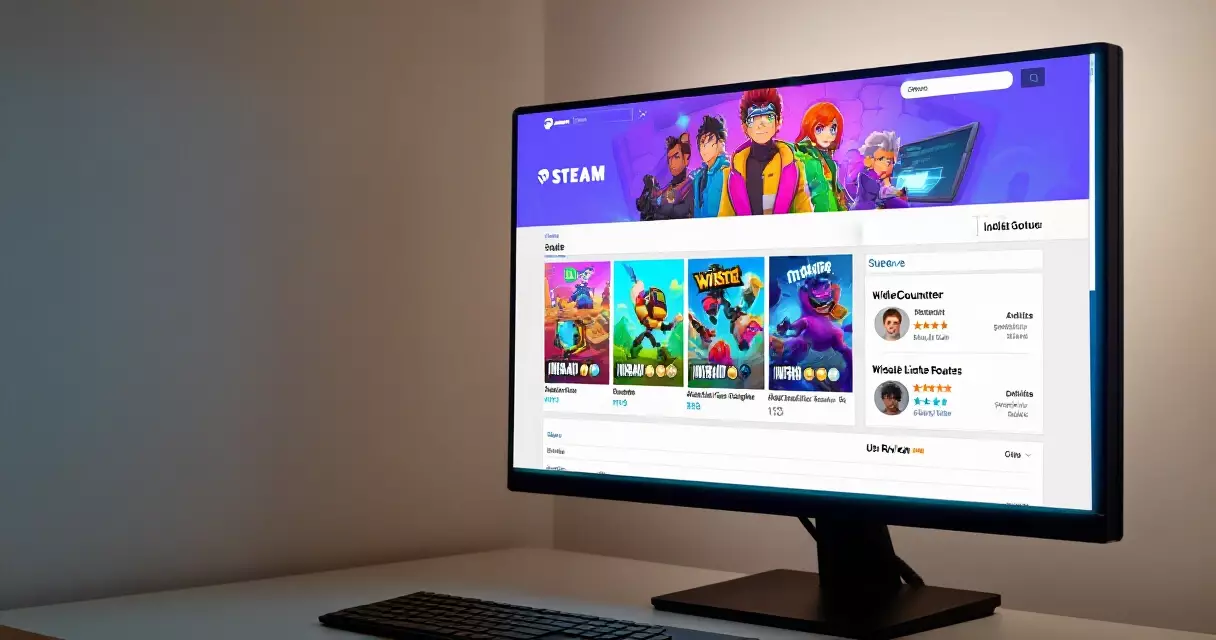
Steam is simultaneously a store and a discovery engine, and those two functions are inseparable for indie developers working without a publisher’s promotional infrastructure. Optimizing a Steam page is not simply a matter of writing better copy: it is about sending the correct signals to Valve’s recommendation algorithm while giving prospective players enough information to commit to adding the game to their wishlist.
Go live on Steam as early as possible. The most effective indie developers open their coming-soon pages six to twelve months before launch. This gives a full campaign cycle to drive wishlist signups organically, generates concrete data on capsule image conversion rates, and allows iteration on the page’s core assets before the stakes are at their highest. Every week the page exists before launch is a week of compound discoverability.
Tags drive a significant share of Steam discovery. The platform’s tag system is how the recommendation algorithm categorizes games and surfaces them to players who have bought similar titles. Research which tags the five most successful games in your subgenre use, then apply the most accurate of those to your page. Avoid tagging for traffic that the game cannot deliver: misleading tags generate high bounce rates and negative reviews from players who expected something different, both of which signal poor quality to the algorithm and reduce future organic reach.
The capsule image and launch trailer are the first impressions that determine whether a browser stops scrolling. The capsule – the small thumbnail players see in search results and the discovery queue – must communicate genre, tone, and visual identity instantly at small display sizes. If graphic design is not a core skill, commissioning a designer specifically for capsule and key art work is one of the highest-use investments available to an indie developer. For the trailer, lead with actual gameplay rather than a cinematic opening. Players want to see what they are buying, not a mood reel that delays showing the game for 45 seconds.
| Steam Page Element | Discoverability Impact | Common Mistakes to Avoid |
|---|---|---|
| Capsule Image | Very High | Too much text overlay; unclear genre signal at small display sizes |
| Gameplay Trailer | Very High | Opens with cinematic instead of gameplay; exceeds 90 seconds before showing core loop |
| Store Tags (up to 20) | Very High | Inaccurate tags chosen for raw traffic; missing the primary genre tag |
| Short Description | High | Vague language; no compelling hook surfaced in the opening sentence |
| Screenshots (min. 5) | High | Low resolution; repetitive content; no variety across different gameplay moments |
| Long Description | Medium | Unformatted wall of text; no feature list or visual breaks between sections |
| Pricing | High | Overpriced relative to genre conventions; extremely low pricing can undercut perceived quality |
Social Media Strategy for Indie Developers
Social media marketing for indie games has shifted considerably since the mid-2010s. A well-timed post on Twitter or a feature on a major games journalism site could once carry a launch on its own. Today, the platforms that drive the most organic discovery are TikTok, YouTube Shorts, and – to a lesser degree – Instagram Reels. Short-form video content showing interesting or surprising game mechanics spreads far faster than static screenshots or written announcements, and the algorithmic bias of short-form platforms toward novelty rewards exactly the kind of creative risk-taking that distinguishes good indie games from their large-studio counterparts.
TikTok has become the single highest-reach organic discovery channel for indie games targeting players under 35. Cult of the Lamb, developed by Massive Monster, and Vampire Survivors accumulated hundreds of millions of combined views across user-generated content on TikTok before either title reached mainstream gaming press in force. The platform rewards gameplay that is visually striking, mechanically surprising, or inherently funny – qualities that inventive indie games possess in abundance. Post consistently rather than perfectly: a 30-second mechanic clip published three times per week outperforms a single polished cinematic trailer uploaded once a month, without exception.
YouTube devlogs serve a different but highly valuable audience segment. Players who follow development diaries are among the most engaged and loyal in any game’s potential audience, and they convert to day-one buyers at a higher rate than casual social media followers. ConcernedApe’s sporadic development updates during Stardew Valley’s extended production, and Team Cherry’s intermittent posts during Hollow Knight’s development cycle, demonstrated that transparency about the development process builds trust that no polished marketing asset can replicate. Professional production values are not required. Genuine, substantive updates are.
Reddit demands an understanding of community norms before it rewards developer participation. Subreddits like r/indiegaming, r/gamedev, and genre-specific communities welcome developer posts when they provide something genuinely useful or interesting to the existing members. A GIF showing a mechanic the team is proud of, a before-and-after comparison of an art improvement, or a request for honest feedback on a sound design decision all perform well. Purely promotional posts with no substance are downvoted, removed by moderators, and damage the developer’s standing in the community. The best approach is authentic participation in relevant subreddits for months before launch, so the eventual release announcement lands in front of people who already know and respect the developer.
Twitter/X remains relevant for reaching journalists, other developers, and the core gaming community, though its organic reach contracted significantly after 2022. Bluesky has gained real traction as an alternative among game developers and games press – particularly in North America and Europe. Building a presence on both platforms, even a minimal one, ensures the developer is reachable wherever games media professionals happen to be active.
“The indie games that find audiences give players something to share before launch: a mechanic clip, a piece of art, a story about how the game got made.”
Building a Press Kit and Reaching Out to Media
Games journalists and content creators receive dozens of press releases and review codes every day. Standing out requires a professional, well-organized press kit and a targeted outreach approach that treats each recipient as an individual, not an entry on a bulk email list.
A press kit should contain: a one-paragraph game overview that leads with the hook; a bullet-pointed key features list; high-resolution screenshots at a minimum of 1920×1080; a gameplay trailer hosted on YouTube or Vimeo with a downloadable version linked; the developer and studio biography; the confirmed release date and target platforms; and the pricing and any early access details. The presskit() website format – created by indie developer Rami Ismail, co-founder of Vlambeer – has become a widely adopted industry standard that journalists appreciate for its consistent structure and one-click access to assets. Building your press presence in this format signals professionalism before a journalist has read a single sentence of the accompanying pitch.
Targeting matters far more than volume. A pixel-art RPG belongs in front of journalists who have recently covered similar titles, not every games outlet with a discoverable contact form. Research the bylines of writers at outlets like Rock Paper Shotgun, Eurogamer, Kotaku, and PC Gamer who cover your specific genre and themes. Reference a recent article they wrote to demonstrate that the pitch is genuine rather than automated. A short, personal pitch of two to three paragraphs sent to 20 relevant journalists will consistently outperform a form letter sent to 200 random contacts.
Send outreach three to six months before launch. Most major gaming outlets plan editorial calendars weeks in advance, and reaching editors early gives them time to schedule preview coverage rather than squeezing you into an already crowded launch-day lineup. A playable demo build or early access key sent with the pitch gives journalists something tangible to experience, which dramatically increases the probability of a written preview or video feature. Sending keys on launch day with no prior contact remains the lowest-return outreach approach in the entire marketing toolkit.
Influencer and Streamer Marketing
Streamer and creator coverage has replaced traditional press as the primary discovery mechanism for a growing share of indie games. When Lethal Company was picked up by Twitch and YouTube creators in late 2023, the resulting wishlist spikes and sales momentum exceeded what any equivalent press campaign could realistically have achieved. Creators deliver something that review articles cannot: an audience that watches the game being played in real time, forming an emotional connection through the creator’s live reaction and commentary rather than through descriptive text.
Building relationships with mid-tier creators – typically those with 15,000 to 400,000 followers on their primary platform – is often more accessible and more conversion-efficient than pitching mega-creators with millions of subscribers. A creator in that range who focuses tightly on a specific subgenre has an audience pre-filtered for exactly the content they cover, and their audiences tend to trust their recommendations on a more personal level. Pitch to creators who already play games like yours: their first-play reactions will be more authentic, and their viewers are already predisposed to the genre.
Provide review codes generously and without conditions. Send keys with no requirement for positive coverage, no scripted talking points, and no demand for a specific upload window. Include a brief one-page document with key game facts, social links, and the release date so creators have reference material if they want it, but make clear it is entirely optional. This approach builds genuine trust and produces more authentic, enthusiastic content than any arrangement that constrains what a creator can say about the game.
Community Building Through Discord and Email
Discord has become the standard community hub for indie game audiences. A well-managed server provides a direct channel to the most engaged players, a live testing ground for design decisions, and a built-in launch-day audience who will buy, review, and recommend the game to their own networks within hours of release. Start the server early and populate it with meaningful channels before inviting anyone in: a bare server with a single general channel signals low investment and loses early members before they have a chance to form attachment to the community.
At minimum, a developer Discord should include a development-updates channel with regular announcements, a feedback channel for structured player input on builds and demos, a media channel where members can share gameplay clips and screenshots, and a general community channel for off-topic discussion. Regular personal updates from the developer in the announcements channel – even brief ones – build a sense of access and inclusion that sustains engagement across a long development cycle. The members who join early and feel genuinely invested in the game’s development are often the first to post about it on launch day without being asked, spreading awareness to their own networks organically.
Email newsletters complement Discord by reaching players who do not manage multiple community platforms. A newsletter delivered every two to four weeks through tools like Mailchimp or Substack, containing a genuine development update and a link to a new piece of content, retains subscribers who might miss social media posts in algorithm-driven feeds. Newsletter subscribers typically convert to purchases at a higher rate than social followers because they opted in deliberately and have higher intent. If you are mapping the cost of these community tools against your overall production budget, the indie game development cost breakdown on this site covers which budget categories solo developers most often underestimate during planning.
“A Discord community built before launch means you have a room full of advocates waiting on release day, not just algorithms to hope for.”
Your Pre-Launch Marketing Timeline
Marketing timelines vary by team size, budget, and development pace, but the structure below reflects what consistently works across indie titles that outperform their launch-day expectations. Resist the temptation to compress the earliest phases: that is where the compounding infrastructure is built, and no amount of launch-week effort fully compensates for its absence.
| Timeframe Before Launch | Priority Marketing Activities |
|---|---|
| 18–12 months | Finalize game hook and core branding; create logo and key art; open social media accounts on primary platforms |
| 12–9 months | Steam coming-soon page live with wishlist enabled; first gameplay trailer published; consistent posting cadence begins |
| 9–6 months | Active Reddit and community participation; devlog series launched on YouTube; Discord server opened to the public |
| 6–3 months | Press kit finalized and distributed; outreach to journalists and podcast hosts begins; demo keys sent to select creators |
| 3–1 months | Steam Next Fest participation if available; launch trailer published; creator review keys distributed widely; press embargo dates agreed |
| Launch week | Review articles and creator videos coordinate to go live; social media push across all channels; Steam launch announcement published |
| Post-launch (ongoing) | Review responses; patch notes announcements on Steam; first seasonal sale participation; update roadmap communication to community |
Launch Week Tactics That Actually Move the Needle
Launch week is not a single day. It is a seven-to-ten-day window that determines whether a game enters Steam’s algorithms in a position of momentum or gets absorbed into the noise. Steam weights purchase velocity heavily in the first week when deciding how much visibility to grant a new title in “New and Popular” listings and personalized recommendation feeds. Every tactical decision in the lead-up to and immediately after release should be designed to concentrate player attention into that narrow window.
Coordinate press coverage through a review embargo that lifts at or just before the launch moment. Embargo agreements give journalists adequate time to play the game properly, then release their articles simultaneously, creating a concentrated wave of external validation visible to Steam browsers at precisely the moment the game is available to purchase. Ask participating streamers and YouTubers to schedule their first video for the first three days after release rather than launch day itself, extending the creator attention wave beyond the initial 24-hour spike.
Respond to early Steam reviews quickly and personally – especially mixed or negative ones. A developer who engages constructively and respectfully with critical feedback demonstrates professionalism that influences browsers who read reviews before deciding to buy. Steam’s system also rewards review velocity, so prompting players through an in-game message, a Discord announcement, or a post-credits screen to leave a review after completing the game is a legitimate and effective tactic. Offering any form of incentive for a positive review violates Valve’s platform terms and risks removal from the storefront.
For developers who have not yet finalized their publishing or funding arrangement, the guide to how to fund an indie game on this site covers the tradeoffs between self-publishing, crowdfunding, and traditional publisher deals, including what marketing support each model typically includes and what it costs.
Post-Launch: Keeping the Momentum Going
Many indie developers treat launch as the natural end of the marketing effort, when the post-launch phase is where some of the most efficient promotion actually takes place. Steam’s seasonal sales – the Summer Sale, Autumn Sale, and Winter Sale – consistently generate significant revenue for games participating in a discount for the first time. When a wishlisted title goes on sale, Steam sends a notification to everyone who has it saved on their list. A wishlist of 10,000 players is effectively 10,000 direct outreach opportunities, delivered by Valve’s own notification infrastructure at zero additional cost to the developer.
Plan the first discount thoughtfully. A 20 to 30 percent reduction for a first participation in a major seasonal sale balances price accessibility with perceived value. Deeper discounts of 50 percent or more are more appropriate for later sale cycles after the game has established its standard price point in players’ minds. Discounting too deeply too early can anchor the game’s perceived value at the sale price, making it harder to maintain full-price revenue between sale events.
Frequently Asked Questions
How early should I start marketing my indie game?
Earlier than feels comfortable. Indie developers who achieve strong launch performance typically began active marketing at least 12 months before release, with many starting 18 months out. The reasoning is compounding infrastructure: a wishlist audience, a social media following, and a Discord community each take time to build, and all three grow faster once some base already exists. Starting 12 months out gives months of runway to test which content types resonate, refine capsule image conversion rates based on real data, and build relationships with journalists and content creators before those relationships are actually needed. Starting at launch means competing for attention at the worst possible moment with no warm audience to activate – which is why many well-made games launch to silence despite genuine quality. If you can only take one piece of advice from this article, let it be: open your Steam page and start posting today.
How much does indie game marketing typically cost?
Costs range from near-zero to tens of thousands of dollars depending on the channels prioritized. The most impactful marketing activities – maintaining a Steam page, posting consistently on TikTok and YouTube, participating authentically on Reddit, and managing a Discord community – are free apart from time. The first meaningful expenses most developers encounter are a professional capsule image and gameplay trailer (ranging from a few hundred to several thousand dollars depending on the talent hired), a domain and email newsletter tool subscription (under $150 per year for most platforms), and event exhibiting costs if attending conventions like PAX Unplugged or IndieCade (which can run $1,000 to $5,000 or more including travel). Paid social advertising on TikTok or Meta can amplify reach but typically performs best once organic traction already exists and there is proven content to amplify. Total intentional marketing budgets for indie games most commonly fall between $2,000 and $20,000, though many breakout titles have launched with considerably less. The most important variable is not money: it is consistent effort applied early enough to compound before launch day arrives.
Do I need a publisher to market an indie game?
No. A publisher is not required, but working with one changes the equation in meaningful ways. Independent publishers like Devolver Digital, Annapurna Interactive, Raw Fury, and Fellow Traveller bring established relationships with press and content creators, social media audiences built over years, and institutional experience running Steam promotional campaigns across multiple release cycles. In exchange, they typically take a revenue share and may influence certain development decisions. Many of the most celebrated self-published indie games – Stardew Valley, which ConcernedApe intentionally self-published after evaluating publisher options, being the most prominent example – succeeded without publisher support by applying exactly the organic strategies covered in this article. Whether a publisher makes sense depends on your personal capacity for sustained marketing work, the scale of your ambitions, and the specific terms any deal on the table actually offers. Research the options carefully before committing either way.
What is a Steam wishlist and why does it matter so much?
A Steam wishlist is a feature that lets players save a game they are interested in but not yet ready to purchase. When a wishlisted title launches or goes on sale, Steam sends each player an email notification. For developers, the wishlist count is one of the most important pre-launch metrics for two reasons. First, it is a direct proxy for purchase intent: a player who wishlisted six months ago has seen enough of the game to be genuinely interested and has already waited, meaning a launch or sale triggers a high-conversion notification directly to their inbox. Second, Valve’s algorithm weights wishlist count as one signal of anticipated demand when determining how much algorithmic visibility to grant at launch. A game releasing with 10,000 wishlists receives meaningfully different algorithmic treatment than one launching with 500. Developers who track wishlist-per-visit conversion rates and iterate on their capsule images and short descriptions to improve those numbers consistently outperform those who treat the Steam page as a set-and-forget asset.
How do I find the right streamers and YouTubers to cover my game?
Start by identifying the two or three games most similar to yours that launched in the past two years, then search those titles on YouTube and Twitch to find the creators who covered them. Creators who already play your genre have audiences pre-warmed to the content type and deliver more authentic coverage because the game genuinely fits what they do. Prioritize creators in the 15,000 to 400,000 subscriber or follower range: large enough to generate meaningful traffic, but accessible enough that a personalized pitch actually gets read. Public tools like TwitchTracker and SullyGnome provide data on which creators stream specific game titles on Twitch, which is useful for building an outreach list systematically. Send a short personal pitch of two or three sentences referencing one of their recent videos, include a review key, and link to the press kit. Follow up once if there is no response, then move on: persistence beyond a second contact damages your reputation in creator communities.
Should I use Kickstarter or crowdfunding to market my indie game?
Crowdfunding platforms like Kickstarter serve a dual function: they raise development funding and generate genuine publicity, because a live campaign with a deadline and a funding goal is inherently newsworthy in a way that a passive coming-soon page is not. Hollow Knight, by Team Cherry, raised AUD $57,776 on Kickstarter in 2015 – well above its AUD $35,000 goal – and the backer community became its first wave of vocal advocates at launch. Undertale, by Toby Fox, was funded on Kickstarter in 2013 and used the platform’s community to seed initial awareness. Running a successful crowdfunding campaign, however, requires significant marketing effort before the campaign even goes live: campaigns that launch without a pre-built audience almost invariably fail to fund. If you are considering crowdfunding as part of a broader strategy, plan to spend six to eight weeks building social media and press awareness before the campaign opens, not after.
Can I successfully market an indie game with no budget at all?
Yes, but it demands consistent effort over a long time horizon and a game with at least one quality that is genuinely shareable or visually distinctive without explanation. Developers who have broken through on near-zero marketing budgets share a common approach: they posted content consistently for months before launch, participated in communities as genuine contributors rather than broadcasters, and had a mechanic, visual style, or narrative hook compelling enough to spread through player-generated clips without developer involvement. Vampire Survivors’ early viral growth was driven almost entirely by players sharing gameplay on TikTok; Poncle had minimal marketing infrastructure at that point. Undertale’s initial audience grew largely through Tumblr and Reddit community engagement before the game became a mainstream cultural phenomenon. The zero-budget path is narrower and less predictable than a funded approach, but it is a legitimate route for games with strong inherent shareability and a developer willing to invest the time that money would otherwise substitute for.
Related Reading
- Best Indie Games: Hidden Gems Across All Platforms
- Best Game Engines for Indie Games Compared (2026)
- Common Indie Game Development Mistakes and How to Avoid Them
- How Much Does It Cost to Make an Indie Game?
- How to Fund an Indie Game: Crowdfunding, Grants, Publishers
- How to Make an Indie Game: A Beginner's Roadmap
- How to Publish and Sell Your Indie Game on Steam
- Indie Game Development Timeline: How Long to Ship
- Indie Games vs AAA Games: Key Differences Explained
- The Best Indie Games of All Time, Ranked by Impact
- What Are Indie Games? A Guide to Independent Game Development
- Why Do Indie Games Fail? Causes, Warning Signs, and Fixes
- Celeste Review: A Precision Platformer With Heart
- Hades Review: How Supergiant Perfected the Roguelike
- Hollow Knight Review: Why This Metroidvania Defined a Generation
- Stardew Valley Review: The Solo-Made Farming Sim That Conquered Indie Gaming
Sources
- Steam (service) – Wikipedia
- Indie game – Wikipedia
- FTC Endorsement Guides: What People Are Asking – Federal Trade Commission (ftc.gov)
- Stardew Valley – Wikipedia
- Hollow Knight – Wikipedia
- Vampire Survivors – Wikipedia
Gaming Laptop Buyer’s Guide: Performance, Portability & Best Models