Summary
When Eric Barone released Stardew Valley in February 2016, few players knew he had spent roughly four and a half years building it almost entirely alone, drawing every sprite, scoring every track, and rewriting systems he had already finished once....
Table of contents
- 1 Why Indie Timelines Vary So Much
- 2 A Short History of the Indie Development Cycle
- 3 The Phases of an Indie Game Timeline
- 4 How Long It Really Takes: Real Examples
- 5 What Makes a Timeline Stretch or Shrink
- 6 Planning a Realistic Indie Timeline
- 7 Related Reading
- 8 Frequently Asked Questions
- 8.1 How long does it take to make an indie game on average?
- 8.2 Why do solo indie games take longer than team projects?
- 8.3 How long did Stardew Valley take to make?
- 8.4 Does early access make the timeline longer or shorter?
- 8.5 What part of indie development takes the most time?
- 8.6 Can you make an indie game in under a year?
- 8.7 How much launch and platform time should I budget?
- 9 Sources
- 9.1 Further reading
- 9.2 Further reading
When Eric Barone released Stardew Valley in February 2016, few players knew he had spent roughly four and a half years building it almost entirely alone, drawing every sprite, scoring every track, and rewriting systems he had already finished once. That single fact captures the honest answer to the question most aspiring developers ask first: an indie game rarely ships on the schedule its creator imagined. Looking across the public development histories of the past decade’s most celebrated indie titles, the range runs from about 18 months to seven years between first prototype and launch day.
Below, we break down where that time actually goes, what a realistic indie game development timeline looks like phase by phase, and why two studios building similar games can finish years apart. Real release dates and team sizes anchor every estimate here, so you can plan against numbers instead of optimism.
Why Indie Timelines Vary So Much
No single “average” captures indie development because the category stretches from a one-person passion project to a 25-person studio with publisher funding. Team size is the loudest variable. A solo developer writes the code, makes the art, designs the levels, and handles marketing in sequence, so calendar time balloons even when the game itself is small. A funded team of ten can run those tracks in parallel and compress the same scope into a fraction of the wall-clock time.
Scope is the second multiplier. A tightly focused roguelike with one core loop reaches a shippable state far faster than a sprawling open-world title with branching narrative, and that gap explains much of the difference between, say, an 18-month project and a five-year one. If you are still deciding how big to aim, our beginner’s roadmap to making an indie game walks through scoping a first project you can actually finish.
Funding changes the math in a quieter way. Money does not write code, but it buys focus: a developer paid to work full time moves several times faster than one squeezing development into evenings and weekends. The structural contrast with big-budget production is its own subject, covered in our look at indie games versus AAA games.
A Short History of the Indie Development Cycle
The modern indie timeline took its shape from the digital storefronts that removed the publisher gatekeeper. When Xbox Live Arcade and then Steam opened to small teams in the late 2000s, releases like Braid in 2008 and Super Meat Boy in 2010 proved a tiny team could ship a commercial hit. Super Meat Boy came together in roughly 18 months for the two-person Team Meat, and it set a template many still aim for.
Crowdfunding stretched the front of the timeline. Toby Fox raised more than $51,000 on Kickstarter for Undertale against a $5,000 goal, then spent about 32 months finishing it before its September 2015 launch. Team Cherry funded Hollow Knight through a 2014 Kickstarter and shipped in early 2017. The pattern added a campaign and a community to the schedule, which is its own kind of work.
The most recent shift is early access, which moved part of production after the first public release rather than before it. Hades spent nearly two years in Steam Early Access between December 2018 and its 1.0 launch in September 2020, turning players into ongoing testers. For more on the titles that defined each era, see our ranking of the best indie games of all time.
The Phases of an Indie Game Timeline
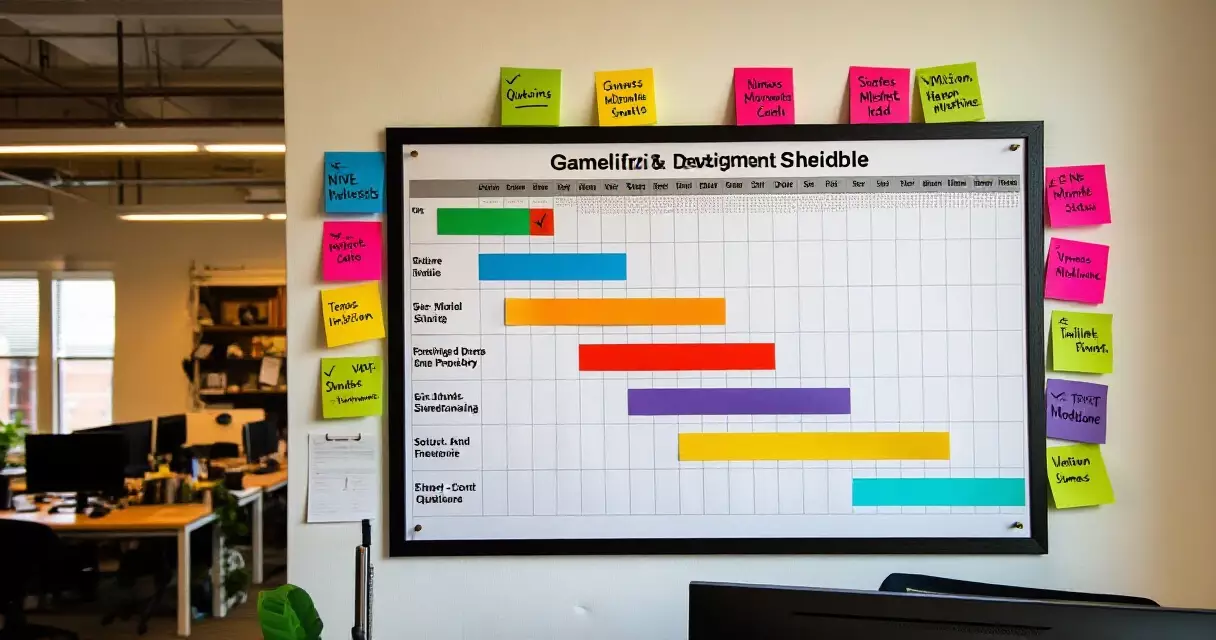
Most indie projects move through the same six stages, even when a solo developer blurs the lines between them. Mapping your calendar against these phases is the fastest way to spot where a schedule is quietly slipping. The durations below reflect common ranges seen across published small-team projects, not hard rules.
| Phase | Typical duration | What happens in it |
|---|---|---|
| Concept and prototype | 1–3 months | Core idea and a playable proof that the central mechanic is fun. |
| Pre-production and vertical slice | 2–6 months | One polished slice that sets the art bar, tools, and scope. |
| Production | 6–24 months | Building the bulk of content: levels, systems, and assets. |
| Alpha (content complete) | 1–3 months | All features in, rough edges everywhere, balancing begins. |
| Beta and polish | 2–6 months | Bug fixing, performance, accessibility, and final tuning. |
| Launch and post-launch | Ongoing | Marketing push, day-one patches, ports, and updates. |
Production is where timelines die or survive. A clean prototype can lull a developer into thinking the hard part is over, but turning one fun room into forty fun rooms is the long grind that swallows years. Beta looks short on paper, yet polishing the last 10 percent of a game routinely takes as long as the first 90, because every fixed bug surfaces two more.
Polishing the final 10 percent of an indie game routinely takes as long as building the first 90 percent.
How Long It Really Takes: Real Examples
Documented release histories beat guesswork. The table below pairs well-known indie games with their developer, approximate team size, and the time between first serious work and launch. Notice how tightly development time tracks team size and scope rather than the eventual sales.
| Game (release) | Developer | Team size | Approx. dev time |
|---|---|---|---|
| Super Meat Boy (2010) | Team Meat | 2 | ~18 months |
| Undertale (2015) | Toby Fox | 1 core | ~2.7 years |
| Stardew Valley (2016) | ConcernedApe | 1 | ~4.5 years |
| Hollow Knight (2017) | Team Cherry | 3 | ~2.75 years |
| Cuphead (2017) | StudioMDHR | grew to ~20 | ~7 years |
| Hades (2020) | Supergiant Games | ~20 | ~3 years (incl. early access) |
| Balatro (2024) | LocalThunk | 1 | ~2.5 years |
The outliers teach the most. Cuphead took StudioMDHR around seven years partly because the founders insisted on hand-drawn, ink-and-paper animation and famously remortgaged a home to keep going. Balatro, by contrast, reached launch in roughly two and a half years of solo work because its scope stayed razor thin: one screen, one loop, deep systems underneath. Same “indie” label, wildly different clocks.
What Makes a Timeline Stretch or Shrink
Scope creep is the number-one timeline killer. Every “small” feature added mid-production drags balancing, art, testing, and bug-fixing behind it, and the cumulative drag is how a one-year plan becomes a three-year reality. Disciplined teams freeze their feature list before full production and treat new ideas as sequel material.
Reused technology shrinks timelines hard. Building on Unity, Unreal, or Godot rather than a custom engine can save a year or more, which is why almost every recent breakout indie sits on an off-the-shelf engine. Tooling, funding runway, and a developer’s prior experience all push the same direction: the second game is almost always faster than the first. Budget pressure shapes scope too, and our breakdown of how much it costs to make an indie game shows how money and months trade against each other.
External factors stretch the back half. Platform certification, ratings, localization, and porting to consoles each add weeks that first-timers forget to schedule, and marketing now needs months of lead time before launch rather than an afterthought the week of release.
The single fastest way to ship sooner is to cut scope, not to work more hours.
Planning a Realistic Indie Timeline
Start from your real weekly hours, not the calendar. A solo developer working 15 hours a week is on a very different clock than a funded team at 40 hours each, so convert your plan into person-hours before you promise yourself a launch date. A common reality check: take your honest estimate and roughly double it, because almost every first project does.
Anchor the plan with a vertical slice early. One fully polished level or loop forces every system to talk to every other one, and the bugs it surfaces are far cheaper to fix at month four than at month twenty. If your slice is not fun, no amount of extra content will save the timeline. New developers can pressure-test their concept against our guide to what defines an indie game before committing years to it.
Finally, schedule the unglamorous work. Store-page setup, age ratings, a demo build, festival submissions, and a marketing runway all belong on the timeline with real dates, not in a vague “launch week” bucket. Treating them as phases keeps the final months from collapsing into chaos.
Related Reading
- Best Indie Games: Hidden Gems Across All Platforms
- Best Game Engines for Indie Games Compared (2026)
- Common Indie Game Development Mistakes and How to Avoid Them
- How Much Does It Cost to Make an Indie Game?
- How to Fund an Indie Game: Crowdfunding, Grants, Publishers
- How to Make an Indie Game: A Beginner's Roadmap
- How to Market an Indie Game: A Marketing Playbook That Works
- How to Publish and Sell Your Indie Game on Steam
- Indie Games vs AAA Games: Key Differences Explained
- The Best Indie Games of All Time, Ranked by Impact
- What Are Indie Games? A Guide to Independent Game Development
- Why Do Indie Games Fail? Causes, Warning Signs, and Fixes
- Celeste Review: A Precision Platformer With Heart
- Hades Review: How Supergiant Perfected the Roguelike
- Hollow Knight Review: Why This Metroidvania Defined a Generation
- Stardew Valley Review: The Solo-Made Farming Sim That Conquered Indie Gaming
Frequently Asked Questions
How long does it take to make an indie game on average?
Most commercial indie games take somewhere between one and four years from serious start to launch, based on the documented release histories of widely played titles. The figure swings heavily with team size, scope, and funding. A funded small team building a focused game can finish in 12 to 24 months, while a solo developer working part time on a larger concept often needs three years or more. There is no clean industry-wide median because the category mixes weekend-sized projects with multi-year studio efforts, so the safest planning assumption for a first project is at least two years.
Why do solo indie games take longer than team projects?
A solo developer performs every role in sequence rather than in parallel. The same person writes code, makes art, designs levels, composes music, tests, and markets, so tasks that a team runs simultaneously stack end to end on one calendar. That serialization is why Stardew Valley ran about 4.5 years for one person despite its modest technical footprint. Solo work also lacks the accountability of teammates and deadlines, which lets scope drift quietly. The trade-off is full creative control and no payroll, which many developers consider worth the extra years on the clock.
How long did Stardew Valley take to make?
Eric Barone, working under the name ConcernedApe, spent roughly four and a half years building Stardew Valley almost entirely alone before its February 2016 release, according to the game’s public history. He started the project partly to practice programming and art for a job portfolio, then expanded it into a full commercial title. During that span he repeatedly rebuilt the game’s art and rewrote systems he had already completed, which lengthened the timeline considerably. His case is often cited as proof that a single dedicated developer can ship a hit, but also as a warning about how long that level of polish actually demands.
Does early access make the timeline longer or shorter?
Early access usually makes total development time longer on paper but lowers the risk of shipping the wrong game. By releasing a paid, unfinished build, a studio gathers real player feedback and revenue during what would otherwise be private production. Hades spent nearly two years in Steam Early Access before its 1.0 launch, refining combat and systems with the community. The approach front-loads a public launch while pushing final release later, so the calendar grows even as the finished product gets stronger. It works best for replayable, systems-driven games rather than tightly scripted narrative experiences.
What part of indie development takes the most time?
Production and polish consume the bulk of the schedule. Production is the long stretch of building the full content set, where turning one enjoyable prototype level into a complete game can take six months to two years. Polish, the bug-fixing and balancing phase, is the most underestimated, because the final 10 percent of quality often costs as much time as the first 90 percent. Art is the other major sink, especially for hand-drawn or 3D styles. First-time developers consistently overrun on these two phases, which is the main reason early timeline estimates tend to be off by a factor of two.
Can you make an indie game in under a year?
Yes, but only with disciplined scope. A small, mechanically focused game built on an existing engine like Unity, Godot, or Unreal can ship in under twelve months, particularly for an experienced developer or a small full-time team. Game jam projects expanded into commercial releases sometimes hit that window. The trade-off is ambition: a sub-year timeline demands cutting features aggressively, reusing assets and systems, and resisting the urge to add “just one more” idea. For a first project, a tight one-year target is far more achievable than a sprawling concept stretched across the same period, and it teaches the full shipping process faster.
How much launch and platform time should I budget?
Reserve at least two to three months at the end for launch logistics, and start marketing far earlier. Setting up a store page, passing platform certification on consoles, securing age ratings, building a demo, and localizing text each add real days that first-timers routinely forget. A marketing runway of several months before release is now closer to a requirement than an option, given how many titles appear on Steam each year. Treat these as scheduled phases with their own dates rather than launch-week scramble, and the final stretch of your indie game development timeline will be far less stressful.
Sources
- Wikipedia, Stardew Valley – https://en.wikipedia.org/wiki/Stardew_Valley
- Wikipedia, Cuphead – https://en.wikipedia.org/wiki/Cuphead
- Wikipedia, Undertale – https://en.wikipedia.org/wiki/Undertale
- Wikipedia, Hollow Knight – https://en.wikipedia.org/wiki/Hollow_Knight
- Wikipedia, Hades – https://en.wikipedia.org/wiki/Hades_(video_game)
- Wikipedia, Balatro – https://en.wikipedia.org/wiki/Balatro
- Wikipedia, Video game development – https://en.wikipedia.org/wiki/Video_game_development
- The Guardian, games coverage – https://www.theguardian.com/games
- BBC News, technology coverage – https://www.bbc.com/news/technology
Further reading
Gaming Laptop Buyer’s Guide: Performance, Portability & Best Models