Summary
Few stories capture the rise of independent games better than Minecraft, a project that began with one Swedish programmer and went on to sell more than 300 million copies, according to figures Microsoft reported in 2023. That single number explains...
Table of contents
- 1 What Makes a Game “Indie”?
- 2 A Short History of Independent Games
- 3 How Indie Games Get Made and Funded
- 4 Where Indie Games Are Sold and Played
- 5 Indie Games That Changed the Industry
- 6 Indie vs AAA: What Sets Them Apart
- 7 Frequently Asked Questions
- 7.1 What is the difference between indie and AAA games?
- 7.2 Are indie games cheaper than big-budget games?
- 7.3 Can one person make an indie game?
- 7.4 What platforms can I play indie games on?
- 7.5 Why are indie games so popular?
- 7.6 Do indie games make money?
- 7.7 What game engine do indie developers use?
- 8 Related Reading
- 9 Sources
Few stories capture the rise of independent games better than Minecraft, a project that began with one Swedish programmer and went on to sell more than 300 million copies, according to figures Microsoft reported in 2023. That single number explains why so many players now ask what are indie games, and why the category sits near the center of modern gaming culture. Independent titles are no longer a quiet corner of the hobby. They launch new genres, set design trends, and frequently outsell big-budget releases. This guide explains what the term actually means, where these games come from, how they are funded, and why they matter to anyone who plays.
What Makes a Game “Indie”?
The word “indie” is short for independent, and the label points to two kinds of independence at once: financial and creative. An independent game is usually made without funding from a large publisher, which means the developers keep control over the design, the budget, and the release. There is no legal definition, so the term works more like a spectrum than a fixed rule. As Britannica notes in its overview of the medium, the line between independent and mainstream production has blurred as digital tools have become cheaper and easier to reach.
Most indie games share a few traits. Teams are small, ranging from a single person to a few dozen. Budgets are modest compared with the tens of millions spent on a typical AAA release. Distribution is almost always digital, through storefronts rather than boxed retail. And the creative direction tends to be personal, since the people funding the project are often the people making it.
Edge cases keep the debate lively. Hades by Supergiant Games is widely called indie even though the studio has dozens of staff and years of polish behind it. Stardew Valley was built almost entirely by one person, Eric Barone, yet it was released with help from publisher Chucklefish. The common thread is autonomy, not team size or budget.
A Short History of Independent Games
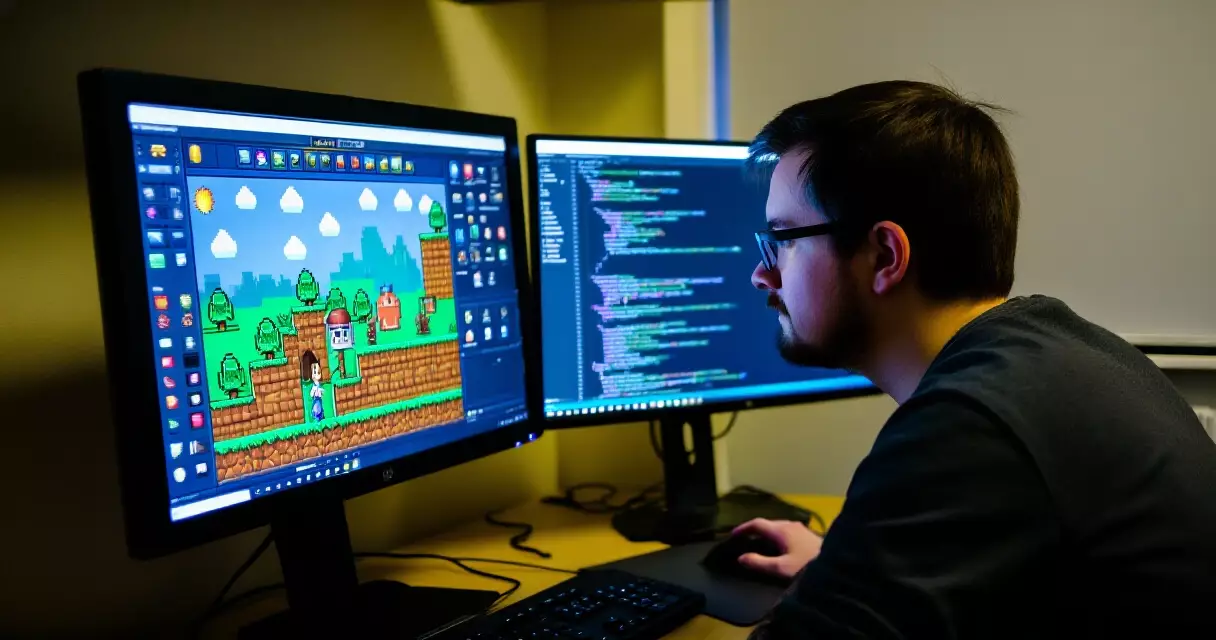
Independent development is older than the word “indie” itself. During the 1980s and 1990s, hobbyist programmers sold games directly to players through shareware, mailing floppy disks or sharing demo versions. id Software used that model to spread Doom in 1993 before publishers took notice. The spirit was the same one that drives indie studios today: build the game you want, then find the audience yourself.
The modern indie movement took shape in the 2000s. Daisuke Amaya released Cave Story for free in 2004 after roughly five years of solo work. Jonathan Blow’s Braid arrived in 2008 and proved a one-designer puzzle game could win both critical praise and strong sales on a console marketplace. The 2012 documentary Indie Game: The Movie introduced a wider public to the people behind titles like Super Meat Boy and Fez.
Digital storefronts changed everything. Steam opened its catalog to smaller developers, and the launch of Steam Greenlight in 2012 let players vote games onto the platform. Cheap engines, faster internet, and easier publishing meant a developer no longer needed a retail deal to reach millions of people. Minecraft rode that wave from a rough 2009 prototype to one of the best-selling games ever made.
Independent development is older than the word “indie” itself, stretching back to programmers who sold games on floppy disks.
How Indie Games Get Made and Funded
Money is the first hurdle for any independent team. Many projects start with personal savings or a side job that pays the bills while the game comes together. Crowdfunding through Kickstarter has backed notable releases such as Shovel Knight and Hollow Knight, letting fans pay upfront in exchange for the finished product. A growing number of developers sign with indie-focused publishers like Devolver Digital, Annapurna Interactive, or Raw Fury, which provide marketing and funding without demanding the creative control a large publisher usually wants.
The tools have become remarkably accessible. Unity and Unreal Engine power a large share of independent titles, while GameMaker built hits like Undertale and Hyper Light Drifter. The free and open-source engine Godot has gained ground with developers who want to avoid licensing fees entirely. Art, music, and sound can be produced by the same handful of people, or contracted out for specific tasks when the budget allows.
Time is the hidden cost. Solo and small-team games often take three to six years to finish, because one person may handle programming, art, design, and testing at once. That long runway is why so many indie projects are described as labors of love rather than calculated business plays.
Where Indie Games Are Sold and Played
Storefronts decide how much of each sale a developer keeps. Steam takes a standard 30% cut, which drops to 25% and then 20% once a game crosses revenue thresholds, according to Valve’s published terms. The Epic Games Store charges 12%, a lower rate it uses to attract developers. On itch.io, the creator sets the platform’s share, with a suggested default. The table below compares the main options.
| Platform | Owner | Standard revenue cut | Strength for indies |
|---|---|---|---|
| Steam | Valve | 30% (lower at sales thresholds) | Largest PC audience |
| Epic Games Store | Epic Games | 12% | Higher developer share |
| itch.io | itch corp | Developer-set (default suggested) | Pay-what-you-want friendly |
| Nintendo eShop | Nintendo | About 30% | Strong Switch indie following |
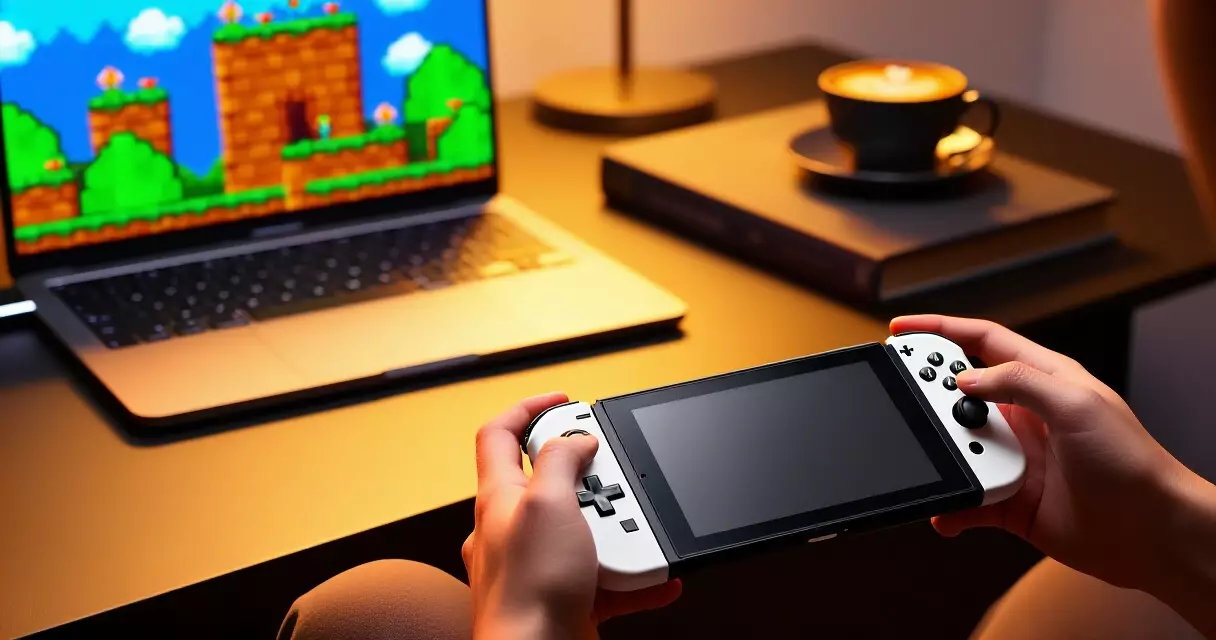
Consoles matter too. The Nintendo Switch became a favorite home for independent games thanks to its portable screen and a storefront that highlights smaller titles. PlayStation and Xbox both run regular indie showcases. On PC, the experience scales with your hardware, so a sharp display and steady frame rate help even simple-looking games feel responsive. If you are weighing a new screen, our 2026 gaming monitor buyer’s guide walks through what actually matters.
Hardware does not need to be expensive. Most indie games run comfortably on modest laptops and older GPUs, which is part of their appeal. Players chasing the smoothest experience can still benefit from a capable machine, and reviews like our HP Omen 16 breakdown show how mid-range systems handle a broad library.
Indie Games That Changed the Industry
A handful of releases proved independent games could reach mainstream scale. Stardew Valley surpassed 30 million copies, according to figures from its creator documented in 2024. Hollow Knight by Team Cherry has reportedly sold more than 15 million copies. Hades from Supergiant Games passed 1 million copies within its first year, per studio figures, and Balatro by solo developer LocalThunk sold more than 1 million copies in its first week in 2024.
| Game | Studio | Released | Reported sales |
|---|---|---|---|
| Minecraft | Mojang | 2011 | 300M+ copies |
| Stardew Valley | ConcernedApe | 2016 | 30M+ copies |
| Hollow Knight | Team Cherry | 2017 | 15M+ copies |
| Hades | Supergiant Games | 2020 | 1M+ in first year |
| Balatro | LocalThunk | 2024 | 1M+ in first week |
Influence goes beyond sales. Undertale showed how writing and tone could carry a tiny budget. Among Us turned a small 2018 release into a global phenomenon two years later through streaming and word of mouth. Vampire Survivors spawned an entire wave of imitators. For a curated look at standout titles across systems, our pillar guide on the best indie games and hidden gems is a useful starting point.
Indie vs AAA: What Sets Them Apart
The gap between independent and AAA games is mostly about resources and risk. Big-budget studios spend heavily on graphics, marketing, and large teams, which pushes them toward proven formulas that can recoup the investment. As The Guardian’s games coverage has repeatedly observed, that pressure leaves independent developers freer to experiment with odd mechanics, niche themes, and shorter playtimes.
Price reflects the difference. New AAA releases often launch at 60 to 70 US dollars, while indie games commonly sell between 5 and 25 dollars. Lower prices and smaller scope make it easier to try something unusual without a major commitment, which is one reason competitive players and casual fans alike keep a few indies in rotation. Tuning your setup helps regardless of budget, and our notes on the best monitor settings for competitive play apply just as well to a fast-paced indie roguelike.
Lower prices and smaller scope let indie developers take creative risks that a 70-dollar blockbuster rarely can.
Frequently Asked Questions
What is the difference between indie and AAA games?
The core difference is independence and scale. AAA games are funded and published by large companies, made by hundreds of staff, and backed by budgets that can reach tens or hundreds of millions of dollars. Indie games are built by small teams or solo developers who keep creative and financial control, usually on a far smaller budget. That freedom shows up in the design, since independent developers can chase unusual ideas without needing to satisfy a publisher’s sales targets. The trade-off is that indie projects tend to be shorter and visually simpler, though many rival or exceed big releases in originality and polish.
Are indie games cheaper than big-budget games?
Most of the time, yes. New AAA titles typically launch at 60 to 70 US dollars, while independent games commonly sell between roughly 5 and 25 dollars. The lower price reflects smaller development costs and shorter playtimes, not lower quality. Some highly polished indies like Hades or Hollow Knight deliver dozens of hours for a fraction of a blockbuster’s price. Sales on Steam, the Epic Games Store, and the Nintendo eShop push prices down further, and storefronts such as itch.io even let developers offer pay-what-you-want pricing, so budget-conscious players have many affordable ways in.
Can one person make an indie game?
Absolutely, and several of the best-known indie games came from a single creator. Eric Barone built nearly all of Stardew Valley on his own over about four years, handling code, art, and music. Toby Fox made the bulk of Undertale alone, and LocalThunk created Balatro as a solo project. Modern engines like Unity, Godot, and GameMaker lower the technical barrier, and asset stores supply art or sound for tasks a single developer cannot cover. Solo work demands patience, since one person carries every role, but the results prove it is entirely possible.
What platforms can I play indie games on?
Indie games are available almost everywhere. On PC, Steam holds the largest catalog, while the Epic Games Store and itch.io offer alternatives with different revenue terms for developers. The Nintendo Switch is a popular console home for independent titles thanks to its portable screen and dedicated indie showcases. PlayStation and Xbox both stock large indie selections and run regular promotional events. Many independent games also reach phones and tablets. Because most indies have modest hardware requirements, they run well on budget laptops, handhelds like the Steam Deck, and older machines, which keeps the category broadly accessible.
Why are indie games so popular?
Popularity comes down to creativity, value, and access. Without a publisher dictating safe choices, independent developers experiment with fresh mechanics, personal stories, and distinctive art styles that larger studios often avoid. Prices are lower, so players can take a chance on something new. Digital storefronts and streaming platforms let word of mouth spread quickly, which is how titles like Among Us and Vampire Survivors became hits. Players also enjoy supporting small creators directly. The result is a steady supply of surprising games that feel different from the predictable rhythm of yearly big-budget franchises.
Do indie games make money?
Some make enormous sums, but most do not. The headline successes are real: Minecraft sold over 300 million copies and Stardew Valley passed 30 million, turning their creators into millionaires. Those outcomes are rare, though. The vast majority of independent games sell modestly, and many barely cover their development costs. Storefront revenue cuts, marketing challenges, and a crowded market all weigh on earnings. Developers who succeed tend to combine a strong concept, a clear audience, and a measure of luck with timing. For most indie creators, breaking even is a genuine achievement.
What game engine do indie developers use?
Several engines dominate independent development. Unity is the most widely used, valued for its flexibility and large asset library, and it powers countless 2D and 3D indies. Unreal Engine appears in more visually ambitious projects. GameMaker has a long track record with 2D hits, including Undertale and Hyper Light Drifter. Godot, a free and open-source engine, has grown quickly among developers who want to avoid licensing fees. The choice usually depends on the game’s style, the team’s experience, and the budget, since all of these tools can be used at little or no upfront cost.
Related Reading
- Best Indie Games: Hidden Gems Across All Platforms
- Best Game Engines for Indie Games Compared (2026)
- Common Indie Game Development Mistakes and How to Avoid Them
- How Much Does It Cost to Make an Indie Game?
- How to Fund an Indie Game: Crowdfunding, Grants, Publishers
- How to Make an Indie Game: A Beginner's Roadmap
- How to Market an Indie Game: A Marketing Playbook That Works
- How to Publish and Sell Your Indie Game on Steam
- Indie Game Development Timeline: How Long to Ship
- Indie Games vs AAA Games: Key Differences Explained
- The Best Indie Games of All Time, Ranked by Impact
- Why Do Indie Games Fail? Causes, Warning Signs, and Fixes
- Celeste Review: A Precision Platformer With Heart
- Hades Review: How Supergiant Perfected the Roguelike
- Hollow Knight Review: Why This Metroidvania Defined a Generation
- Stardew Valley Review: The Solo-Made Farming Sim That Conquered Indie Gaming
Sources
- Wikipedia, “Minecraft” – https://en.wikipedia.org/wiki/Minecraft
- Wikipedia, “Stardew Valley” – https://en.wikipedia.org/wiki/Stardew_Valley
- Wikipedia, “Hollow Knight” – https://en.wikipedia.org/wiki/Hollow_Knight
- Wikipedia, “Hades (video game)” – https://en.wikipedia.org/wiki/Hades_(video_game)
- Wikipedia, “Balatro” – https://en.wikipedia.org/wiki/Balatro
- Wikipedia, “Steam (service)” – https://en.wikipedia.org/wiki/Steam_(service)
- Wikipedia, “Epic Games Store” – https://en.wikipedia.org/wiki/Epic_Games_Store
- Encyclopaedia Britannica, “Video game” – https://www.britannica.com/topic/video-game
- The Guardian, Games section – https://www.theguardian.com/games
Gaming Laptop Buyer’s Guide: Performance, Portability & Best Models