Summary
A card game built by one anonymous developer working under the name LocalThunk did something no blockbuster managed in 2024: Balatro walked away with three British Academy Games Awards in April 2025, including Best Game, beating studios with budgets thousands...
Table of contents
- 1 What Counts as an Indie Game?
- 2 A Short History of Indie Games
- 3 Indie Games by the Numbers
- 4 The Best Indie Games Right Now
- 5 Indie Games by Genre
- 6 Where to Play Indie Games
- 7 What Hardware You Actually Need
- 8 The Business of Indie Games
- 9 How to Find Your Next Favorite Indie Game
- 10 Case Study: How Stardew Valley Redefined the Solo Indie Dream
- 11 What Indie Games Actually Cost, and How to Pay Less
- 12 Frequently Asked Questions
- 12.1 What exactly makes a game “indie”?
- 12.2 Are indie games cheaper than big-budget titles?
- 12.3 Do I need a powerful PC to play indie games?
- 12.4 Where is the best place to buy indie games?
- 12.5 Which indie game has sold the most copies?
- 12.6 How do I discover good new indie games?
- 12.7 Are early-access indie games worth buying?
- 13 Sources
- 13.1 Further reading
- 14 Related Reading
A card game built by one anonymous developer working under the name LocalThunk did something no blockbuster managed in 2024: Balatro walked away with three British Academy Games Awards in April 2025, including Best Game, beating studios with budgets thousands of times larger. That single result captures why indie games matter. Small teams, and sometimes solo creators, keep producing the most surprising, most talked-about titles in the medium. This pillar maps the whole landscape: what an indie game actually is, the milestones that built the scene, the numbers behind it, the standout titles worth your time, and where to play them across PC, console, and handheld.
What Counts as an Indie Game?
There is no licensing board that stamps a title “indie.” The label generally describes a game built by an individual or a small studio that funds and controls its own development, without a large publisher dictating budget, scope, or deadlines, according to Wikipedia’s overview of the term. Creative independence sits at the center of the definition. When the people making the game also decide what it becomes, the result is an indie game, whether the team is one person in a bedroom or twenty people in a rented office.
Edges of the category stay blurry on purpose. Hades II from Supergiant Games carries the polish of a mid-size studio yet remains self-published. Dave the Diver shipped under a label owned by a much larger company, which sparked debate about whether it qualifies at all. Money is only part of the test. A useful rule of thumb: if the people building it answer to their own vision rather than a corporate quarterly target, most players and critics will call it indie.
A Short History of Indie Games
Independent development is older than the word “indie,” reaching back to the shareware and bedroom-coder era of the 1980s. The modern movement, though, crystallized in the late 2000s when digital storefronts removed the need for boxed retail. Xbox Live Arcade and Steam let tiny teams reach millions of players directly. Jonathan Blow’s Braid in 2008, Team Meat’s Super Meat Boy in 2010, and Phil Fish’s Fez in 2012 became the faces of that wave, later documented in the film Indie Game: The Movie.
Then came the breakouts that reshaped the whole industry. Markus Persson released Minecraft into early access in 2009, and the building game grew into the best-selling title in history at more than 300 million copies sold. Eric Barone, working alone for roughly four years, shipped Stardew Valley in 2016 to more than 30 million copies. By the turn of the 2020s, an indie game was no longer a curiosity at the edge of the market. It was where some of the medium’s biggest cultural moments happened.
The best-selling video game ever made started as one Swedish programmer’s side project, which tells you everything about how far indie reach now extends.
Indie Games by the Numbers
Scale is the part most players underestimate. Steam, the dominant PC marketplace, now receives well over ten thousand new releases every year, and a large majority of them are independent productions. The flood is so heavy that visibility, not development, has become the hardest problem an indie team faces. Standing out among that volume is why awards, festivals, and word of mouth carry so much weight in this corner of gaming.
Critical recognition has followed the commercial growth. Vampire Survivors, a one-developer project that started life as a rough browser prototype, won the British Academy Games Award for Best Game in 2023, as documented in its award record. Two years later Balatro repeated the feat. When the same trophy that honors hundred-million-dollar productions keeps landing on solo and tiny-team games, the data is telling a consistent story.
The Best Indie Games Right Now
Picking standouts means naming real titles, not vague categories. The list below mixes recent award winners with modern classics that still define their genres. Every one is a genuine independent release that earned its reputation through sales, critical acclaim, or both.
| Game | Developer | Year | Why it stands out |
|---|---|---|---|
| Balatro | LocalThunk | 2024 | Poker-roguelike that won Best Game at the 2025 BAFTAs |
| Hades | Supergiant Games | 2020 | Roguelike with a follow-up, Hades II, now in development |
| Stardew Valley | ConcernedApe | 2016 | Farming sim built almost entirely by one person |
| Hollow Knight | Team Cherry | 2017 | Hand-drawn metroidvania, more than 3 million sold |
| Celeste | Maddy Makes Games | 2018 | Precision platformer praised for its story and accessibility |
| Disco Elysium | ZA/UM | 2019 | Dialogue-driven RPG with no traditional combat |
| Cuphead | StudioMDHR | 2017 | 1930s cartoon visuals, more than 8 million copies sold |
| Animal Well | Billy Basso | 2024 | Dense single-developer puzzle-platformer |
Beyond the headliners, 2024 alone delivered a remarkable run of smaller gems: UFO 50, a collection of fifty fictional retro games; Lorelei and the Laser Eyes, a surreal puzzle mystery; and Thank Goodness You’re Here, a slapstick comedy adventure. The depth of that year is part of why so many players now treat indie releases as their main source of new favorites rather than an occasional detour.
Indie Games by Genre
One reason the scene feels so varied is that independent teams gravitate toward genres big publishers often ignore. Roguelikes, metroidvanias, cozy simulations, and narrative experiments thrive here precisely because they do not need mass-market budgets to succeed. The table below pairs popular indie genres with a defining example.
| Genre | What defines it | Flagship indie example |
|---|---|---|
| Roguelike / roguelite | Runs reset on death, with permanent progression between attempts | Hades |
| Metroidvania | Interconnected map unlocked gradually through new abilities | Hollow Knight |
| Cozy simulation | Low-pressure building, farming, or crafting loops | Stardew Valley |
| Narrative RPG | Story and choice over combat systems | Disco Elysium |
| Precision platformer | Tight, skill-based movement challenges | Celeste |
| Deck-builder | Strategy built from a growing set of cards | Balatro |
Genre is also a practical filter when you are hunting for something new. If a roguelike like Hades clicked for you, the related universe of deck-builders such as Slay the Spire and Balatro is a natural next step. Following a genre thread, rather than chasing only the biggest names, tends to surface the hidden gems that never reach a front page.
Where to Play Indie Games
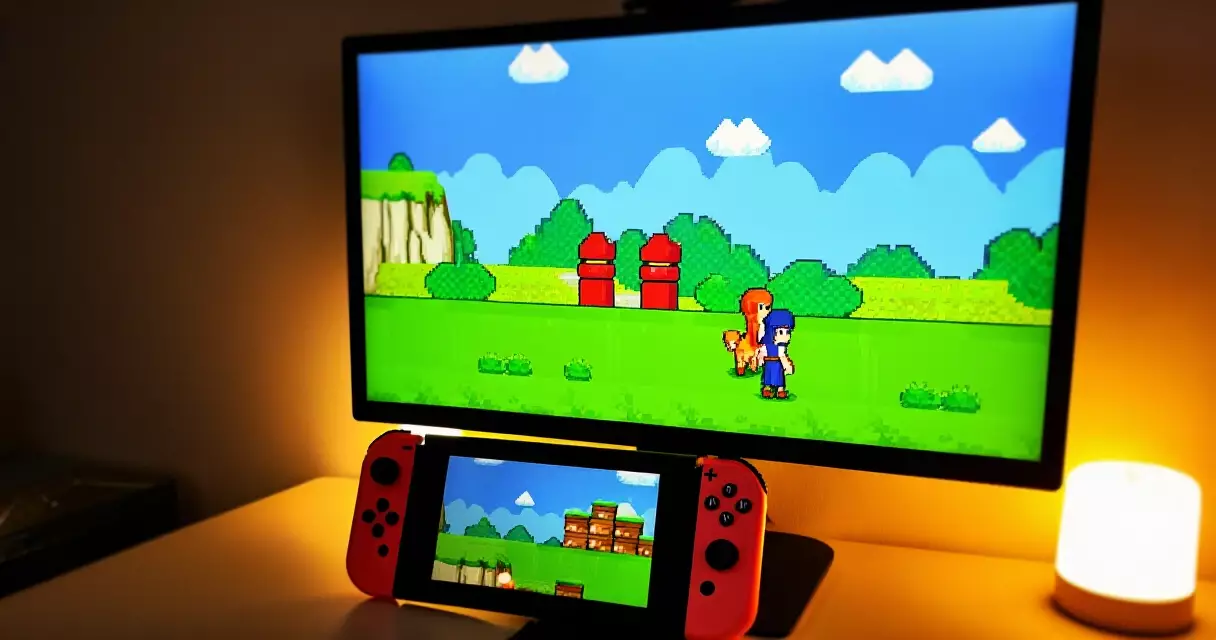
Indie titles reach nearly every platform, but a few storefronts dominate. Steam remains the largest hub on PC, with Epic Games Store and the developer-friendly itch.io as strong alternatives. On consoles, the Nintendo Switch built a reputation as the go-to home for indies, while the PlayStation and Xbox stores both run regular indie showcases. Subscription services such as Xbox Game Pass and PlayStation Plus now feature independent games heavily, often on day one.
Handhelds changed the picture again. The Steam Deck turned a huge back catalog of indie games into pocketable experiences, and pixel-art or 2D titles in particular look sharp on a small high-density screen. The Switch and newer handheld PCs reinforced the same trend. Because most indie games carry modest performance demands, you rarely need current hardware to run them, which keeps the barrier to entry low.
You do not need a flagship rig to enjoy the best of indie gaming; the genre’s modest hardware demands are part of its charm.
What Hardware You Actually Need
The good news for newcomers is that indie games rarely punish older machines. A mid-range laptop or a modest desktop handles the overwhelming majority of them at full settings. If you are choosing a portable machine to play across both indie and bigger titles, our Lenovo Legion 5 review covers a balanced option that has more than enough headroom for anything in this article.
Display choice matters more than raw power for this kind of game. Crisp pixel art and hand-drawn 2D animation benefit from a panel with strong contrast and accurate color, which is where panel technology comes in. If you are weighing options, our breakdown of IPS, VA, TN, and OLED panels explains the trade-offs, and the 2026 gaming monitor buyer’s guide helps match a screen to your budget. For most 2D indie games, resolution matters less than you might assume, a point our 1080p versus 1440p versus 4K comparison walks through in detail.
The Business of Indie Games
Behind every hidden gem sits a business model that has to survive crowded storefronts. Most indie developers rely on a one-time purchase rather than microtransactions, which builds goodwill but raises the stakes on launch day. Some teams use early access, releasing an unfinished game at a lower price and funding development through ongoing sales, the path Hades and Stardew Valley both followed before their full launches.
Publishers still play a role, just a lighter one. Labels such as Devolver Digital, Annapurna Interactive, and Playstack help with marketing and funding while leaving creative control with the developer. Festivals matter too. The Independent Games Festival, held alongside the Game Developers Conference, and the indie categories at the BAFTA Games Awards give small teams the visibility that pure marketing budgets cannot buy. For an industry where a single feature placement can change a studio’s future, that recognition is currency.
How to Find Your Next Favorite Indie Game
Discovery is the real skill in 2026. With thousands of releases each year, leaning on trusted signals beats scrolling endlessly. Follow the major award shortlists, the BAFTA and IGF nominees in particular, since they surface quality you might otherwise miss. Curated showcases such as the seasonal Steam Next Fest let you try dozens of demos in a week, which is the fastest way to find something that fits your taste.
Genre threads and creator history are the other two reliable filters. If a studio made one game you loved, their next project is a strong bet, which is why fans track Supergiant, Team Cherry, and StudioMDHR so closely. Wishlisting upcoming titles on your storefront of choice also matters, because a healthy wishlist count directly improves a small game’s visibility at launch. Supporting the developers you like, even by clicking one button before release, helps the next hidden gem actually get found.
Case Study: How Stardew Valley Redefined the Solo Indie Dream
No single title illustrates the indie hidden-gem story better than Stardew Valley. Eric Barone, working under the name ConcernedApe, built nearly the entire game alone, including pixel art, music, and code, over roughly four and a half years starting in 2011. In his 2019 GDC postmortem talk, Barone explained that he rewrote the art and several systems from scratch multiple times, using the project as a way to teach himself game development while job-hunting as a recent computer science graduate.
The game launched on February 26, 2016, published by Chucklefish for a launch price of 14.99 USD. According to ConcernedApe’s own announcements, it sold more than 1 million copies within two months of release, and surpassed 20 million copies sold across platforms by March 2022. That trajectory is remarkable for a farming-life simulator with no marketing budget, built by one person who initially expected modest sales.
Several concrete lessons emerge for anyone hunting hidden gems. First, sustained free updates drove long-tail discovery: Barone shipped major content patches from version 1.1 through the 1.6 update released in March 2024 (ConcernedApe 2024), each one returning lapsed players and generating fresh word of mouth. Second, multiplatform availability mattered. The game reached PC, then PlayStation, Xbox, Nintendo Switch, and mobile, widening its audience well beyond the Steam launch.
- One developer, four-plus years, zero outsourced art or music (GDC 2019).
- Over 1 million copies in two months despite no ad spend (ConcernedApe 2016).
- More than 20 million copies by March 2022 (ConcernedApe 2022).
- Ongoing free updates through 1.6 in March 2024 (ConcernedApe 2024).
The practical takeaway for players: a quiet launch and a low price tag say nothing about a game’s ceiling. The hidden gems that endure are often the ones their creators keep patching for years.
What Indie Games Actually Cost, and How to Pay Less
Indie pricing sits well below blockbuster pricing. Most indie titles launch between 14.99 and 24.99 USD, while AAA games moved to a 69.99 USD standard with the PlayStation 5 generation (Sony 2020 confirmed the 70 USD tier for first-party titles). That gap means a single AAA purchase can buy three or four indie games, and patient buyers can pay far less.
Where you buy changes how much of your money reaches the developer. Valve’s 2018 revenue-share update set Steam’s cut at 30 percent, dropping to 25 percent after a game earns 10 million USD and 20 percent after 50 million USD (Valve 2018). By contrast, itch.io uses an open default revenue model where buyers choose the platform’s share, with developers typically keeping around 90 percent (itch.io documentation). The Epic Games Store charges a flat 12 percent fee (Epic 2018).
| Storefront | Developer keeps | Buyer perk |
|---|---|---|
| Steam | 70 to 80 percent (Valve 2018) | Frequent seasonal sales |
| itch.io | About 90 percent (itch.io docs) | Pay-what-you-want options |
| Epic Games Store | 88 percent (Epic 2018) | Recurring free game giveaways |
| Xbox Game Pass | Licensing fee model | Day-one indies in subscription |
Three practical tactics cut costs without hurting developers more than necessary. First, wait for Steam’s Summer and Winter Sales, where indie discounts of 50 to 90 percent are routine. Second, watch the Epic Games Store’s weekly free giveaways, which have included paid indie titles at zero cost. Third, subscribe to Xbox Game Pass, where many indies arrive on launch day, so a single monthly fee covers titles you might otherwise buy individually.
If you want maximum money to reach a small developer, buy direct on itch.io and add an optional tip. For the lowest price, queue the game on a Steam wishlist and let the next seasonal sale notify you.
Frequently Asked Questions
What exactly makes a game “indie”?
An indie game is made by an individual or a small studio that funds and controls its own development without a major publisher dictating the creative direction. The defining trait is independence rather than a specific budget or team size. Some indie teams are a single person, while others have twenty or more staff and self-publish their work. Because there is no official certifying body, the label sits on a spectrum, and titles near the edge, such as studio-backed releases, often spark friendly debate among players and critics about whether they truly qualify.
Are indie games cheaper than big-budget titles?
Usually, yes. Most indie games launch well below the price of a major release, often in the range of a few dollars up to around twenty-five, with many priced even lower. Smaller development costs and a focus on value let independent teams charge less while still profiting. Frequent storefront sales push prices down further, and early-access titles often start cheaper still. That affordability is a big part of indie gaming’s appeal, since a single mid-tier budget can fund a deep personal library of acclaimed independent titles rather than one or two blockbusters.
Do I need a powerful PC to play indie games?
In most cases, no. The majority of indie games are designed to run smoothly on modest hardware, including older laptops, budget desktops, and handhelds like the Steam Deck or Nintendo Switch. Pixel-art, 2D, and stylized 3D games in particular demand very little graphical power. A small number of more ambitious indie titles push higher requirements, but they are the exception. This low barrier to entry is one reason the genre attracts such a wide audience, since you do not need to invest in a flagship gaming rig to enjoy the best the scene offers.
Where is the best place to buy indie games?
Steam holds the largest indie catalog on PC and runs frequent sales and demo events, making it the default choice for many players. The Epic Games Store and itch.io are strong alternatives, with itch.io especially popular for experimental and smaller projects. On consoles, the Nintendo eShop earned a reputation as an indie haven, and the PlayStation and Xbox stores both highlight independent games regularly. Subscription services such as Xbox Game Pass also add indie titles often, sometimes on launch day, which is a low-risk way to sample new releases.
Which indie game has sold the most copies?
Minecraft holds that record by an enormous margin. It began as an independent project by Markus Persson in 2009 and grew into the best-selling video game of all time, with more than 300 million copies sold according to Wikipedia. Among games that have stayed independent throughout their life, Stardew Valley is a standout, with more than 30 million copies sold, built almost entirely by one developer. Terraria and Among Us also rank among the best-selling indie titles ever, each reaching tens of millions of players across multiple platforms.
How do I discover good new indie games?
Start with award shortlists, since the BAFTA Games Awards and the Independent Games Festival reliably highlight quality you might otherwise overlook. Curated demo events like Steam Next Fest let you try many upcoming games quickly, which is the fastest way to find something suited to your taste. Following genres you already enjoy and tracking studios behind games you loved are two more dependable filters. Wishlisting upcoming titles helps too, both for your own reminders and because it boosts a small game’s visibility, increasing the chance the next hidden gem actually reaches you.
Are early-access indie games worth buying?
They can be, but it depends on the project. Early access lets you buy an unfinished game at a lower price and play it while development continues, and several modern classics, including Hades, used this model successfully before their full release. The risk is that some early-access games stall or never reach completion. Before buying, check how actively the developer posts updates, read recent player reviews, and judge whether the current version is already enjoyable on its own. If it is fun today, you are protected even if development slows later.
Sources
- Wikipedia, Indie game – https://en.wikipedia.org/wiki/Indie_game
- Wikipedia, Minecraft – https://en.wikipedia.org/wiki/Minecraft
- Wikipedia, Balatro – https://en.wikipedia.org/wiki/Balatro
- Wikipedia, Stardew Valley – https://en.wikipedia.org/wiki/Stardew_Valley
- Wikipedia, Vampire Survivors – https://en.wikipedia.org/wiki/Vampire_Survivors
- BAFTA Games Awards – https://www.bafta.org/games
- The Guardian, Games section – https://www.theguardian.com/games
- BBC, Technology – https://www.bbc.co.uk/news/technology
Further reading
Gaming Laptop Buyer’s Guide: Performance, Portability & Best Models
Related Reading
- Best Game Engines for Indie Games Compared (2026)
- Common Indie Game Development Mistakes and How to Avoid Them
- How Much Does It Cost to Make an Indie Game?
- How to Fund an Indie Game: Crowdfunding, Grants, Publishers
- How to Make an Indie Game: A Beginner's Roadmap
- How to Market an Indie Game: A Marketing Playbook That Works
- How to Publish and Sell Your Indie Game on Steam
- Indie Game Development Timeline: How Long to Ship
- Indie Games vs AAA Games: Key Differences Explained
- The Best Indie Games of All Time, Ranked by Impact
- What Are Indie Games? A Guide to Independent Game Development
- Why Do Indie Games Fail? Causes, Warning Signs, and Fixes
- Celeste Review: A Precision Platformer With Heart
- Hades Review: How Supergiant Perfected the Roguelike
- Hollow Knight Review: Why This Metroidvania Defined a Generation
- Stardew Valley Review: The Solo-Made Farming Sim That Conquered Indie Gaming