Summary
When Stardew Valley launched on February 26, 2016, it had one developer, a $14.99 price tag, and modest expectations. What happened instead was extraordinary: the game sold over 30 million copies by early 2024, making it one of the best-selling...
Table of contents
- 1 The Origin Story: One Developer, Four Years, One Cultural Reset
- 2 Gameplay Overview: What Actually Happens in Stardew Valley
- 3 Farming, Mining, and the Art of Time Management
- 4 Relationships, Community, and the Social Layer
- 5 Stardew Valley Specs, Platforms, and Technical Details
- 6 Pros and Cons: The Honest Assessment
- 7 Stardew Valley vs. The Competition
- 8 Pricing, Editions, and Where to Buy
- 9 Who Should Play Stardew Valley (And Who Might Not)
- 10 Our Verdict: Score and Final Rating
- 11 Frequently Asked Questions About Stardew Valley
- 11.1 How many hours does it take to finish Stardew Valley?
- 11.2 Is Stardew Valley worth buying in 2026?
- 11.3 Does Stardew Valley have multiplayer, and how does it work?
- 11.4 What is the best starting farm layout in Stardew Valley?
- 11.5 Can you mod Stardew Valley, and is it easy to set up?
- 11.6 How does Stardew Valley compare to Harvest Moon and Story of Seasons?
- 11.7 Is Stardew Valley good for mental health and low-stress gaming?
- 11.8 What is new in Stardew Valley Version 1.6?
- 12 Related Reading
- 13 Sources
When Stardew Valley launched on February 26, 2016, it had one developer, a $14.99 price tag, and modest expectations. What happened instead was extraordinary: the game sold over 30 million copies by early 2024, making it one of the best-selling indie games in history – all built by a single person, Eric Barone, working under the alias ConcernedApe, over roughly four and a half years. One developer. One game. Thirty million sales.
The Origin Story: One Developer, Four Years, One Cultural Reset
Eric Barone spent nearly four and a half years building Stardew Valley in his Seattle apartment, teaching himself programming, pixel art, music composition, and sound design entirely from scratch. He started the project in 2012 as a tribute to the Harvest Moon series – a franchise he loved but felt had grown stale under its publisher. By launch day in 2016, what began as a personal project had grown into a 50-60 hour experience with hundreds of thousands of lines of code, an original soundtrack spanning 25-plus tracks, and hand-drawn pixel art covering every item, NPC, and environment in the game.
The development journey is now a defining case study in what indie game development timelines can look like when a single creator refuses to reduce scope. Barone has spoken openly about struggling financially and emotionally through those years.
Stardew Valley’s eventual success is frequently cited in discussions of why indie games fail – as the rare counterexample of one that did not, despite all the structural pressures that typically end solo projects before launch.
Publisher Chucklefish handled the initial 2016 release and early porting work. Barone retained full creative control throughout and later took over direct publishing for all post-1.3 updates. Every patch, every balance tweak, every content addition since launch has come from one person. That model is practically unheard of at this commercial scale.
Gameplay Overview: What Actually Happens in Stardew Valley
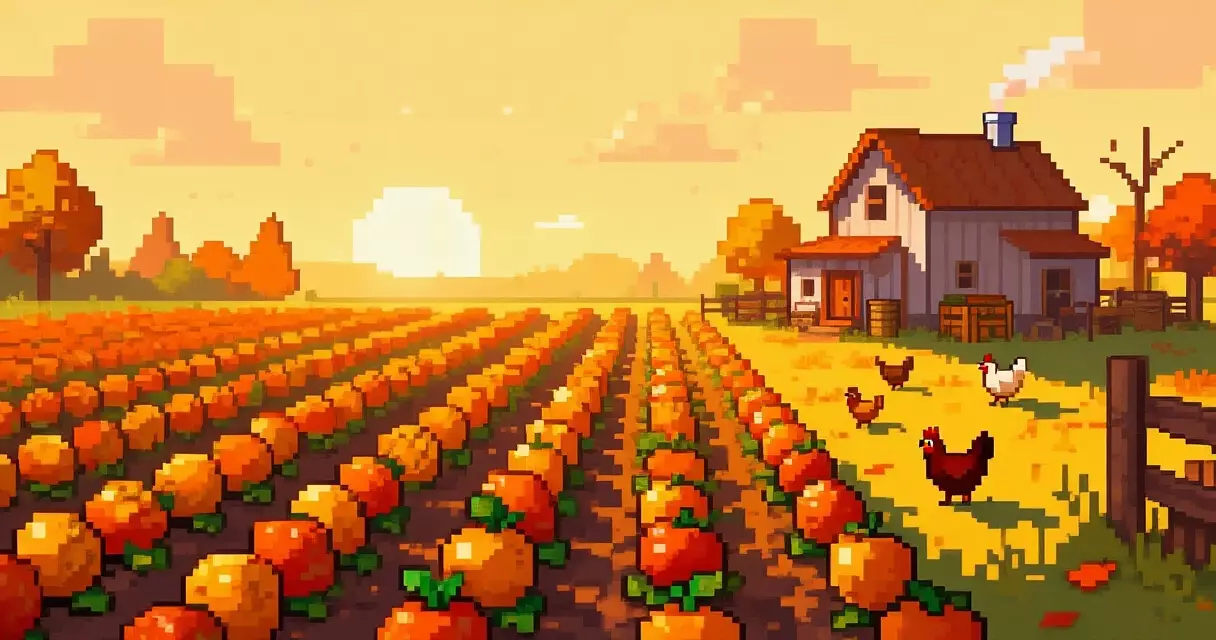
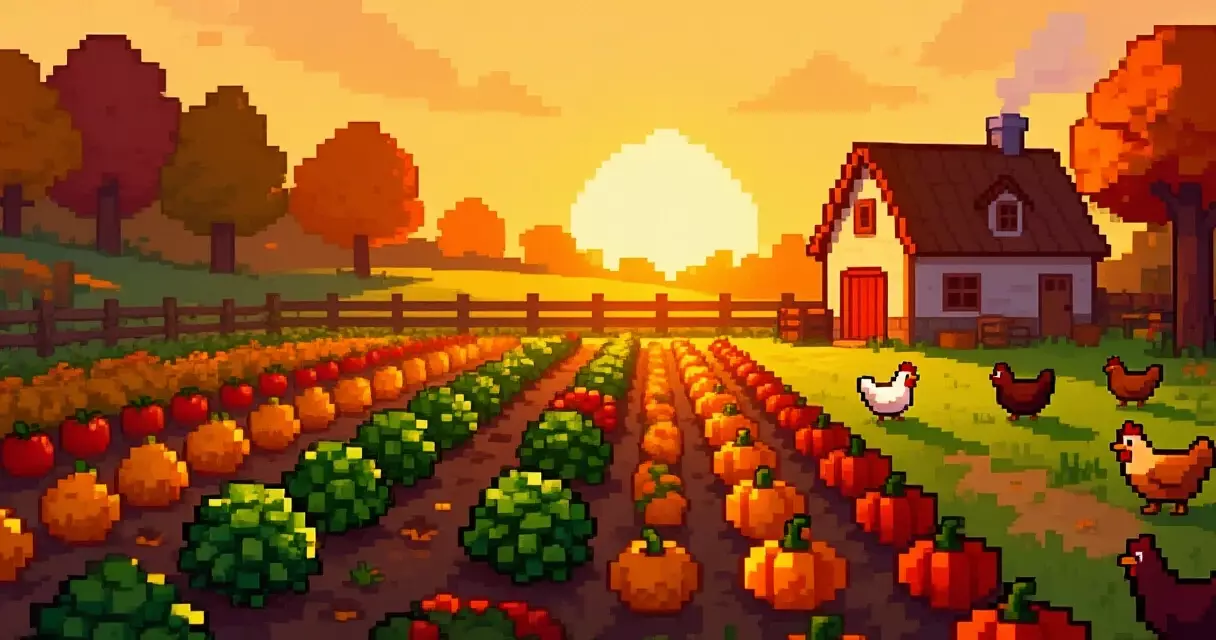
The premise is simple: you inherit your grandfather’s overgrown farm in Pelican Town and rebuild it from scratch. In practice, that means an almost infinite loop of planting, harvesting, exploring, socializing, crafting, fishing, and mining – all managed within in-game days that run about 13-14 real-world minutes each.
Each season lasts 28 in-game days. Spring, Summer, Fall, and Winter each bring distinct crops, weather patterns, seasonal fish, and town events. Crops die at season’s end unless they are multi-harvest varieties like blueberries or cranberries, so planning your planting calendar matters as much as the act of farming. Year 1 teaches most players this lesson the hard way – and that learning curve is part of what makes the early game memorable rather than punishing.
Combat exists but never dominates. The Mines south of Pelican Town contain 120 floors of progressively harder enemies, ores, and buried artifacts. Clearing them unlocks the desert zone, the Skull Cavern, and eventually Iridium – the game’s top-tier crafting material. Version 1.5 added Ginger Island, a full post-game area with its own farm plot, questlines, and a boss encounter, extending an already long game by dozens more hours. The combat system uses swords, daggers, and clubs and sits closer to a light action RPG than anything demanding – accessible rather than grueling.
Farming, Mining, and the Art of Time Management
Time is Stardew Valley’s central tension. Each day begins at 6 AM and ends – forcibly – at 2 AM when your character passes out. Every action costs a slice of that window. Watering 40 crops manually by hand eats half a day before you can afford your first sprinkler. Learning to optimize – sprinklers, kegs, preserves jars, later farm automation – is the meta-game running beneath the charming surface.
The farming economy rewards patience and processing. Raw crops sell for baseline prices, but running them through artisan equipment multiplies value significantly. A strawberry ($120) becomes strawberry wine ($360) in a keg, then aged strawberry wine ($720) after time in a cask. The Artisan profession perk pushes those numbers further. Players who discover this loop early often rebuild their entire operation around wine and cheese production rather than direct crop sales – a fundamentally different playstyle from what the opening hours suggest.
Mining mirrors farming in its progression arc. You start barely able to scratch a copper node. Upgrading tools through iron, gold, and finally iridium tiers accelerates every other activity on the farm. An iridium watering can covers an 18-tile row in one pass; an iridium pickaxe clears a stone boulder in a single swing. That steady climb from helpless to capable is one of the most satisfying progression curves in the genre.
“Stardew Valley does not punish failure – it rewards curiosity. Miss a season’s planting window and you discover fishing. Neglect crops for a week and you find yourself three floors deeper in the Mines with an ore you have never seen before.”
Relationships, Community, and the Social Layer
Pelican Town has 28 residents, each with a daily schedule, a personal backstory, and a friendship meter that responds to gifts, conversation, and completed quests. Twelve of those residents are romanceable. Players court NPCs through twice-weekly gifts and heart events – short cutscenes that reveal character depth – before eventually marrying a chosen partner and, if desired, adopting children.
The social layer is more nuanced than most farming sims attempt. Leah dreams of becoming a sculptor. Harvey struggles with loneliness in a small town that rarely needs a doctor. Sebastian feels trapped and misunderstood. Shane deals with depression and alcohol dependency in a storyline that a notable share of the player community has described as genuinely affecting. These are not throwaway characters built to fill a roster – they carry the emotional weight of the game’s world and are consistently cited among the reasons players return for second and third playthroughs.
The Community Center vs. Joja Corporation questline provides the long-term structural goal tying social and farming progress together. Completing bundles for the Community Center – requiring specific crops, fish, minerals, and artisan goods from across all four seasons – restores Pelican Town and unlocks facilities including a greenhouse (enabling year-round farming) and the bus to the desert. The Joja route, buying out memberships instead, is faster but narratively cold. Most players choose the Community Center even on repeat playthroughs.
Stardew Valley Specs, Platforms, and Technical Details
Stardew Valley runs on virtually every platform that plays games. The PC version remains the most feature-complete, receiving updates first. Console and mobile versions follow. Below is a current breakdown.
| Platform | Price | Multiplayer | Version | Notes |
|---|---|---|---|---|
| PC (Windows / Mac / Linux) via Steam or GOG | $14.99 | Up to 8 players | 1.6.x | First to receive updates; extensive mod support via SMAPI |
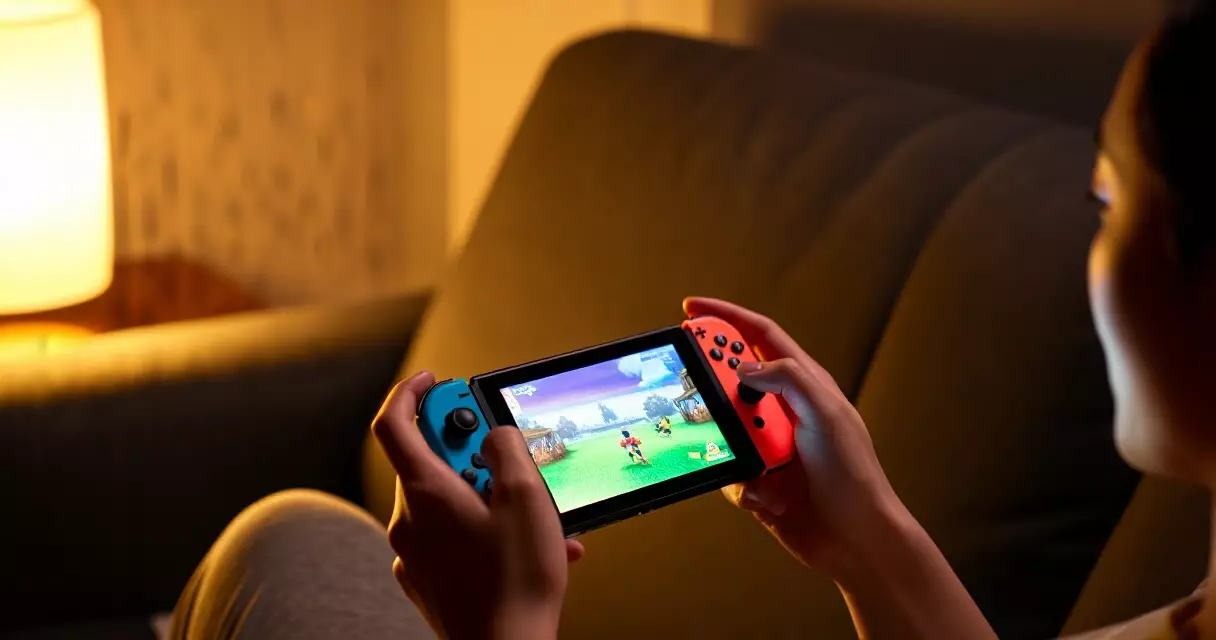
| Nintendo Switch | $14.99 | Up to 4 players | 1.6.x | Excellent portable experience |
| PlayStation 4 / 5 | $14.99 | Up to 4 players | 1.6.x | PS5 runs via backward compatibility |
| Xbox One / Series X|S | $14.99 | Up to 4 players | 1.6.x | Included in Xbox Game Pass |
| iOS (iPhone / iPad) | ~$6.99 | No | 1.6.x | Touch controls; controller supported |
| Android | ~$4.99 | No | 1.6.x | Google Play; Bluetooth controller supported |
PC mod support deserves special mention. The SMAPI modding API acts as a loader and enables thousands of community-made mods hosted primarily on NexusMods – ranging from visual texture overhauls and new NPC characters with full dialogue trees to quality-of-life tools and gameplay rebalances. Console and mobile versions do not officially support mods. For players who exhaust the base game and want more, the PC modding scene effectively doubles the available content.
System requirements are minimal. The game needs roughly 2 GB of RAM, a 256 MB GPU, and a dual-core 2 GHz processor – hardware most machines made after 2010 exceed easily. The pixel art style means Stardew Valley runs on aging laptops, integrated graphics, and the Steam Deck without configuration. That accessibility contributed directly to its reach across demographics that typically do not buy PC games.
Pros and Cons: The Honest Assessment
Stardew Valley earns its critical consensus honestly. But it has genuine weak points worth naming before recommending it to a specific player type.
| Pros | Cons |
|---|---|
| Exceptional value: 60-100+ hours for $14.99 | Early game pacing can feel slow and directionless |
| Years of substantial free content updates | Fishing minigame difficulty spike in the opening hours |
| No microtransactions, DLC, or subscriptions ever | Winter season removes farming for 28 in-game days |
| Outstanding original soundtrack (25+ tracks) | Console multiplayer capped at 4 players vs. PC’s 8 |
| Deep social simulation with memorable characters | No official cross-platform multiplayer |
| Thriving mod community on PC extends lifespan indefinitely | Mobile version lacks multiplayer entirely |
| Available on almost every gaming platform | End-game goals become vague after Community Center completion |
| Fully offline; no account or login required | Shane and Emily heart events can feel abrupt in pacing |
The fishing complaint surfaces constantly in new-player discussions and deserves direct acknowledgment. The minigame requires keeping a green bar aligned with a moving fish icon – a precision task that feels disproportionately demanding before the fishing skill levels up through use. It normalizes substantially by level 4 or 5, but the first few in-game days are rough enough that some players avoid the mechanic entirely until later in Year 1. This is one of the few design points where the onboarding does not match the game’s otherwise welcoming tone.
Stardew Valley vs. The Competition
The farming sim genre expanded significantly after Stardew Valley proved the market existed. Several strong alternatives have arrived since 2016, each targeting slightly different audiences and preferences.
| Game | Price | Year | Key Differentiator | Metacritic (PC) |
|---|---|---|---|---|
| Stardew Valley | $14.99 | 2016 | Deepest systems, best value, strongest modding | 89 |
| Story of Seasons: A Wonderful Life | $39.99 | 2023 | 3D graphics; the franchise that inspired Stardew | 75 |
| My Time at Portia | $29.99 | 2019 | 3D open world; heavier crafting and building focus | 72 |
| Coral Island | $24.99 | 2023 | Higher graphical fidelity; underwater content layer | 78 |
| Sun Haven | $19.99 | 2023 | Fantasy setting; extensive co-op multiplayer | User reviews only |
| Fields of Mistria | $17.99 | 2024 | Anime aesthetic; strong NPC writing (Early Access) | Early Access |
The pattern is clear: no competitor has matched Stardew Valley’s combination of depth, polish, and price at launch. Story of Seasons costs more than double and delivers less content per hour. Coral Island looks better but is mechanically thinner. Fields of Mistria shows real promise but remains unfinished. None of them are bad games. None of them have replicated what this game does.
For anyone placing Stardew Valley in the broader indie canon, our roundup of the best indie games of all time consistently ranks it among the genre’s most significant achievements.
Barone’s solo development story is also a central example in our guide on how to make an indie game – worth reading if the development history interests you as much as the finished product.
“In a genre where competitors charge $40 for less content, Stardew Valley at $14.99 – with nearly a decade of free updates behind it – represents one of gaming’s strongest value propositions at any budget level.”
Pricing, Editions, and Where to Buy
Stardew Valley’s pricing is refreshingly uncomplicated. There are no collector’s editions, season passes, or in-game stores. One purchase, one complete game, all updates free.
On PC, the game is available on Steam and GOG (DRM-free). Both platforms run seasonal sales where it appears at 50% off, bringing the price to $7.50. On console, it retails at $14.99 on the Nintendo eShop, PlayStation Store, and Xbox Store, with periodic discounts. Xbox Game Pass subscribers can play it at no additional cost as part of their existing subscription – a strong proposition for anyone already subscribed.
Mobile pricing varies by platform and region but typically falls in the $4.99-$6.99 range. The mobile versions received Version 1.6 content in 2024 and are polished experiences, though they still lack multiplayer and represent a separate purchase from PC or console versions. There is no cross-buy between platforms.
Who Should Play Stardew Valley (And Who Might Not)
Stardew Valley is not a universal recommendation, and naming that honestly saves players time and money.
The game suits players who enjoy systems-driven progression without urgent pressure. If you like optimizing a production chain, decorating a space, building relationships with fictional characters, or simply having a world to return to after a long day, Stardew Valley delivers across all of those axes. A substantial community uses it specifically for stress relief and decompression – a quality few games at any price reliably provide.
It is a worse fit for players who need constant action, competitive modes, or clear narrative structure with a defined ending. The co-op multiplayer is genuinely enjoyable but structurally light: no competitive play, no PvP, no ranking systems. Players driven by those hooks will find more satisfaction in an action RPG or strategy title.
Age accessibility is worth noting. The ESRB rates the game T for Teen, citing mild fantasy violence, crude humor, and alcohol references. In practice the tone is gentle – the alcohol references are mostly villagers drinking beer at the local Saloon – and many parents report children playing comfortably from around age 8 or 9. No voice acting sets a natural literacy floor: players need to read dialogue and item descriptions to understand what they are doing.
Players who loved the authored world-building in our Hollow Knight review – where every corner felt intentional rather than procedurally generated – will recognize the same quality here. Stardew Valley’s world feels personal because one person built all of it.
Our Verdict: Score and Final Rating
Tested across PC and Nintendo Switch through Version 1.6, across multiple full playthroughs and seasonal runs, Stardew Valley holds up in every category that matters and shows its age only in a handful of places most players will either not notice or quickly forgive.
| Category | Score /10 | Notes |
|---|---|---|
| Gameplay depth | 9 | Layered interlocking systems reward extended discovery |
| Content and value | 10 | 60-100+ hours for $14.99 with eight years of free updates |
| Art and soundtrack | 9 | Distinctive pixel aesthetic; exceptional original music |
| Accessibility | 8 | Fishing difficulty spike; otherwise welcoming from the first hour |
| Multiplayer | 7 | Solid co-op; limited scope; no cross-platform play |
| Replayability | 9 | Farm types, goals, spouses, and mods keep runs fresh |
| Overall | 9.2 | Landmark indie game; essential play |
The weaknesses – early-game pacing, fishing onboarding, absence of cross-platform multiplayer – are real but minor against the scale of what the game delivers. No farming sim rivals this combination of depth, character, and value at this price point. That has been true since 2016, and eight years of free updates have widened the gap rather than narrowing it.
Our guide to the best indie games consistently places Stardew Valley among the top tier across every platform and playstyle category. That placement is earned and overdue for no revision.
Frequently Asked Questions About Stardew Valley
How many hours does it take to finish Stardew Valley?
Stardew Valley does not have a traditional narrative ending. The closest completion milestone is finishing the Community Center bundles and reaching Mines floor 120, which most first-time players achieve in 40-60 hours. Seeing all major content – completing the Perfection tracker added in Version 1.5, finding every artifact, reaching maximum friendship with all NPCs, mastering all five skills – takes 100-200 hours depending on playstyle. According to HowLongToBeat, the main story averages around 52 hours and completionist runs average approximately 153 hours. Those figures climb further for players who engage with the PC modding scene, which adds effectively unlimited additional content.
Is Stardew Valley worth buying in 2026?
Yes, without hesitation. A decade after release, Stardew Valley remains the benchmark for farming simulation games. Version 1.6 (2024) added a new farm type, expanded PC co-op to 8 players, introduced the Mastery progression system, new seasonal events, and over 100 quality-of-life improvements – all free of charge. No competitor has matched its combination of depth and value in the years since. For players who have never tried it, $14.99 at full price or $7.50 on sale is an easy call. For players who completed it before Version 1.5 or 1.6, enough new content exists to justify another run from the beginning.
Does Stardew Valley have multiplayer, and how does it work?
Multiplayer was added to the PC version in Version 1.3 (2018) and later ported to console. On PC, up to 8 players can share one farm. On Nintendo Switch, PlayStation, and Xbox, the cap is 4 players. Multiplayer is cooperative only – there are no competitive or PvP modes. All players work toward the same farm, share a money pool (or use the optional separate-wallets setting), and experience the same seasonal festivals and story events together. The host owns the save file. Mobile versions do not support multiplayer. There is no official cross-platform play, meaning PC players cannot join console sessions. The co-op is well-implemented for casual friend groups, though the lack of structured objectives can make coordination feel loose across longer play sessions.
What is the best starting farm layout in Stardew Valley?
For new players, the Standard Farm is the strongest starting choice. It offers the largest flat farming area, making crop layouts and sprinkler grids easier to plan. The Hill-top Farm suits mining-focused players with its built-in quarry. The Forest Farm rewards foraging; the Riverland Farm rewards fishing investment. The Four Corners Farm was designed with multiplayer in mind – it gives each section a distinct functional zone for different players. The Beach Farm, added in Version 1.5, is a deliberate hard-mode layout where standard sprinklers do not work on sandy soil; it is best left to experienced players on a second or third playthrough. Version 1.6 added the Meadowland Farm, which starts with a pre-built coop and two chickens – an ideal entry point for players who want to build their economy around animal products from day one.
Can you mod Stardew Valley, and is it easy to set up?
PC modding is well-supported and genuinely accessible for players with no prior modding experience. The SMAPI (Stardew Modding API) acts as a mod loader and installs in roughly five minutes following its official documentation. After that, mods downloaded from NexusMods or the Stardew Valley community forum are dropped into a Mods folder and load automatically at the next launch. The catalog runs to thousands of mods covering visual overhauls, new NPC characters with full dialogue trees, expanded story content, quality-of-life tools, and balance changes. Console and mobile versions do not officially support mods. SMAPI works on Windows, Mac, and Linux. The modding community is one of the most organized in indie gaming and produces content that routinely adds 40-plus hours to an already-lengthy base game.
How does Stardew Valley compare to Harvest Moon and Story of Seasons?
Stardew Valley was directly inspired by Harvest Moon 64 and Harvest Moon: Back to Nature – a lineage Eric Barone has acknowledged publicly. The comparison is instructive: modern Story of Seasons titles feature 3D graphics and more structured storylines, but they score lower on Metacritic, launch at significantly higher prices ($39.99 for Story of Seasons: A Wonderful Life vs. $14.99 for Stardew), and receive far fewer post-launch updates. The farming systems in Stardew Valley are more layered, the NPC writing is stronger by most critical accounts, and the progression depth is wider. Many longtime Harvest Moon fans describe Stardew Valley as the game the series was always trying to become. The broader question of indie versus publisher-backed games rarely maps this cleanly onto a single genre, but in farming sims it does.
Is Stardew Valley good for mental health and low-stress gaming?
Stardew Valley has developed a well-documented reputation as a low-anxiety gaming experience. There is no game over screen, no permadeath, and no competitive pressure. Dying in the Mines costs a small amount of gold and some inventory items at worst – no lost progress, no permanent setbacks. Players advance at whatever pace suits them. Multiple communities across gaming forums and mental health discussion spaces recommend it specifically for players managing anxiety, depression, or burnout. Eric Barone has spoken publicly about his own mental health struggles during development, which adds weight to storylines like Shane’s depression and alcohol dependency arc that land differently once you know that context. The time-limited daily cycle can feel mildly stressful during the first in-game week, but that feeling fades quickly as the rhythm of each day becomes second nature.
What is new in Stardew Valley Version 1.6?
Version 1.6 launched on PC in March 2024 and reached consoles and mobile through the remainder of 2024. Key additions include the Meadowland Farm type (pre-built coop, two starter chickens), PC multiplayer expanded from 4 to 8 players, the Mastery system (a new late-game progression track for players who have maxed all five skills), a pet overhaul allowing multiple pets, expanded NPC dialogue across the existing cast, new fishing bait attachments, new seasonal events and festivals, a new late-game item category, and more than 100 quality-of-life improvements covering inventory management, UI clarity, and control responsiveness. All 1.6 content was free, consistent with the policy ConcernedApe has held since 2016. That commitment to free substantial updates across eight-plus years stands as one of the most player-friendly practices in commercial gaming today.
Related Reading
- Best Indie Games: Hidden Gems Across All Platforms
- Best Game Engines for Indie Games Compared (2026)
- Common Indie Game Development Mistakes and How to Avoid Them
- How Much Does It Cost to Make an Indie Game?
- How to Fund an Indie Game: Crowdfunding, Grants, Publishers
- How to Make an Indie Game: A Beginner's Roadmap
- How to Market an Indie Game: A Marketing Playbook That Works
- How to Publish and Sell Your Indie Game on Steam
- Indie Game Development Timeline: How Long to Ship
- Indie Games vs AAA Games: Key Differences Explained
- The Best Indie Games of All Time, Ranked by Impact
- What Are Indie Games? A Guide to Independent Game Development
- Why Do Indie Games Fail? Causes, Warning Signs, and Fixes
- Celeste Review: A Precision Platformer With Heart
- Hades Review: How Supergiant Perfected the Roguelike
- Hollow Knight Review: Why This Metroidvania Defined a Generation
Sources
- Wikipedia – Stardew Valley
- Metacritic – Stardew Valley (PC)
- Steam – Stardew Valley Store Page
- HowLongToBeat – Stardew Valley playtime data
- Polygon – Stardew Valley Review (2016)
- IGN – Stardew Valley Review
- Eurogamer – Stardew Valley Review
Gaming Laptop Buyer’s Guide: Performance, Portability & Best Models